



Microsoft Launches NLWeb: Open Protocol Brings AI-Powered Conversation to the Web
Microsoft has unveiled NLWeb, an open-source protocol designed to integrate AI-driven conversational features into websites and web applications. By supporting natural language interaction and model-agnostic AI integration, NLWeb aims to make the web more dynamic, intuitive, and accessible for users and developers alike.

Fortnite’s AI Darth Vader Sparks Backlash Over Offensive Outputs and Voice Ethics
An AI-powered Darth Vader NPC in Fortnite, launched in May 2025, was pulled into controversy after users exploited the system to generate offensive language. Though Epic Games responded with a quick hotfix, the incident raises ethical and technical concerns about AI moderation, digital legacy rights, and voice actor protections.

Google Tests AI Mode in Search, Experimenting With ‘I’m Feeling Lucky’ Button Replacement
Google’s new AI Mode in Search introduces a conversational interface powered by Gemini 2.0, currently available to select U.S. users through Search Labs. The experimental feature is being tested as a possible replacement for the “I’m Feeling Lucky” button, aiming to enhance the search experience with AI-generated answers.

OpenAI Launches Codex: AI Coding Agent Integrated with ChatGPT for Seamless Development
OpenAI has unveiled Codex, an AI-powered coding agent integrated with ChatGPT. Designed to automate routine software development tasks, Codex aims to boost productivity for developers and beginners alike, offering secure, cloud-based functionality and GitHub integration. The release marks a significant step in AI-assisted coding.

AI Transforms Hardware Design with Natural-Level Synthesis for Faster Development
Natural-Level Synthesis (NLS) leverages AI to convert natural language into HDL code, streamlining hardware design. This innovative approach aims to reduce learning barriers and boost design efficiency, potentially transforming industries like robotics and IoT.

NVIDIA Unveils AI Breakthroughs at ICLR 2025: From Robots to Real-Time Music and Healthcare
NVIDIA Research presented over 70 papers at ICLR 2025, revealing significant AI advancements across diverse sectors including robotics, language models, audio generation, video understanding, and healthcare. Key highlights include Fugatto for multimodal audio, HAMSTER for efficient robot training, and STORM for dynamic 3D scene reconstruction.

Wharton School Introduces AI-Focused MBA Major and Undergraduate Concentration for Fall 2025
The Wharton School at the University of Pennsylvania will debut a new MBA major and undergraduate concentration in Artificial Intelligence for Business in Fall 2025. This forward-looking program combines machine learning and data science training with courses on AI ethics and accountability to prepare students for leadership in a rapidly evolving digital economy.

Peter Singer AI Chatbot Brings Utilitarian Ethics to Global Conversations
A new AI chatbot based on the philosophy of Peter Singer invites users to explore ethical questions through dialogue. Launched via Singer’s Substack, the tool applies his utilitarian principles to real-world dilemmas, sparking debate over AI’s role in moral reflection.

Anthropic’s Claude Adds Web Search and Google Workspace Integration, Rivalling ChatGPT and Gemini
Anthropic’s Claude now features real-time web search with source citations and Google Workspace integration. These updates position it alongside other leading AI assistants like ChatGPT, Grok, Gemini, and Copilot, with a focus on smarter task execution, transparency, and productivity.

NVIDIA Launches Nemotron AI Models to Boost Reasoning and Speed for Developers
NVIDIA has introduced the Nemotron family of AI models, designed to advance multistep reasoning, coding, and decision-making. With enhanced performance, broad accessibility, and strategic partnerships, Nemotron aims to accelerate the adoption of intelligent AI agents across industries.

New Study Highlights Untapped Potential of AI Researchers in Scientific Discovery
A recent preprint by researchers from Westlake University analyzes AI’s increasing presence in scientific research. While AI tools are widely adopted, the study finds that AI researchers seldom lead discoveries and suggests strategies to integrate them more directly into the scientific process.

Intelmatix Launches AI Academy to Boost Enterprise AI Skills After LEAP 2025 Debut
Intelmatix has officially launched its AI Academy following its presentation at LEAP 2025. The initiative aims to equip non-technical professionals with practical knowledge to implement AI across industries, addressing the global skills gap and supporting digital transformation efforts.
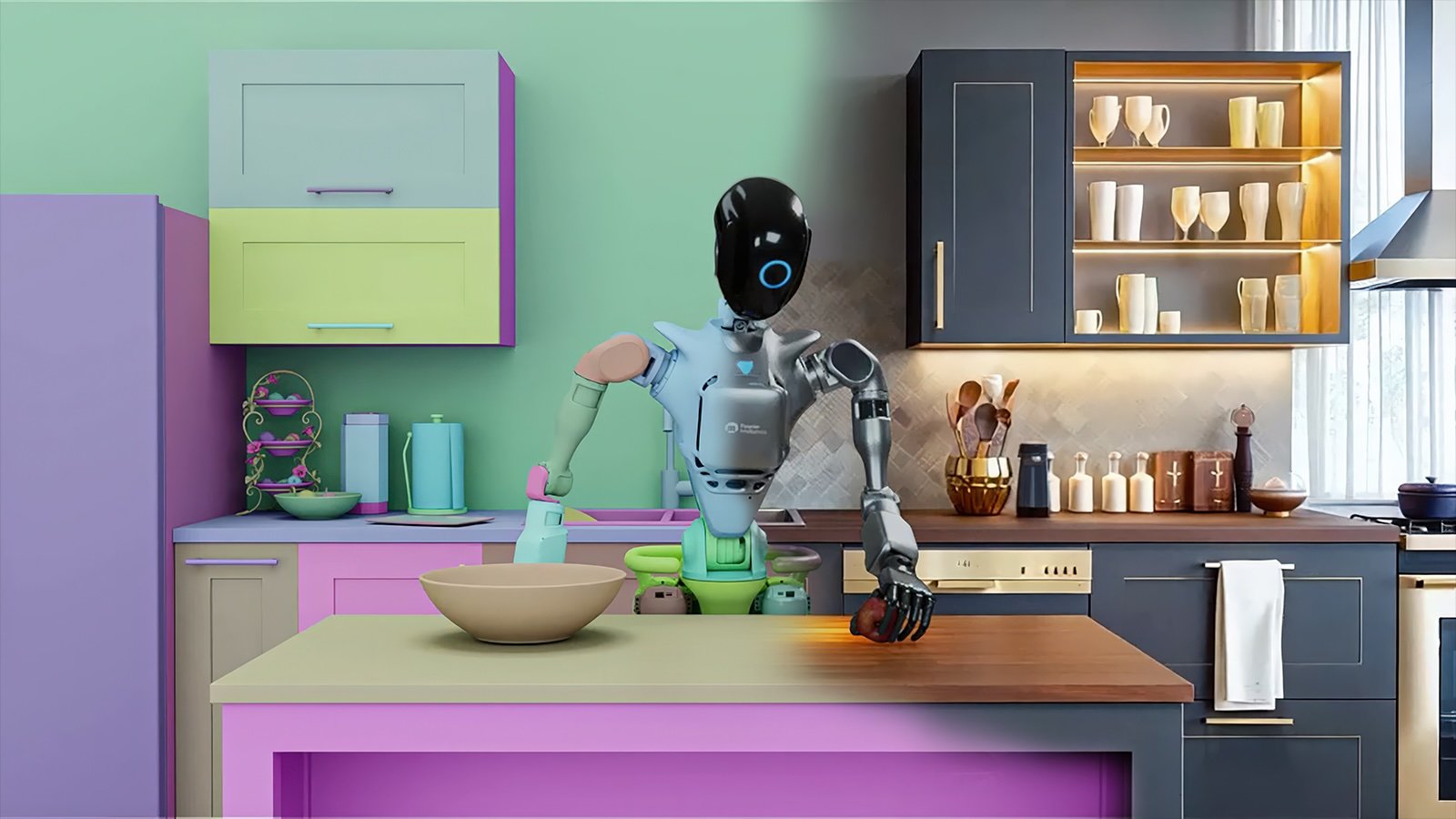
NVIDIA Introduces Cosmos World Foundation Models for Physical AI Development
NVIDIA launched its Cosmos World Foundation Models at GTC 2025, providing developers with customizable AI tools for creating photorealistic virtual environments. Early adopters, including Agility Robotics and Uber, are leveraging Cosmos for advanced robotics and autonomous vehicle training.

AI Weighs In: Kai Tak Sports Park Snooker Controversy and “Raising a Child” Excuse
Kai Tak Sports Park’s debut was marred by a mid-match spectator ejection, triggering public backlash. A government official’s “raising a child” analogy drew sharp criticism. AI weighs in: is it sound governance—or just a way to deflect blame for mismanagement?

Why Chatbots Fail at Character Counting: A Detailed Test
Chatbots excel in conversation but falter at counting characters, as Our test of models like ChatGPT 4o, Grok 3, and Gemini 2.0 Flash shows. With results ranging from 114 to 153 for a 135-character sentence, the report uncovers design flaws, from tokenization traps to hallucination, highlighting the complex trade-offs in AI development.

Google Gemini AI: Search History and Calendar Data in Focus?
Google’s experimental Gemini Personalization Model aims to enhance AI by tapping into users’ search histories and calendars, offering tailored responses and scheduling aid. Unveiled in beta, it promises utility but ignites privacy debates, with safeguards under scrutiny as testing expands.

Philosophical Study Probes AI Intelligence in Language Models Like OpenAI ChatGPT-4
A new philosophical paper dives into the capabilities of large language models like OpenAI ChatGPT-4, questioning whether their high performance on tests like the GRE and LSAT reflects genuine intelligence or advanced mimicry. Authors Raphaël Millière and Cameron Buckner explore how AI challenges traditional views on cognition, setting the stage for a deeper look at machine learning’s inner workings.

Examining Grok 3’s “DeepSearch” and “Think” Features
xAI’s Grok 3, launched in February 2025, introduces "DeepSearch" for real-time data and "Think" for reasoning. This report examines their differences, user options, and AI implications, offering insights into when each feature shines—or falls short. From speed to transparency, we analyze what sets Grok 3 apart in the evolving AI landscape.

s1-32B AI Breakthrough: Simple Reasoning Rivals OpenAI o1
In a leap for AI, researchers unveil s1-32B, a model that enhances reasoning with a mere 1,000 curated questions. Outshining OpenAI’s o1-preview on math contests, it scores 59.6% on tough science problems using a simple "budget forcing" technique. Fully open-source, it challenges industry norms with efficiency and transparency.

Fei-Fei Li’s New AI Model Redefines Distillation: Challenging DeepSeek at Just US$14?
Fei-Fei Li’s s1-32B introduces a new approach to low-cost AI distillation, achieving strong reasoning results at a reported cloud cost under US$50. The model’s efficiency invites comparison with DeepSeek’s US$5.6 million development budget, signalling a shift in how AI capabilities may be scaled.