



CSIRO Launches AI-Powered ‘My Plan’ for Personalized Weight Loss
CSIRO has introduced "My Plan," a new AI-powered feature for the Total Wellbeing Diet designed to personalize meal plans based on individual preferences, allergies, and health conditions. The launch follows CSIRO analysis indicating that members who frequently use meal plans lose 24% more weight on average than less frequent users. The tool utilizes data from millions of meal interactions to tailor suggestions, aiming to improve adherence and long-term results.

UK Elections 2026: Regulators Target Political Deepfakes With New Unit
As the United Kingdom enters the regulated period for the May 2026 elections, the Electoral Commission is forming a new unit to identify and request takedowns of political deepfakes. The initiative addresses concerns regarding AI-generated impersonations and manipulated audio targeting candidates. This report examines recent incidents involving UK politicians, the regulatory gaps in current legislation, and how the UK's operational response contrasts with Australia's focus on disclosure and voter education.

Prithvi CAFE: Hybrid AI Blends Tech to Improve Satellite Flood Mapping
A new preprint from researchers at the University of Wisconsin-Madison and the University of Portsmouth introduces Prithvi CAFE, a hybrid AI architecture for flood inundation mapping. By combining the Prithvi EO 2.0 foundation model with a parallel CNN branch, the method aims to improve segmentation accuracy on unseen geographies while significantly reducing the number of trainable parameters required for fine-tuning.
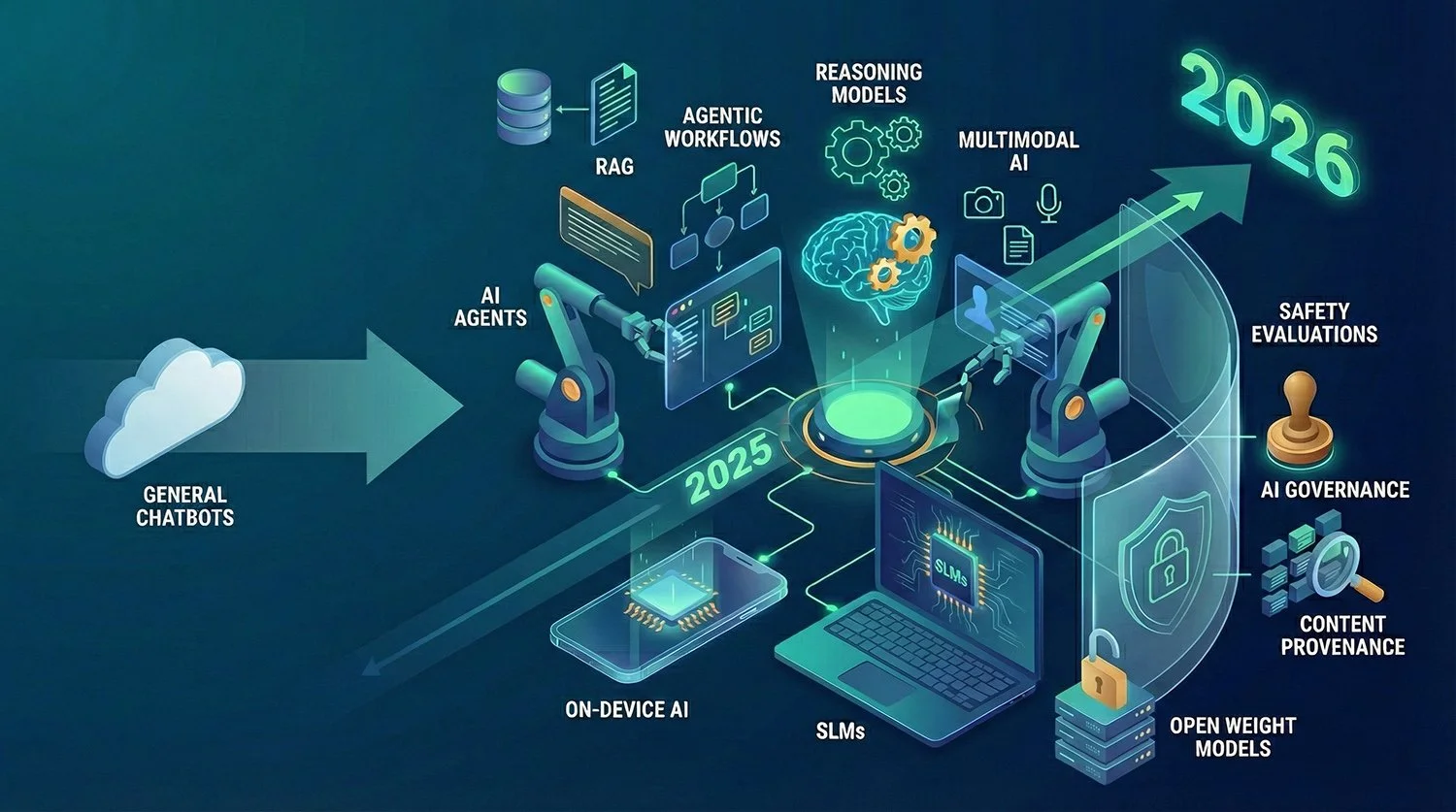
Ten AI Terms That Shaped 2025 — What to Watch in 2026?
As AI development moved from general chatbots to actionable agents in 2025, the vocabulary of the industry shifted. This report explains ten critical terms—from reasoning models and small language models (SLMs) to content provenance—that defined the year’s technological and regulatory landscape.

Facebook Marketplace & Gumtree Scams: ABC Guide & AI Risks
ABC News has published guidance on avoiding scams on Facebook Marketplace and Gumtree as losses rise. This summary outlines key warning signs, such as fake payment proof and urgency, and explains how AI tools are enhancing social engineering tactics. Includes safety advice from Scamwatch and Gumtree.
Grok AI Faces Global Regulatory Backlash Over Image Safety
Regulators across Europe and Asia have launched inquiries into X’s Grok AI following reports that its image editing tool was used to generate non-consensual explicit imagery. As complaints surge regarding the safety of the new feature, authorities in the EU, UK, India, and other jurisdictions are demanding immediate safety updates and compliance with digital safety laws to protect users from deepfake abuse.

PYXA.AI Review 2026: Is the $49.99 Lifetime Deal Sustainable?
PYXA.AI promotes a consolidated AI dashboard for a single lifetime payment, aiming to disrupt the subscription model. This analysis examines the viability of this offer, detailing how the company's "Fair Use" policies, reliance on third-party models, and usage-based refund strictures affect long-term user access and service sustainability.

AI’s 2026 Reality Check: Australian Economists Weigh Boom vs. Bubble
Australian economists and global analysts are framing 2026 as a pivotal year for artificial intelligence, shifting focus from technical potential to financial viability. Recent reports from the ABC, Axios, and Goldman Sachs highlight the growing pressure on companies to demonstrate return on investment amidst rising infrastructure costs. The analysis further examines Australia's unique economic position, citing the impact of global trade fluctuations and domestic challenges regarding data center capacity, energy consumption, and water usage.

AI Agents Are Stressing API Security: 2025 Report Findings
Industry reporting for 2025 identifies Application Programming Interfaces (APIs) as the critical infrastructure connecting AI agents to real-world systems. Data from the Postman State of the API Report suggests that while AI adoption is widespread, API design and security measures often lag behind, raising significant concerns about unauthorized access and automated tool usage.

MCA Sydney’s Data Dreams: Major Exhibition Explores Art and AI
The Museum of Contemporary Art Australia (MCA) is currently hosting "Data Dreams: Art and AI," a large-scale survey exhibition running until April 2026. Presented as part of the Sydney International Art Series, the show features ten artists—including Angie Abdilla, Kate Crawford, and Christopher Kulendran Thomas—who examine AI as a complex infrastructure rather than a single tool. The exhibition explores themes of data collection, model behavior, and the credibility of synthetic media, distinguishing itself from other international shows by focusing on the social and systemic effects of artificial intelligence.

Iron Beam Delivered: Israel Adds High-Power Laser to Air Defense Network
Israel’s Ministry of Defence officially handed over the first operational Iron Beam system to the IDF in late December 2025. Developed by Rafael Advanced Defense Systems, the high-power laser is designed to neutralize aerial threats such as drones and mortars using thermal sensors and real-time computing. It will operate alongside the Iron Dome as a cost-effective, software-driven defense layer, with serial production now underway.

Smart Tourism: How AI, Robots and Data Are Reshaping Travel
A December 2025 ABC report examines the integration of AI, robots, and data analytics in the tourism sector, detailing how "smart tourism" is evolving from a concept to an operational reality. The article discusses end-to-end automation in hotels, the use of smart city data for crowd management, and the shift toward chat-based trip planning interfaces. It further notes the challenges regarding user preference for human interaction and the potential visibility risks for small businesses relying on search traffic.

Slipknot's Clown Backs AI Music Tools Amid Industry Licensing Shift
Slipknot co-founder M. Shawn Crahan has publicly endorsed AI as a creative aid, distinguishing between assistive tools and generative replacements. His comments come as the music industry shifts toward licensed AI models following settlements between major labels and tech firms, alongside evolving regulations in Australia and new tagging policies on streaming platforms.
Australia Targets AI Chatbots with New Child Safety Rules
Australia is expanding its online safety regulatory framework to include specific compliance obligations for AI chatbots and companion services. Under the eSafety Commissioner’s new industry codes, providers face phased deadlines through March 2026 to implement safety measures—such as age assurance and risk assessments—designed to prevent minors from accessing restricted or harmful material.
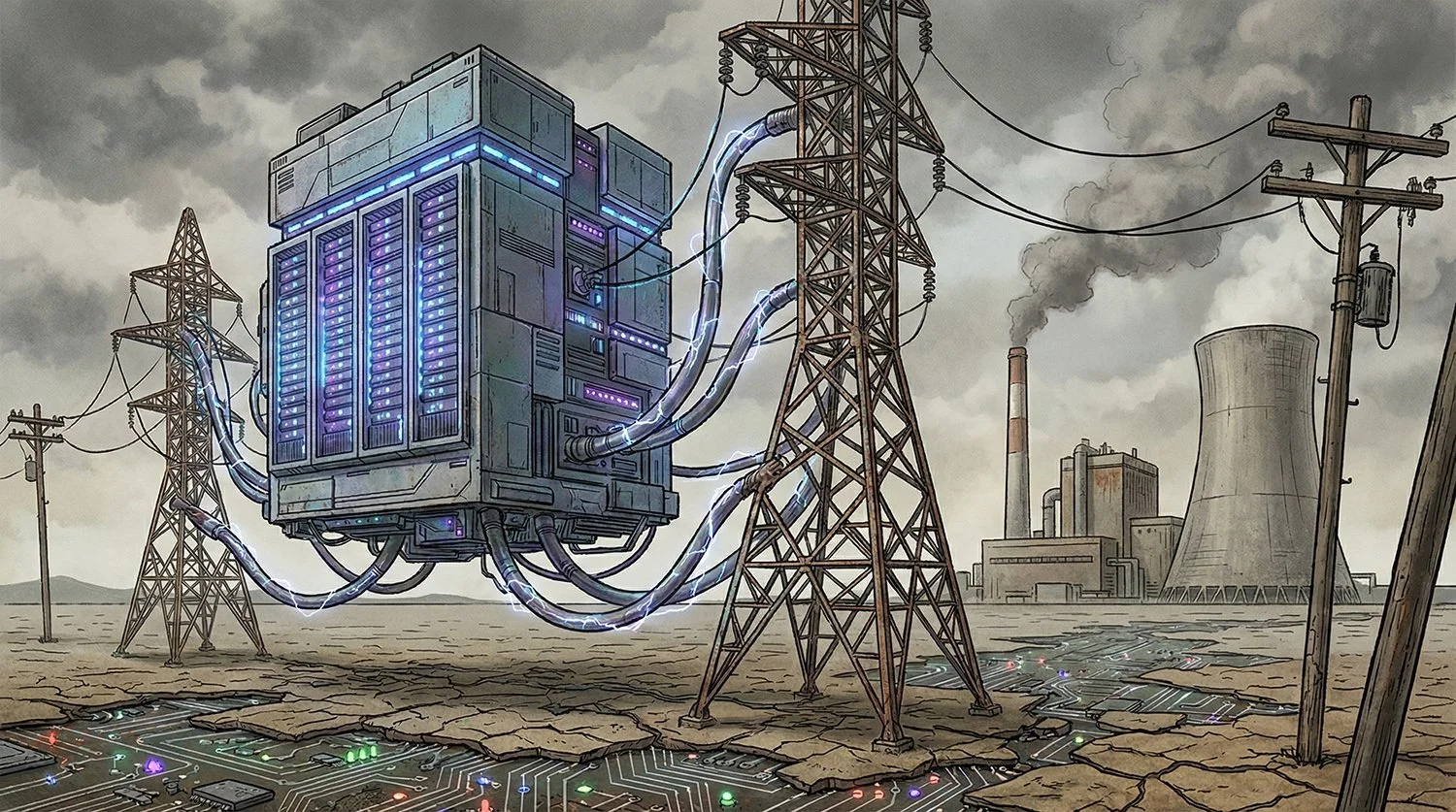
AI Power Struggle: US Grid Rules Tighten as States Push Back
As artificial intelligence data centers drive a surge in electricity demand, US federal agencies and state policymakers are implementing new regulatory frameworks to manage the strain on the power grid. The Federal Energy Regulatory Commission (FERC) has directed PJM Interconnection to establish transparent rules for large, co-located loads to safeguard system reliability. Simultaneously, individual states are enacting distinct laws to limit cost-shifting onto residents and manage local infrastructure impacts, creating a complex dual-governance landscape for energy and technology sectors.

NVIDIA & UW Use 18,000 Years of Synthetic Climate for AI Forecasting
Researchers from NVIDIA and the University of Washington have introduced "long range distillation," a method that utilizes 18,000 years of synthetic climate data to train AI models for improved subseasonal to seasonal weather forecasting, addressing data scarcity in historical records.

OpenAI Updates ChatGPT Atlas Browser Against Prompt Injection Attacks
On December 22, 2025, OpenAI announced a security update for the ChatGPT Atlas browser agent aimed at reducing the risk of prompt injection attacks. The update follows internal red teaming that identified new exploit classes, leading to the deployment of an adversarially trained model designed to better resist malicious instructions embedded in web content. OpenAI describes this update as part of a continuous "proactive rapid response loop" to address evolving security challenges in agentic browsing.

MIA: The New AI Chatbot Built for Safe Mental Health Triage
ABC News reports on the development of MIA, a mental health chatbot from the University of Sydney designed to triage users using clinical frameworks rather than general conversation. Unlike general-purpose AI, MIA relies on a closed knowledge bank to minimize errors and aligns with Australian government referral standards (IAR). The system is currently in testing with a public release expected in 2026.
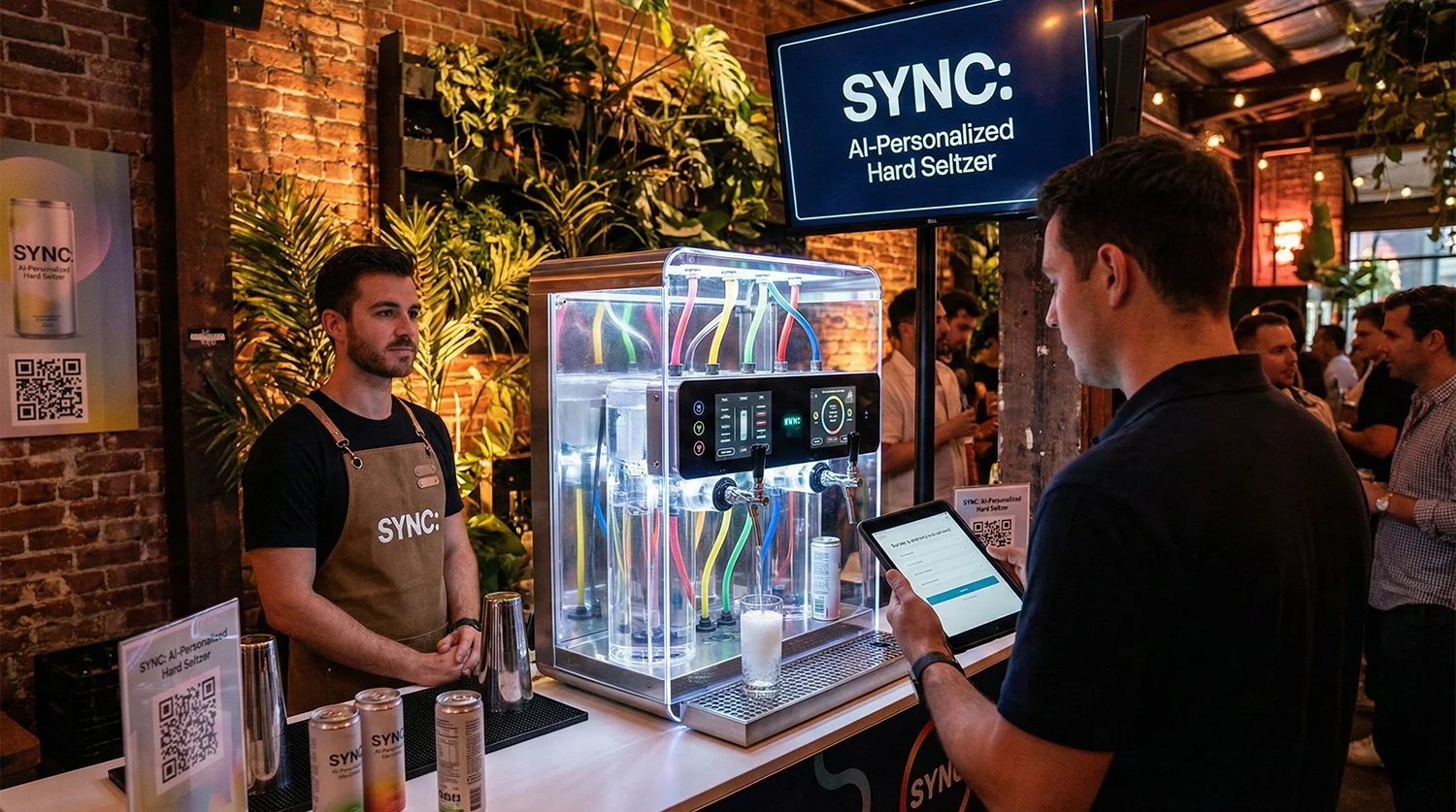
Taste the Future: SYNC Launches AI-Personalized Seltzer in SA
South Australian startup SYNC has introduced a hard seltzer brand that utilizes an AI-enabled feedback loop to guide flavor development. Founded by Denham D’Silva and Trent Fahey, the company recently piloted an "AI bar" activation where customers received personalized beverages based on digital questionnaires. The initiative, highlighted by the Australian Institute for Machine Learning (AIML), aims to use consumer taste data to determine future product releases.
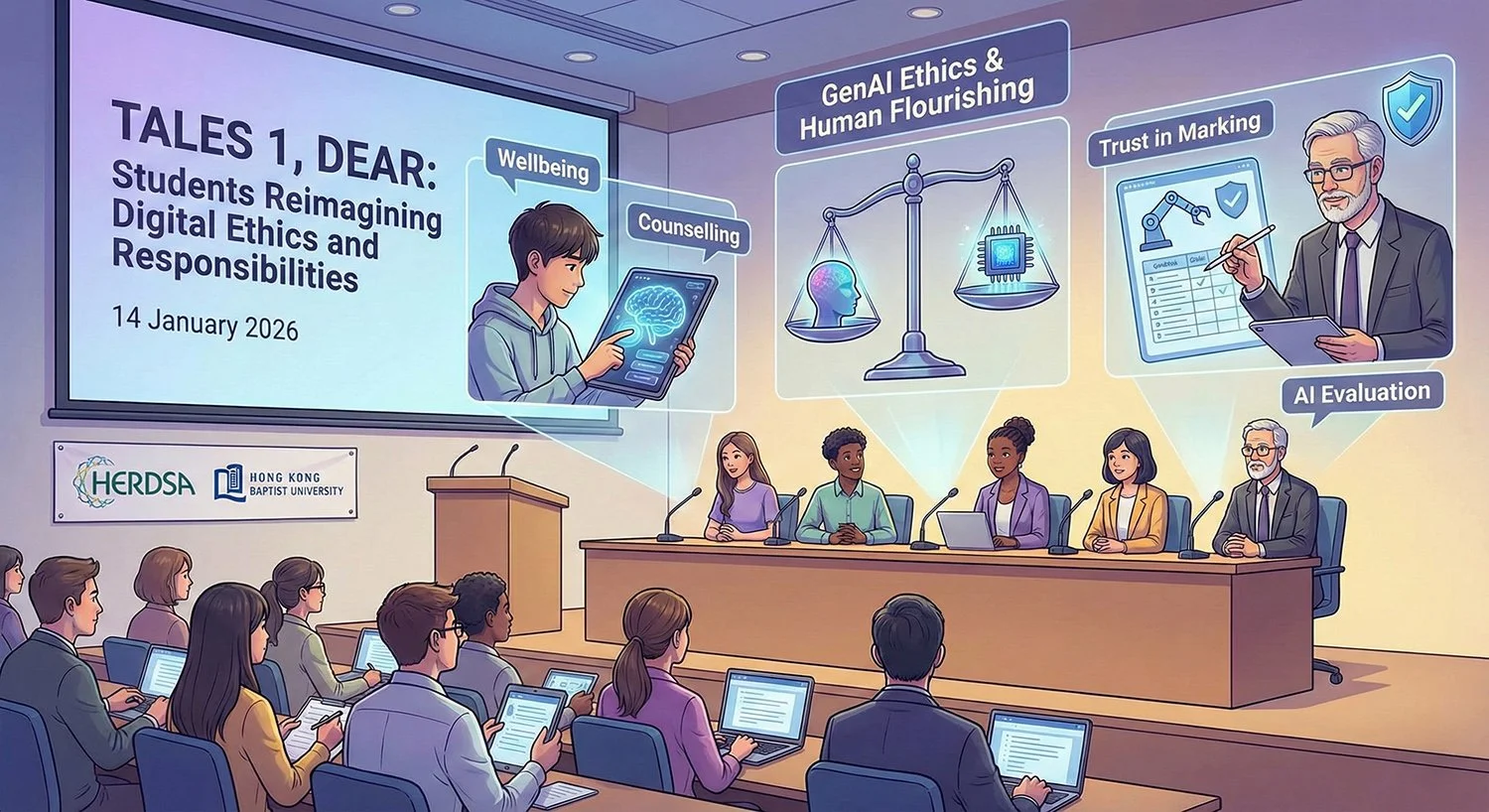
GenAI & Student Trust: HERDSA Flags Workshop on Ethics & Wellbeing
The Higher Education Research and Development Society of Australasia (HERDSA) has circulated a notice regarding an online workshop on digital ethics and Generative AI hosted by Hong Kong Baptist University. Scheduled for 14 January 2026, the session will address student perspectives on AI usage in mental health support and assessment, referencing frameworks for responsible AI in education.