


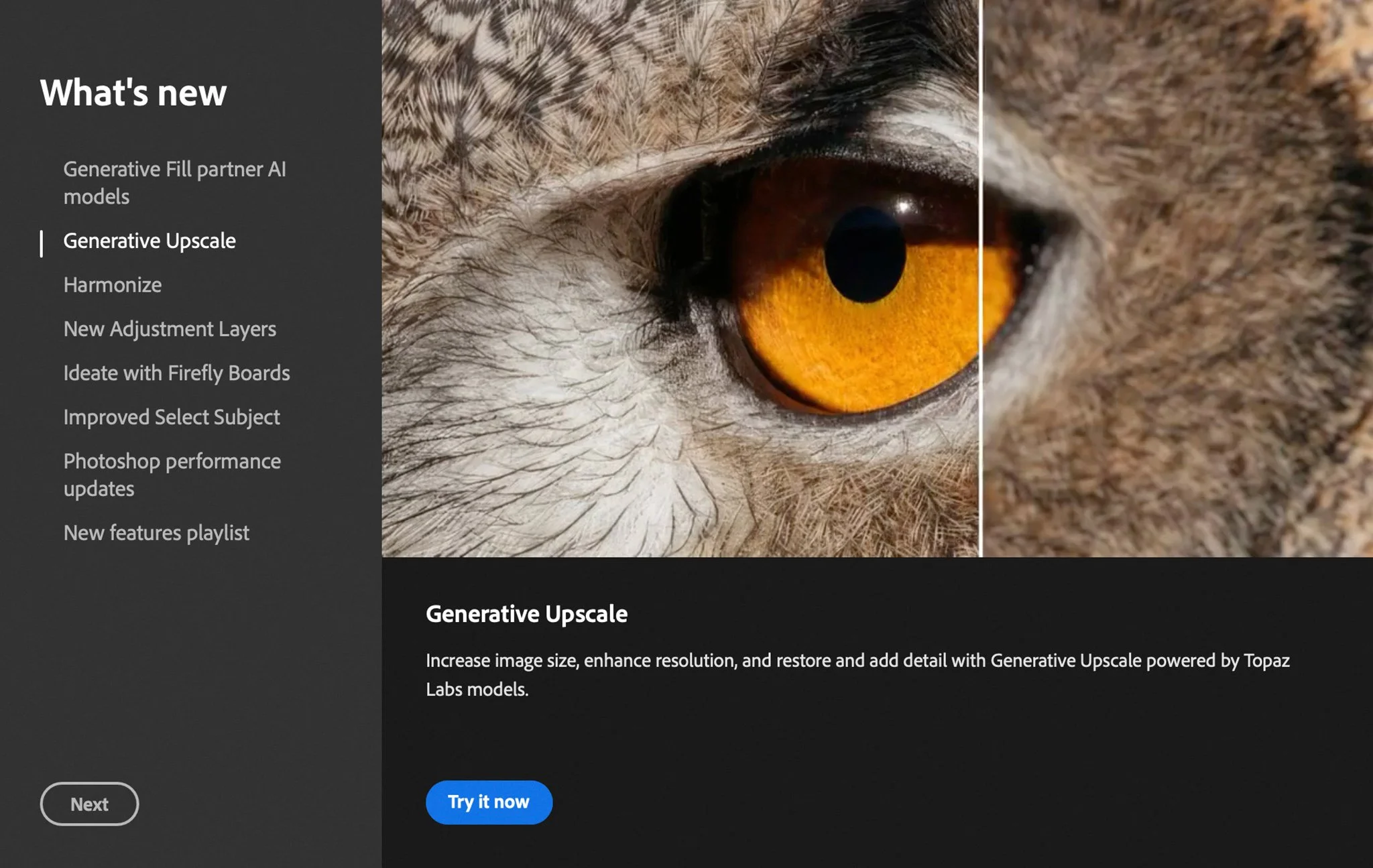
Photoshop 2026 Adds Topaz AI: 4x Upscale & 56MP Support
Adobe has integrated Topaz Labs’ AI models directly into Photoshop 2026, allowing users to access Gigapixel upscaling and AI sharpening tools without external plug-ins. As part of the new partner program, these premium features utilize Adobe’s generative credits to power high-resolution enhancements and creative upscaling within the native interface.
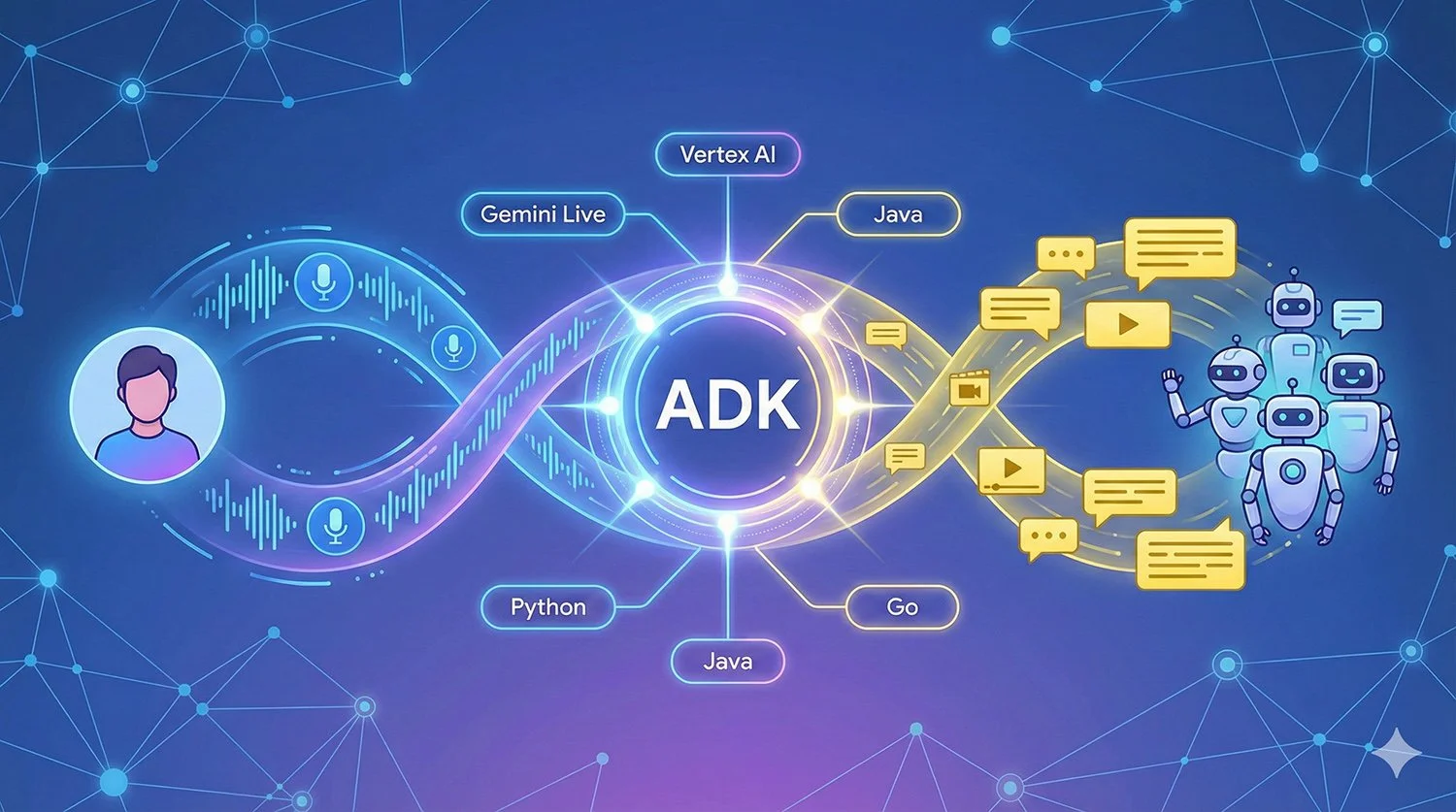
Google ADK Adds Real-Time Streaming: 40% of Apps to Use Agents by 2026
Google has updated its open-source Agent Development Kit (ADK) to include fully documented bidirectional streaming capabilities, enabling developers to build real-time, multimodal agents that utilize Gemini Live. Now supporting Python, Java, and Go, the framework allows for low-latency interactions such as user interruptions during voice sessions. This development aligns with broader industry trends, as Gartner forecasts a significant rise in enterprise agent adoption over the coming years.

Deepfakes and Scams Drive USD 4.6 Billion in Global Losses
In late 2025, artificial intelligence has shifted from a background tool to a central driver of financial crime. With global crypto scam losses reaching US$4.6 billion and deepfakes accounting for 40% of high-value fraud, this report analyzes the mechanics behind artist "proof sketch" theft, celebrity deepfakes, and "digital arrest" schemes, while outlining practical defenses for creative professionals and investors.
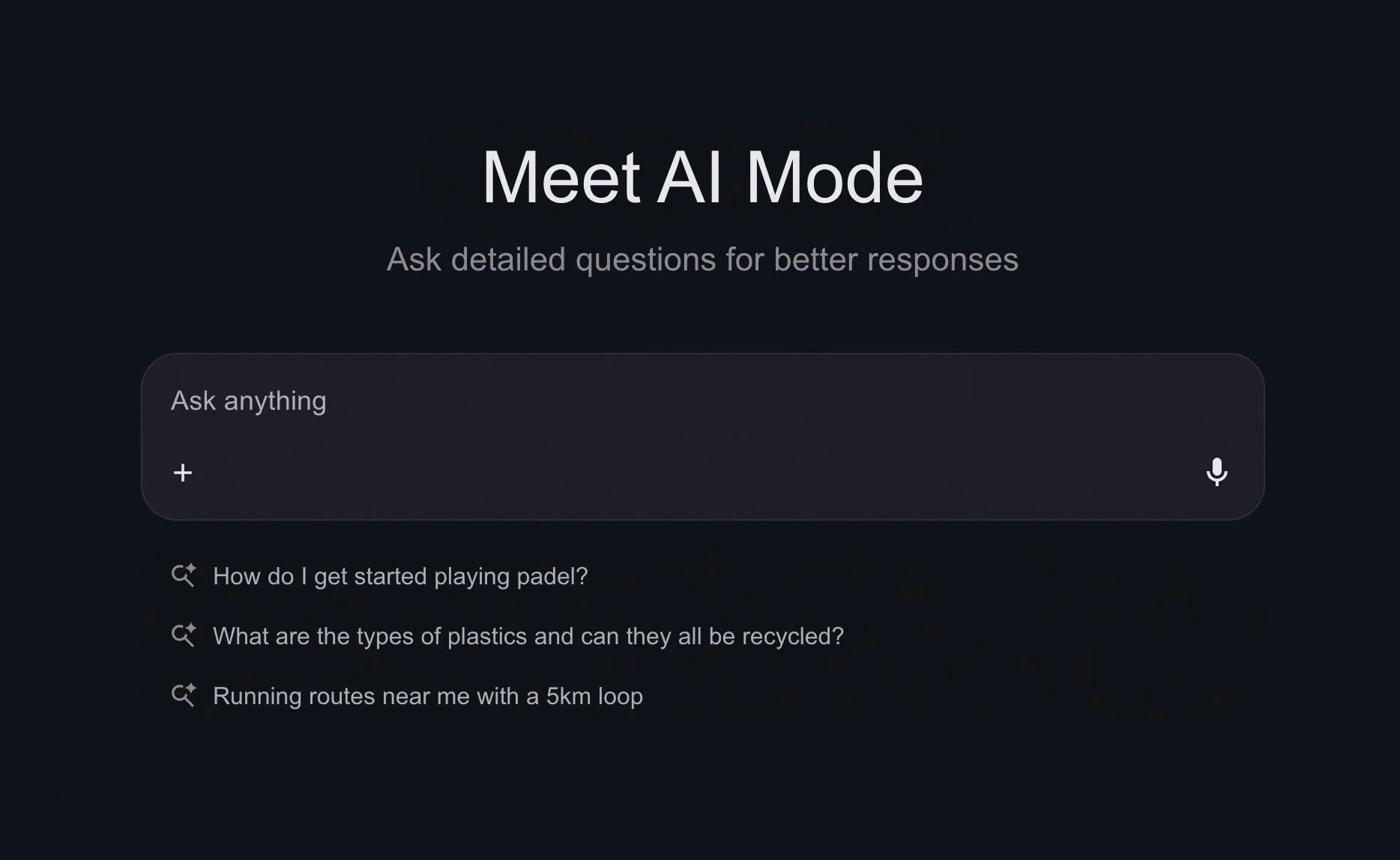
Google AI Mode Expands to 180+ Countries: Search Turns Into a Chatbot
Google is shifting from a list of blue links to a conversational assistant with the global rollout of AI Mode. Building on AI Overviews — now reaching 1.5 billion users — the feature uses Gemini models to answer complex questions directly. However, the shift faces mounting legal and industry scrutiny over its impact on publisher traffic and the "zero-click" economy.

Ukraine Deploys USD 2,500 AI Drones to Counter 5,000 Monthly Shaheds
Facing record-breaking barrages of Russian loitering munitions, Ukraine has accelerated the production of low-cost, AI-assisted interceptor drones. Systems such as STING and Octopus are now being fielded to protect airspace and conserve high-value missiles, addressing the critical cost imbalance of modern air defense.

AI in Radio: 12.3 Million Listeners and the Rise of 24/7 Synthetic Hosts
Artificial intelligence is transforming broadcast radio, enabling stations to generate 24/7 content using tools that scan 250,000 real-time sources. While supporters argue this efficiency ensures survival in a rapidly growing $2.8 billion market, critics warn it risks eroding the spontaneity and empathy that distinguish radio from streaming algorithms.

XRPH AI Launches Vitals Dashboard for Africa’s 680M Mobile Users
XRP Healthcare M&A Holding Inc. has introduced a Vitals Dashboard to its XRPH AI mobile application, enabling manual tracking of health metrics for users across Africa and North America. This update supports the company's hybrid strategy of combining digital triage tools with its physical pharmacy network in Uganda and proposed TSX Venture Exchange listing.
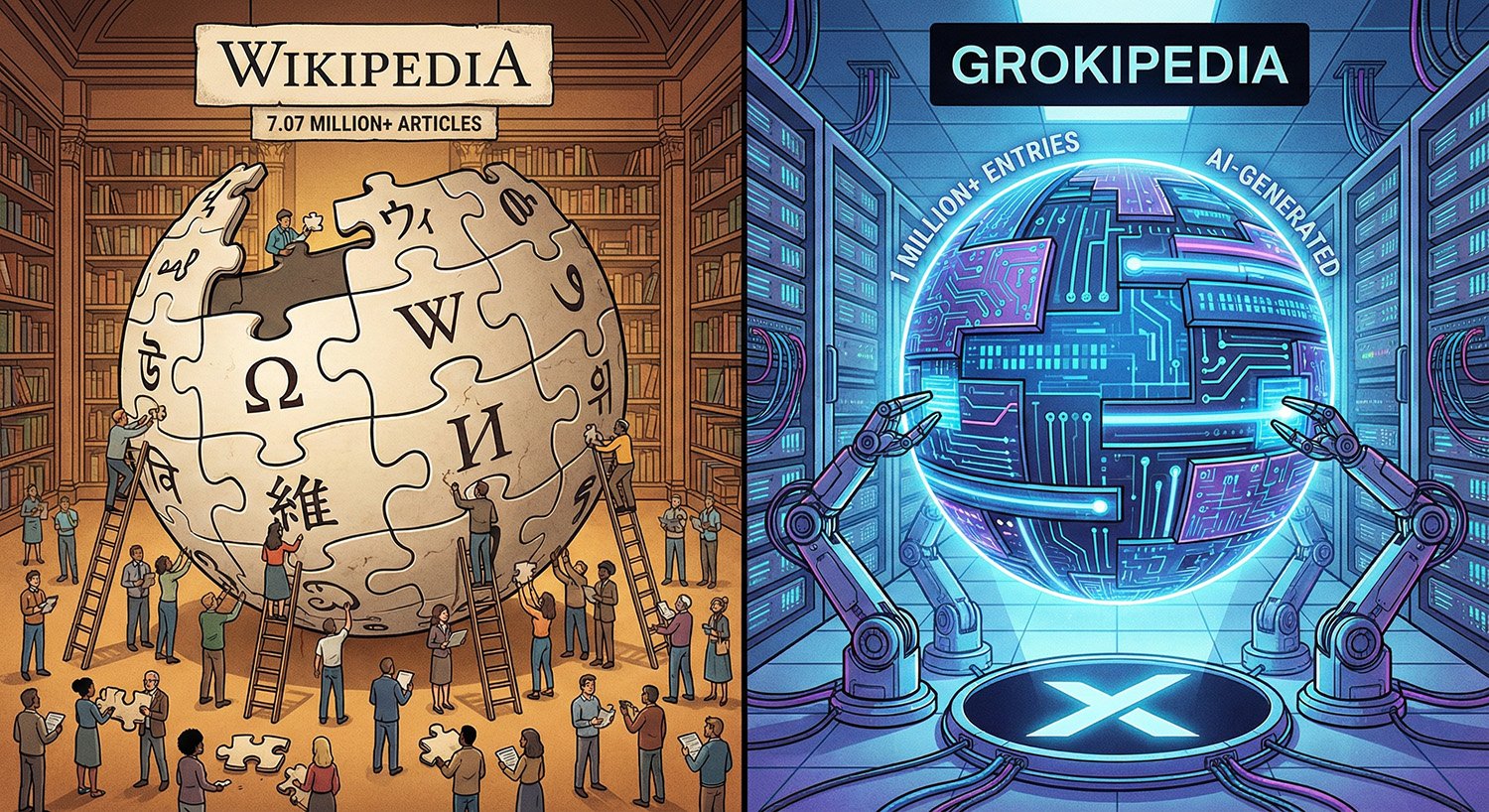
Grokipedia: Musk’s AI Encyclopedia Hits 1M+ Entries to Rival Wikipedia
Launched in late 2025, Grokipedia utilizes the Grok language model to generate over 1 million articles as a proposed alternative to Wikipedia. This report examines the platform’s automated structure and rapid growth alongside independent analyses highlighting its reliance on low-credibility sources and distinct ideological framing compared to traditional human-curated encyclopedias.

Stanford AI Designs 16 Functional Viruses from 302 Synthetic Genomes
In a September 2025 study, scientists from Stanford University and the Arc Institute demonstrated that artificial intelligence can design fully functional viral genomes. Using the Evo 2 large genome model, the team synthesized 302 unique DNA sequences, resulting in 16 viable bacteriophages capable of infecting and lysing E. coli bacteria.

Moonshot Launches Kimi K2 Thinking: 1T Model Rivals GPT-5
On November 6, 2025, Moonshot AI introduced Kimi K2 Thinking, a 1-trillion-parameter open-weight model designed for complex reasoning and tool use. With a reported 44.9% score on Humanity’s Last Exam and highly competitive inference costs, the model offers a new alternative to proprietary systems like GPT-5 and Claude Sonnet 4.5 for agentic workflows and data analysis.

How ISO Standards Are Shaping the Potential $15.7T AI Economy in 2025
International standards are rapidly evolving to support the safe deployment of artificial intelligence. This report details the 2025 expansion of the ISO/IEC ecosystem, including new guidelines for impact assessment, auditing, and environmental sustainability, and examines the growing adoption of the ISO/IEC 42001 management system by global industry leaders.

Google’s Nano Banana Pro: 4K AI Images & 14-Image Blending
Google has officially launched Nano Banana Pro (Gemini 3 Pro Image), a significant upgrade to its generative AI capabilities. The new model introduces support for high-fidelity 2K and 4K outputs, consistent character generation for up to five subjects, and the ability to blend 14 distinct reference images. Integrated with Gemini 3 Pro for grounded real-time information, the tool targets professional workflows in design and marketing.
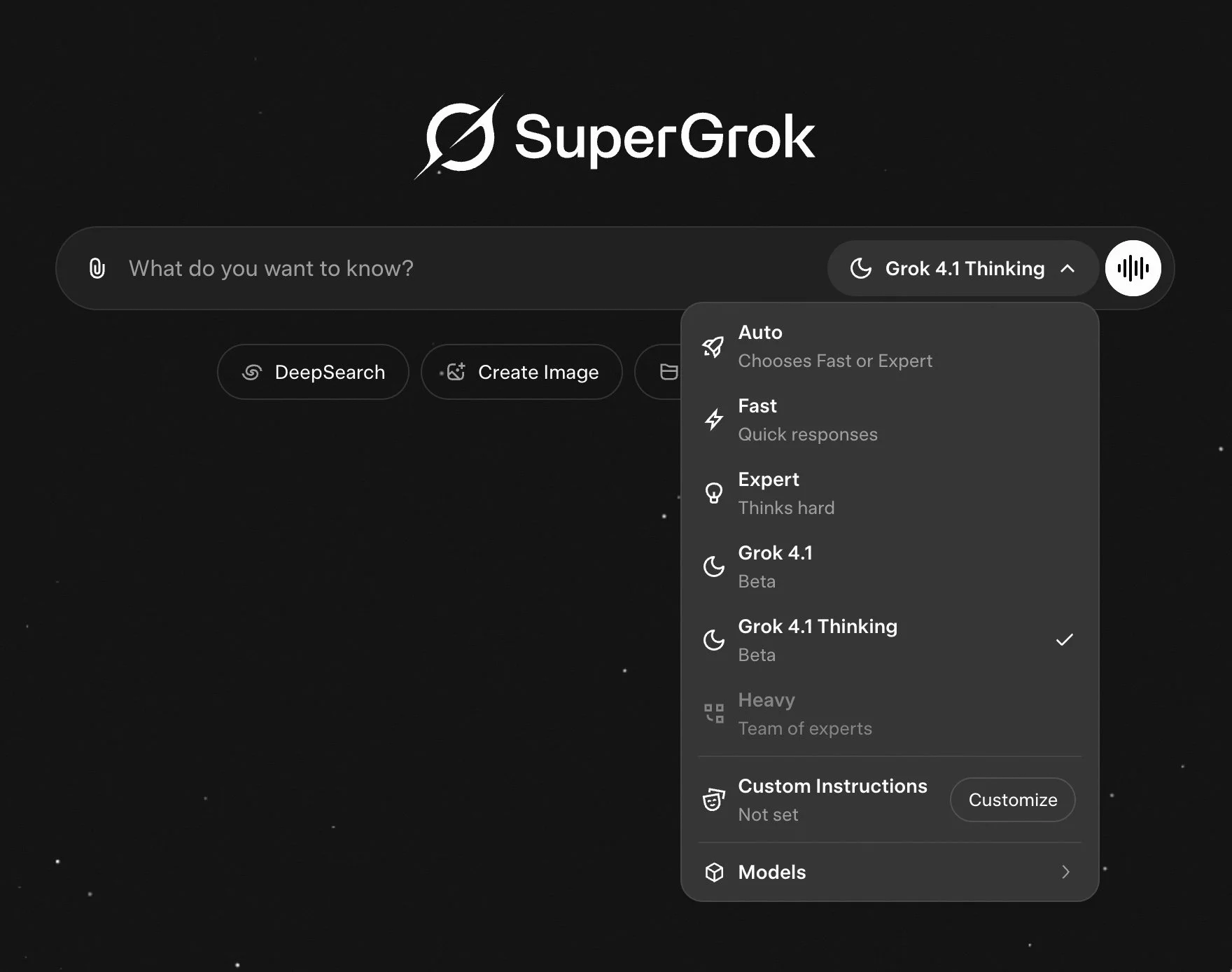
xAI Launches Grok 4.1: New "Thinking" Mode Hits 1483 Elo Score
xAI has formally introduced Grok 4.1, a new large language model family that includes a dedicated "Thinking" mode designed for complex reasoning tasks. The release, which recorded an initial Elo score of 1483 on the LMArena leaderboard, features a significantly reduced hallucination rate compared to previous versions and is now available to users on the X platform and Grok website.

Gemini 3.0, GPT-5.1 & Grok 4.1: New AI Tools Cut Research Time by 50%
November 2025 brings major updates to academic AI with the release of Gemini 3.0, Grok 4.1, and GPT-5.1. This report compares these general reasoning engines against specialised tools like Elicit and Perplexity, highlighting new features, pricing, and the shift toward hybrid workflows for faster evidence synthesis.
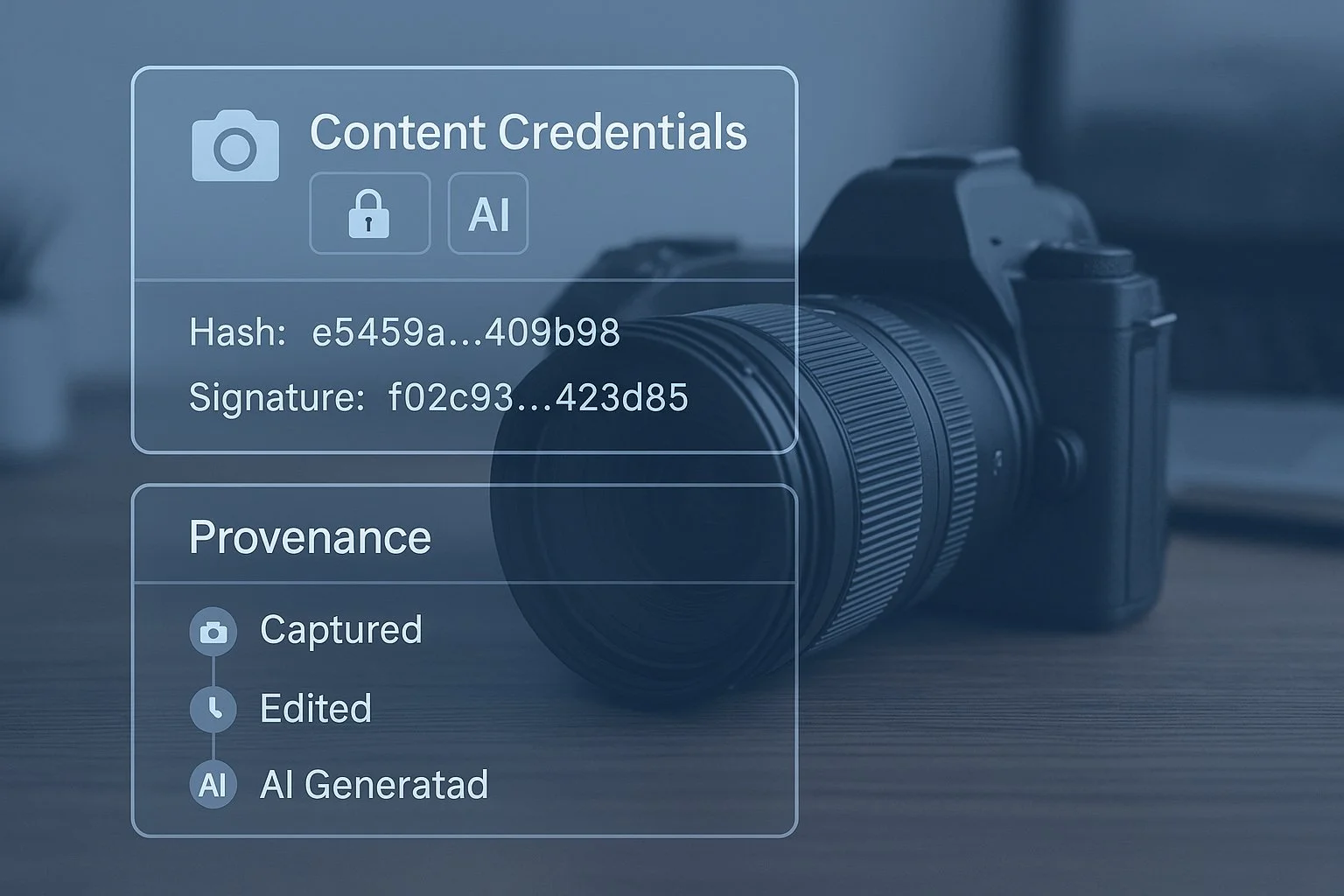
C2PA 2.2 in 2025: How a Global Provenance Standard Aims to Tackle AI Fakes
The Coalition for Content Provenance and Authenticity (C2PA) has emerged as a leading open standard for tracking how digital media is created and edited, from cameras like Leica’s M11-P to AI systems such as DALL·E and Firefly. Its latest specification, C2PA 2.2, released in May 2025, strengthens soft-binding and threat models while offering clearer implementation guidance for hardware and software vendors. Adoption is still uneven, but growing support from camera manufacturers, major platforms and AI developers suggests Content Credentials may play an increasingly visible role in how audiences assess online images, video and audio.

Reflection AI Raises $2B at $8B Valuation as It Prepares First Frontier Model for 2026
Reflection AI has raised $2 billion at an $8 billion valuation, marking one of the largest AI funding rounds of 2025. The company will use the capital to expand compute resources and train its first open-weights frontier model, expected in early 2026.

AI Researchers Advance Noise Injection Defences With New 2022–2025 Techniques
Noise-injection techniques are emerging as a key area of research for strengthening AI systems against adversarial attacks. Recent methods — including PNI, AdaNI, DiffPure, ADBM and MANI-Pure — combine adaptive noise, diffusion purification and feature-aware strategies to enhance both model robustness and clean accuracy.
AI Giants Release 3 Major Upgrades in One Week: GPT-5.1, Grok 4.1 and Gemini 3 Pro
Three leading AI developers — OpenAI, xAI and Google — released major model updates within a single week, introducing GPT-5.1, Grok 4.1 and Gemini 3 Pro. The upgrades emphasise personalisation, reliability and enhanced multimodal reasoning, marking a tightening race in frontier AI development.

Cloudflare Outage: 6-Hour Failure Disrupts ChatGPT, Claude and Millions of Websites Worldwide
Cloudflare suffered a major outage on 18 November 2025, triggering global 5xx errors and disrupting AI platforms such as ChatGPT and Claude, along with many mainstream websites. The incident, caused by a configuration error in Cloudflare’s bot-management system, lasted nearly six hours before full recovery.

AI Browsers Exposed: 4 Major Prompt-Injection Flaws Hit ChatGPT Atlas and Perplexity Comet
Researchers have uncovered four major prompt-injection attack vectors affecting both ChatGPT Atlas and Perplexity Comet, revealing systemic weaknesses across AI-powered browsers. Hidden webpage instructions, screenshots, malformed URLs and tainted agent memory can all trigger unintended actions. The findings indicate that architectural changes are needed as AI browsers become more autonomous.