
How ISO Standards Are Shaping the Potential $15.7T AI Economy in 2025

Image Credit: Jacky Lee
As artificial intelligence reshapes industries from healthcare to finance, international efforts to ensure its safe and ethical deployment are increasingly anchored in standards from the International Organization for Standardization (ISO) and the International Electrotechnical Commission (IEC).
Developed under their joint technical committee ISO/IEC JTC 1/SC 42, these standards have moved beyond theoretical frameworks to become operational requirements. With PwC’s often-cited benchmark estimating that AI could add up to US$15.7 trillion to global GDP by 2030, the need for structured governance tools has never been higher.
While voluntary, ISO’s portfolio is effectively becoming the "common language" for the global AI economy, providing the technical bedrock for regulations like the EU AI Act and bridging gaps between fragmented national policies.





















The Foundations: Why ISO Stepped In
Concerns about AI’s societal risks—bias, opacity, and security—prompted ISO and IEC to form SC 42 in 2017. Overseen by the United States (via ANSI) as the secretariat, SC 42 has evolved into a massive ecosystem involving dozens of national standards bodies and liaison partners like UNESCO and the European Commission.
Rather than focusing on narrow technical fixes, SC 42 adopts an "ecosystem" approach. By late 2025, the committee has published over 40 AI-related standards, creating a cohesive suite that covers everything from terminology to environmental sustainability.





















The Flagship: ISO/IEC 42001 (AI Management Systems)
At the heart of this ecosystem is ISO/IEC 42001:2023, the world’s first certifiable AI management system standard. Published in December 2023, it adapts the "Plan–Do–Check–Act" model familiar from ISO 9001 (Quality) and ISO 27001 (Security) to the specific challenges of AI, such as continuous learning and autonomy.
Industry Adoption Accelerates 2025 has been a watershed year for ISO/IEC 42001 adoption.
On March 25, 2025, Microsoft announced that Microsoft 365 Copilot and Copilot Chat had achieved ISO/IEC 42001:2023 certification following an independent audit by Mastermind (an accredited certification body). This marked a significant milestone, signaling to enterprise buyers that generative AI can be managed within a rigorous, auditable framework.
Following Microsoft's lead, certification numbers have ticked upward globally, with organizations using the standard to demonstrate "responsible AI" to regulators and clients.



















The 2025 Expansion: Impact, Audit, and Green AI
While 42001 sets the management structure, SC 42 expanded its toolkit significantly in 2025 with three critical new publications that address specific market needs:
1. ISO/IEC 42005:2025 – AI System Impact Assessment Published in April 2025, this standard provides the "how-to" for conducting AI System Impact Assessments (AISAs). It offers structured guidance on evaluating how an AI system affects individuals and society—covering human rights, fairness, and safety. With regulators worldwide demanding "impact assessments" for high-risk AI, 42005 provides a standardized methodology to satisfy these legal requirements.
2. ISO/IEC 42006:2025 – Requirements for Auditors Released in July 2025, this standard is the "trust anchor" for the entire system. It sets strict competency requirements for the bodies that audit companies against ISO/IEC 42001. It prevents "certification washing" by ensuring that auditors actually understand AI technical risks, solidifying the credibility of 42001 certificates.
3. ISO/IEC TR 20226:2025 – Environmental Sustainability Published in February 2025, this Technical Report addresses the growing concern over AI’s energy and water footprint. It provides a framework for measuring metrics like carbon intensity and resource utilization across the AI lifecycle. As "Green AI" moves from a buzzword to a procurement requirement, TR 20226 offers the metrics needed to back up sustainability claims.



















Bridging the Regulatory Gap
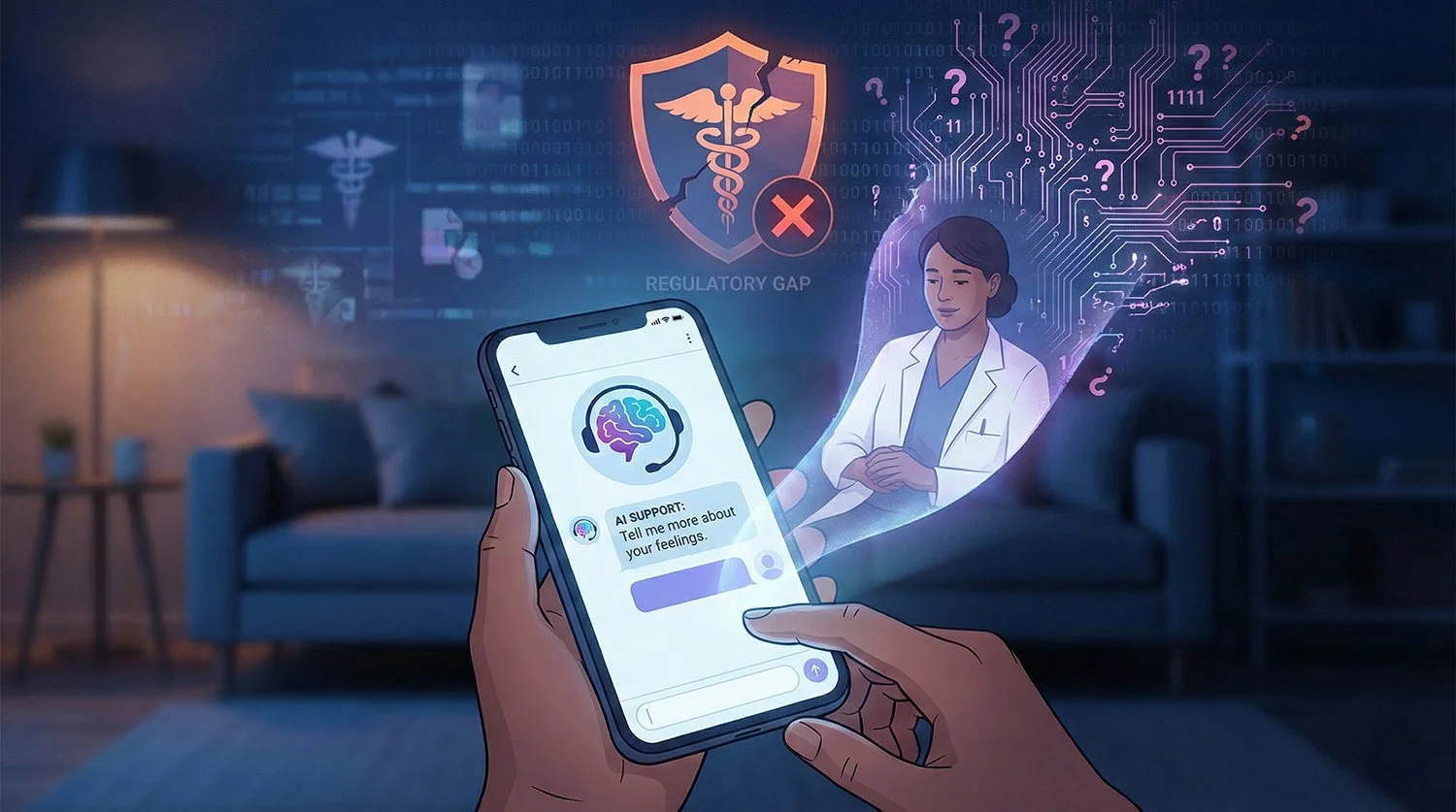
ISO standards are designed to work alongside, not replace, hard law.
EU AI Act: Fully enforceable as of August 2026, the Act relies on "harmonized standards" for compliance. ISO/IEC 42001 and 42005 are widely viewed as key tools for companies to demonstrate conformity with the EU's high-risk requirements.
NIST AI RMF: In the US, the NIST AI Risk Management Framework (AI RMF) remains the primary guidance. Crosswalks published by NIST show substantial alignment between the RMF and ISO/IEC 42001, allowing US companies to build a single governance program that satisfies both domestic guidance and international standards.













Looking Ahead: The Seoul Summit
The immediate focus for the global standards community is the International AI Standards Summit, scheduled for December 2–3, 2025, in Seoul, South Korea.
Hosted by the Korean Agency for Technology and Standards (KATS) in partnership with ISO, IEC, and the ITU, the summit will bring together policymakers and industry leaders to align these technical standards with high-level policy goals, such as the UN Global Digital Compact. Key topics will include ensuring standards are inclusive of the Global South and preventing fragmented regulations from stalling digital trade.












Source: PwC, Microsoft Copilot Blog, CMS, R&C Magazine EU Standards, IISD, UNESCO, NIST, Wikipedia, UN, WITA, WTO, ISO, Financial Times, ISACA, FairNow, CADE, SAI Global









 TheDayAfterAI News
We are a leading AI-focused digital news platform, combining AI-generated reporting with human editorial oversight. By aggregating and synthesizing the latest developments in AI — spanning innovation, technology, ethics, policy and business — we deliver timely, accurate and thought-provoking content.