
Yann LeCun Ends 12-Year Meta Run to Launch New AI Startup
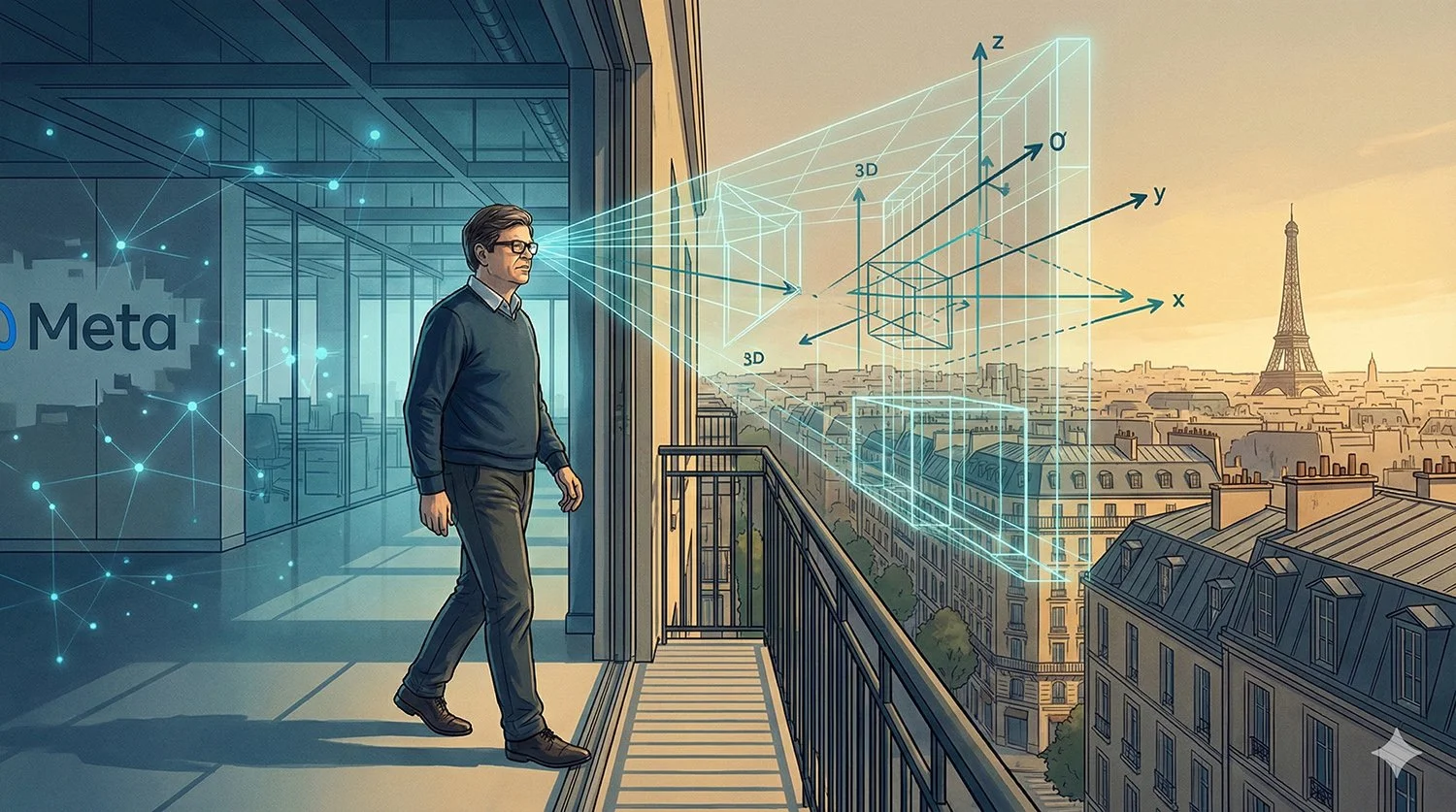
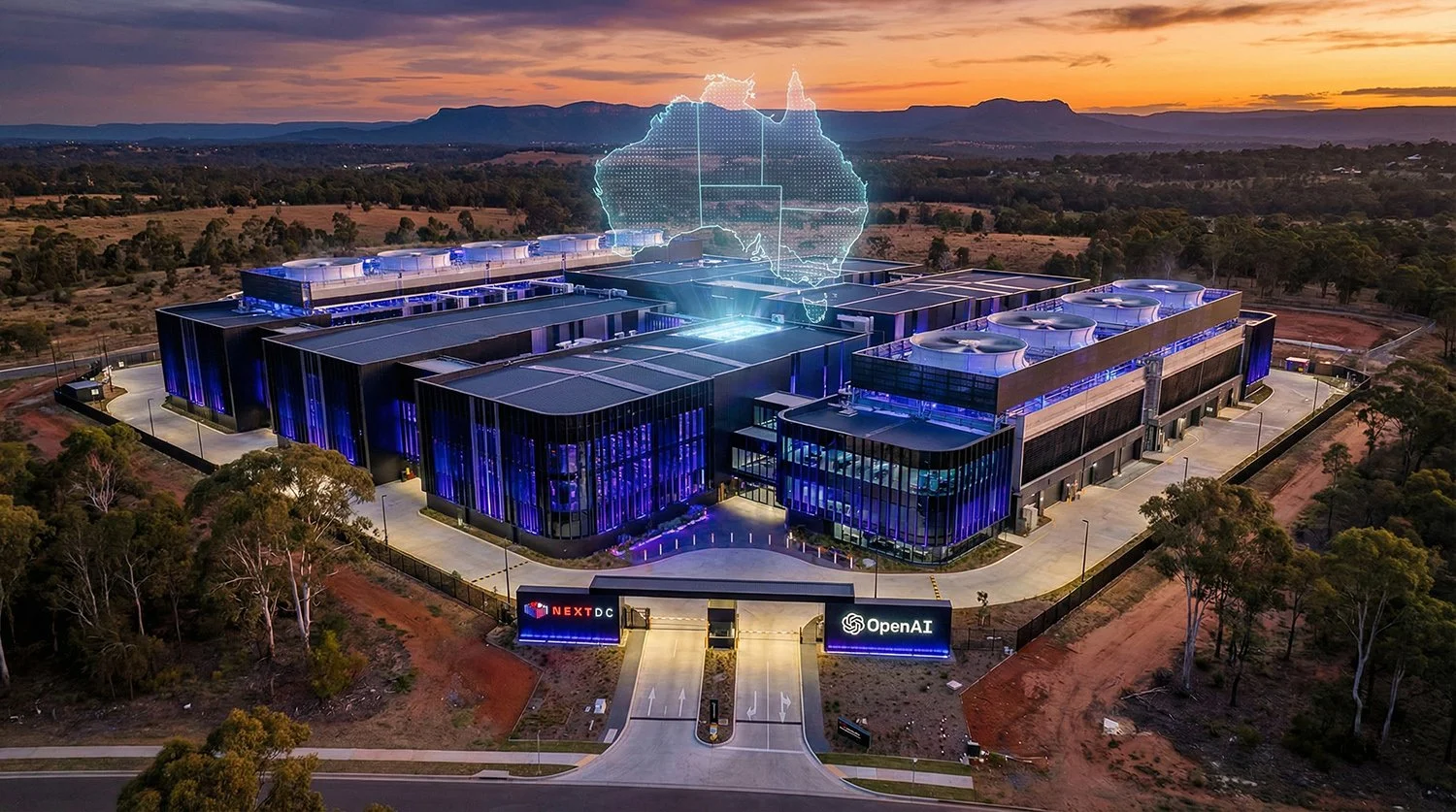
AI-generated Image for Illustration Only (Credit: Jacky Lee)
Yann LeCun, the Turing Award-winning French-American computer scientist and a central architect of modern deep learning, says he will leave Meta Platforms at the end of 2025 to launch a new AI research startup focused on what he calls “advanced machine intelligence”, including systems that can build internal models of the physical world. LeCun announced the plan in a LinkedIn post on November 19, 2025, and later clarified that Meta will be a partner to the venture but will not invest in it.
The move would end a 12-year run at the company where LeCun helped found and lead Meta’s Fundamental AI Research organization (FAIR) and served as chief AI scientist. His next project is expected to be based in Paris and to pursue AI that can reason, plan, and maintain persistent memory while learning from rich sensory data rather than relying primarily on text.





















A Veteran of Deep Learning’s Early Breakthroughs
LeCun’s career spans foundational academic work and influential industry leadership. Born in 1960, he earned his doctorate from Université Pierre et Marie Curie and went on to develop early convolutional neural network systems such as LeNet, which helped establish the technical basis for modern computer vision. He joined New York University in 2003 and later became founding director of NYU’s Center for Data Science around 2012–2013, before stepping down after taking his Meta role.
In 2018, LeCun shared the ACM Turing Award with Geoffrey Hinton and Yoshua Bengio for their contributions to deep learning, cementing his status as one of the field’s most influential figures.













Meta’s Superintelligence Pivot
LeCun’s departure comes during a broader reshaping of Meta’s AI priorities. In mid-2025, Meta invested about USD 14.3 billion in Scale AI in a deal valuing the data-labeling firm at roughly USD 29 billion and brought Scale’s CEO, Alexandr Wang, into a prominent role in Meta’s superintelligence efforts.
The company has also been reorganizing teams and reducing headcount in parts of its AI unit, including reports of approximately 600 AI-related job cuts this fall, even as it continues to pour resources into next-generation model development.
Leadership churn has added to the sense of transition. Joelle Pineau, who led FAIR, announced earlier in 2025 that she would depart Meta at the end of May, and Cohere later hired her as its chief AI officer in August 2025.














World Models as an Alternative Path
LeCun has long argued that large language models alone are unlikely to deliver robust, human-level machine intelligence. His new startup is positioned to pursue architectures that learn from video, spatial structure, and other real-world signals to build predictive internal representations — an approach often described as “world models.” In his public statements about the new venture, LeCun framed this direction as a route toward AI capable of deeper reasoning, planning, and understanding of physical environments.
Meta’s decision to partner with — but not invest in — the new company suggests that the project will operate with a degree of independence from Meta’s commercial priorities, while still maintaining research ties.
















An Emerging Ecosystem of “World-centric” AI
LeCun’s planned company enters a growing landscape of efforts aimed at moving beyond text-first intelligence. In late 2024, Google DeepMind introduced Genie 2, a large-scale world model designed to generate diverse interactive 3D environments from video training data. DeepMind then followed with Genie 3 in August 2025, continuing its push toward richer and more general interactive simulations.
Another prominent signal came in September 2024, when Fei-Fei Li and colleagues launched World Labs with USD 230 million in funding to develop “spatial intelligence” — AI systems built to understand and operate in three-dimensional reality.
Meanwhile, OpenAI’s Sora was first revealed in early 2024 and later made broadly available in December 2024, highlighting rapid progress in video generation even as debates continue over how far such models can go toward causal, planning-oriented intelligence.












What the Shift May Signal
For Meta, losing one of the most visible champions of long-horizon, fundamental AI research could raise questions about the balance between open-ended exploration and product-driven superintelligence competition. For the broader field, LeCun’s next step underscores a diversification of research bets as leading labs and startups chase models that can reason about the physical world rather than only predict or emulate patterns in text and images.
LeCun has indicated he will share more details about the startup in the coming months. If the venture succeeds in turning world-model ideas into scalable, reliable systems, it could become a major European anchor for the next wave of foundational AI research.
































 TheDayAfterAI News
We are a leading AI-focused digital news platform, combining AI-generated reporting with human editorial oversight. By aggregating and synthesizing the latest developments in AI — spanning innovation, technology, ethics, policy and business — we deliver timely, accurate and thought-provoking content.