
Shield AI’s $5.3B X-BAT Jet: AI-Piloted VTOL Aircraft Targets 2026 Flight Trials
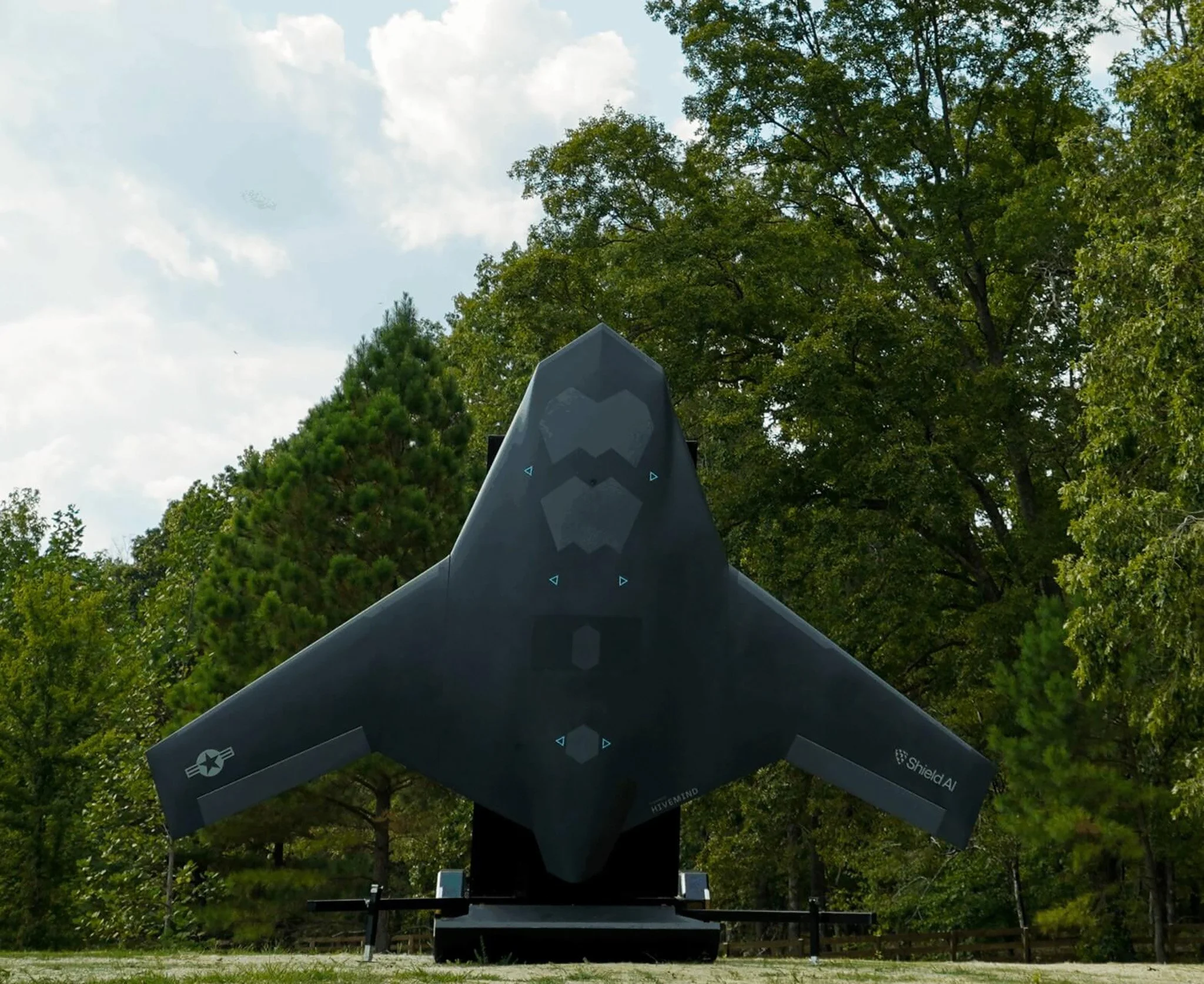
Image Source: Shield AI
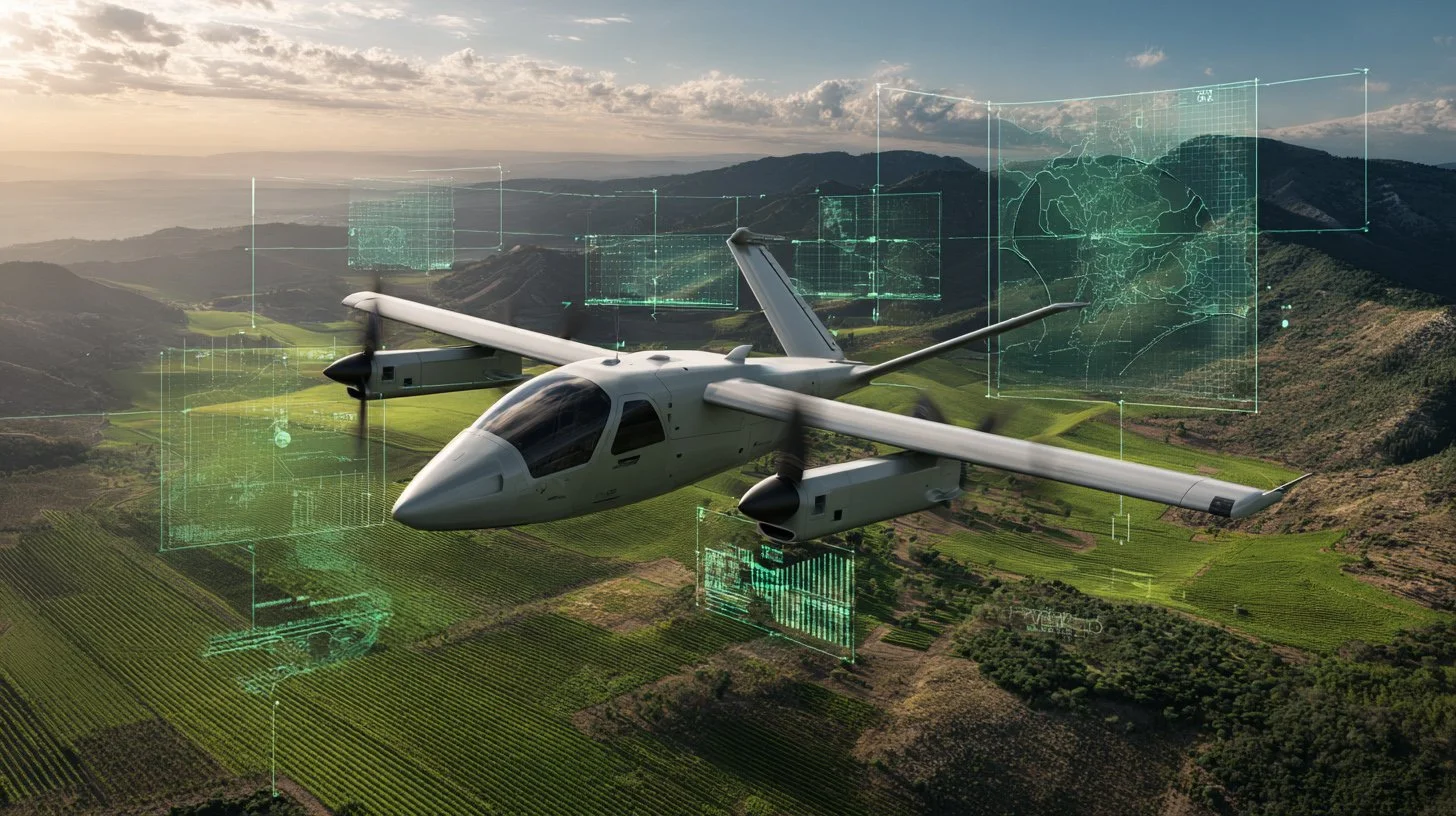
US defence technology firm Shield AI has introduced the X BAT, a vertical takeoff and landing fighter jet fully piloted by artificial intelligence, marking a step towards runway free air operations in high threat environments. The announcement, reported on October 22 in Washington DC before military leaders and industry figures, highlights the growing role of AI in enabling autonomous combat systems that reduce risks to human pilots.
The X BAT emerges from Shield AIs decade long push into mission autonomy, co founded in 2015 by brothers Ryan Tseng, a technology entrepreneur, and Brandon Tseng, a former US Navy SEAL. Now valued at 5.3 billion US dollars after raising USD 240 million in March this year, the San Diego based organisation has secured around USD 1.3 billion in total funding from investors including Andreessen Horowitz, L3Harris and Hanwha.
Its Hivemind software, already deployed on smaller drones like the V BAT, forms the backbone of this new platform, allowing it to navigate and engage targets without human input or GPS signals.






















The Unveiling and Development Path
Shield AI chose a subdued event in the US capital for the reveal, showcasing a scale model of the tailless, stealth oriented design to an audience that included Air Force and Navy officials. The timing aligns with the Pentagon's Replicator initiative, which aims to field multiple thousands of attritable autonomous systems by August 2025, though progress has faced scrutiny over supply chain hurdles and delivery timelines. Brandon Tseng, the company's president, told attendees that the X BAT addresses a core vulnerability in modern air forces: reliance on fixed runways, which adversaries can easily target.
Development began as an internal effort to scale Hivemind beyond tactical unmanned aerial systems, drawing on lessons from real world deployments in the Middle East and Ukraine. Shield AIs engineers integrated the AI pilot with proven hardware, including an F 16 class afterburning engine from GE Aerospace or Pratt and Whitney, paired with thrust vectoring nozzles. The first vertical takeoff trials are slated for autumn 2026, with full system testing in 2028 and production partnerships to follow, positioning the jet for integration into US and allied fleets by the early 2030s.
This progression reflects Shield AIs broader evolution. From its start with indoor drones for urban search and rescue, the firm pivoted to military applications amid rising demand for autonomy in jammed environments. By 2025, Hivemind had participated in simulated dogfights and live tests via the DARPA Air Combat Evolution programme, which informed the X BATs collaborative tactics.

























AI at the Core: Hivemind's Role in Autonomy
Central to the X BAT is Hivemind, Shield AIs edge computing based autonomy stack, which acts as an onboard pilot capable of real time decision making. Unlike traditional remote controlled drones, Hivemind processes sensor data locally to execute missions in communications denied zones, using machine learning models trained on vast flight datasets for adaptive behaviours.
The system excels in networked operations, where multiple X BATs can form ad hoc teams for strikes or reconnaissance, sharing intent without constant links. It has powered fully autonomous intelligence, surveillance and reconnaissance flights on platforms like the General Atomics MQ 20 Avenger during multi ship coordination tests at exercises such as Orange Flag, as well as separate demonstrations on the Kratos MQM 178 Firejet. For the X BAT, Hivemind is designed for dynamic teaming with manned jets, such as escorting F 35s while engaging threats independently, a capability aligned with the Air Force's Collaborative Combat Aircraft programme.
Experts at the Centre for a New American Security note that such AI reduces cognitive overload on operators, allowing focus on strategy over micromanagement. Yet, certification challenges remain, with Hivemind incorporating runtime assurance components per ASTM F3269 21 standards to monitor and intervene in anomalous behaviours, ensuring compliance with military airworthiness rules.

























Design Features and Operational Reach
The X BAT measures 26 feet in length with a 39 foot wingspan, fitting the Group 5 unmanned aerial system category with a takeoff weight exceeding 1,320 pounds. Its flying wing shape minimises radar cross section, while folding wings allow three units to occupy the space of one conventional fighter on a carrier deck or trailer. Launch occurs via upright launchers on mobile trailers five per aircraft for sustained ops or from naval vessels, reducing reliance on airfields or tankers in forward areas.
Performance includes a service ceiling above 50,000 feet, supersonic speeds and a range over 2,000 nautical miles with full payload. Internal bays hold air to air and air to surface missiles such as AIM 120 class weapons, with external hardpoints for additional ordnance, supporting roles from precision strikes to electronic warfare jamming. At an estimated 27 million US dollars per unit similar to other CCA drones the design prioritises affordability, making it suitable for high volume production and attritable use in swarm tactics.




























Strategic Context: Lessons from Ukraine and the Middle East
The X BAT responds directly to battlefield shifts exposed in Ukraine, where low cost drones have overwhelmed traditional defences, and in the Middle East, where Iranian backed groups deploy swarms against US assets. US officials, including Deputy Defence Secretary Kathleen Hicks, have cited these conflicts as catalysts for Replicator, which by September 2025 transitioned initial drone swarms to field units, though delivery timelines face ongoing scrutiny.
In this landscape, the X BAT fits as a "loyal wingman", augmenting manned fighters in peer contests with China or Russia. The Air Force's CCA programme, selecting prototypes from Anduril and others, already incorporates Hivemind, underscoring Shield AIs alignment with Pentagon priorities for dispersed, resilient airpower. Analysts at the Centre for Strategic and International Studies argue this counters adversaries' mass production edges, as seen in Ukraine's USD 2.5 million drone forecast for 2025, by leveraging AI for precision over quantity alone.


























Implications and Future Trajectories
While the X BAT promises to simplify kill chains and enhance deterrence through persistent presence, third party observers caution on ethical and technical fronts. Reports from the United Nations and International Committee of the Red Cross highlight risks of AI escalation in autonomous targeting, urging robust human oversight protocols. Economically, its lower lifecycle costs could free budgets for broader fleet modernisation, but scaling production demands new manufacturing paradigms, akin to those accelerating under Replicator 2's counter drone focus.
Looking ahead, trends point to deeper AI integration across domains, with swarms of X BAT like assets coordinating via mesh networks. Shield AIs open architecture invites third party software, potentially spurring an ecosystem of autonomy add ons. As Gary Steele, the CEO, put it in a recent CNBC segment, the goal is systems that "fight the fights that never happen", buying time for diplomacy in an era where air superiority hinges on intelligent, expendable machines.
Shield AI plans further disclosures on partners and testing milestones in coming months, as the US military navigates this pivot towards AI led warfare.


































 TheDayAfterAI News
We are a leading AI-focused digital news platform, combining AI-generated reporting with human editorial oversight. By aggregating and synthesizing the latest developments in AI — spanning innovation, technology, ethics, policy and business — we deliver timely, accurate and thought-provoking content.