
Runway Introduces Aleph AI Model for Video Editing
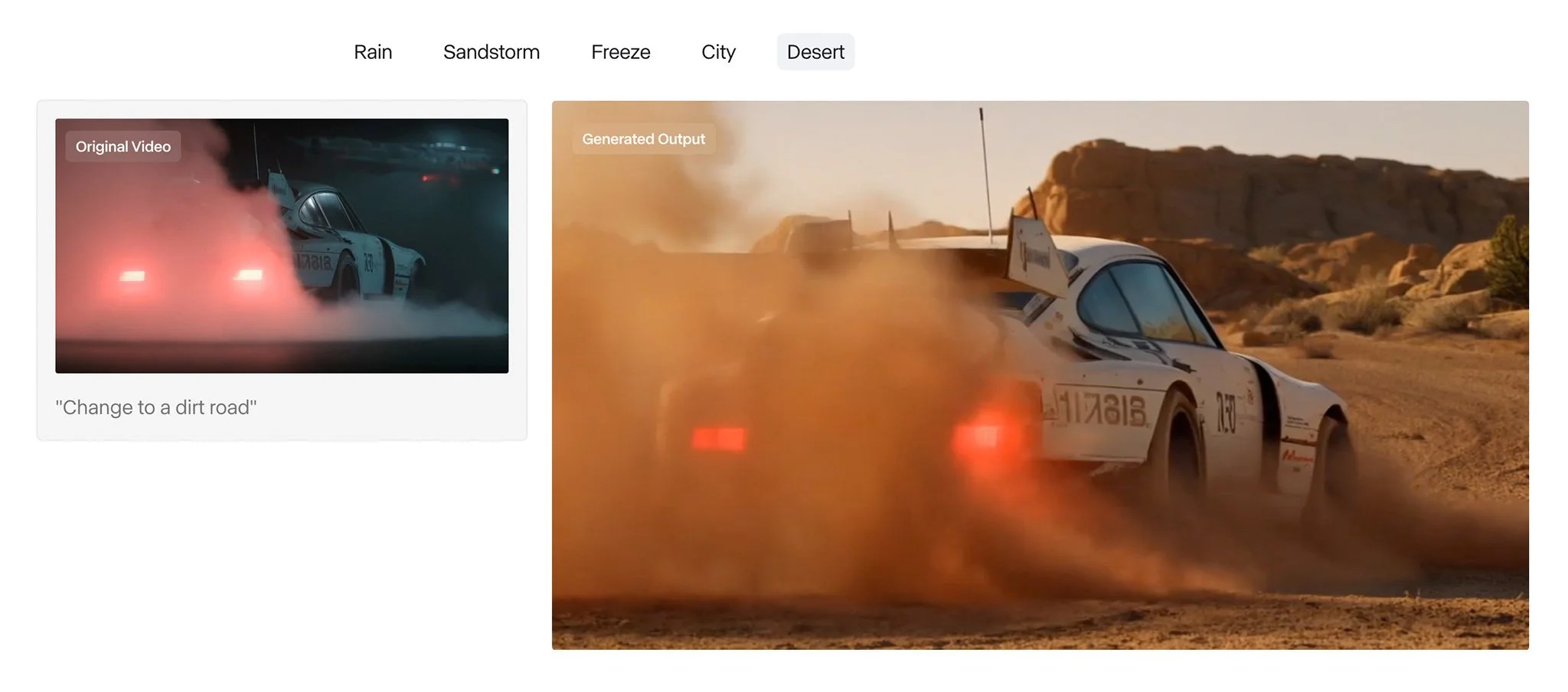
Image Source: Runway
U.S.-based artificial intelligence company Runway launched Aleph, a new AI model designed to edit and transform existing video footage through text-based prompts, marking an advancement in generative AI applications for visual media.
The model, integrated into Runway's platform, enables users to perform tasks such as generating alternative camera angles, removing or adding objects, adjusting lighting, and applying style changes to pre-recorded videos. Developed in New York, Aleph operates as an "in-context" system, meaning it analyzes input footage to produce modifications that maintain consistency with the original motion and structure, without requiring reshooting or traditional editing software.
Runway, which charges for access via subscription tiers, has begun rolling out Aleph to users, with outputs currently limited to short clips of up to five seconds in some cases, though longer durations are under development. The tool has been demonstrated in user-shared examples on social platforms, including transformations of everyday smartphone videos into scenes with altered environments, such as turning a static shot into one with dynamic weather effects.






















Features and Technical Capabilities
Aleph's core functionality revolves around multi-task visual generation, allowing a single model to handle diverse edits prompted by natural language descriptions. For instance, users can input commands to simulate camera movements like pans or zooms, or replace elements such as clothing or backgrounds while preserving the subject's actions.
The system supports real-time previews in Runway's chat interface, where prompts guide the AI to refine footage for applications in advertising, gaming, and e-commerce. Early tests indicate variable output quality, with some results showing realistic integration of effects, while others exhibit inconsistencies in textures or motion, depending on the source material and prompt complexity.
























Company Background and Development Context
Runway, founded in 2018 by Cristóbal Valenzuela, Alejandro Matamala, and Anastasis Germanidis, originated from research into image and video generation technologies. The company, headquartered in New York, initially focused on making AI tools accessible to artists and creators, evolving from collaborations with academic researchers to commercial products used by major studios such as Lionsgate, with reports of adoption by entities like Disney.
Aleph builds on Runway's prior models, such as Gen-4, which emphasized general world simulations for video creation. The development stems from a push to address bottlenecks in post-production workflows, where traditional methods often require extensive manual labor and specialized skills. Runway's approach incorporates user feedback from its Creative Partners Program, aiming to bridge gaps between AI research and practical creative needs.

























Industry Impact and Adoption
The introduction of Aleph reflects broader shifts in the visual effects (VFX) sector, where AI tools have the potential to reduce reliance on time-intensive processes like rotoscoping and keyframing in certain tasks. Industry observers note that such models lower barriers for independent filmmakers and small teams, potentially cutting production costs by enabling quick iterations without large crews. However, adoption varies; advertising agencies have integrated similar AI tools more rapidly due to demands for rapid content turnaround, while Hollywood studios approach it cautiously, using it selectively for VFX enhancements amid concerns over quality and ethics.
Critics within the VFX community express concerns over job displacement for specialized roles, though proponents argue it shifts focus toward creative oversight rather than technical execution. Runway's tool has sparked discussions on platforms like X, where users share experiments, highlighting both its potential for democratizing filmmaking and limitations in achieving consistent, high-fidelity results.


























Future Trends in AI-Driven Video Production
Looking ahead, AI integration in filmmaking is expected to emphasize automation in editing, with tools like Aleph potentially evolving toward real-time processing and longer-form content generation. Emerging trends include adaptive storytelling, where AI analyzes scripts to suggest visuals, and compatibility with formats such as virtual reality and 360-degree video, though these remain developmental.
Ethical considerations, including data privacy in model training and the authenticity of AI-altered footage, are gaining prominence as these technologies scale. Analysts predict a hybrid future, blending AI with human input to enhance efficiency, though widespread industry transformation will depend on improvements in output reliability and regulatory frameworks.

























Source: RunwayML, CNet, MLQ, No Film School, Blare Media, Deloitte, arXiv








 TheDayAfterAI News
We are a leading AI-focused digital news platform, combining AI-generated reporting with human editorial oversight. By aggregating and synthesizing the latest developments in AI — spanning innovation, technology, ethics, policy and business — we deliver timely, accurate and thought-provoking content.