
AI’s 2026 Reality Check: Australian Economists Weigh Boom vs. Bubble

Image Credit: Yassine Ait Tahit | Splash
Australian economists are increasingly treating artificial intelligence as a first order macroeconomic story for 2026, not just a tech story. In an ABC analysis published on 31 December 2025, business reporter Daniel Ziffer spoke with five economists who pointed to AI shaping capital markets, business investment, productivity expectations, and the risk that valuations run ahead of real world payoffs.
























What The Economists Are Flagging
The ABC piece frames 2026 around four linked forces, with AI featuring in two of them: the rising cost and scale of an AI infrastructure build out, plus the way AI shifts how work gets done and what customers expect from products and services. It also sets AI alongside interest rate uncertainty and global trade settings, which matter for Australia through commodity demand and financial market conditions.
One of the most market relevant questions raised is whether the current enthusiasm around AI priced into equities resembles a bubble, or a cycle with durable cash flows behind it. The ABC reports Betashares chief economist David Bassanese highlighting that bubble question as central for markets in 2026.


























The Macro Mechanics Behind The Debate
From a global economy lens, the core issue is timing. Large scale AI spending can lift measured investment in the near term, but productivity and earnings gains often lag because businesses still need to integrate new tools into real workflows, retrain staff, redesign processes, and build supporting software. Axios, in a 1 January 2026 outlook piece, similarly reports that 2026 is likely to be a prove it year, with more pressure on organisations to show real ROI rather than pilots and experimentation.
That matters for markets because the current AI cycle is being funded through massive capital expenditure in data centres, chips, networking gear, and power infrastructure. If the revenue uplift does not arrive quickly enough, investors tend to differentiate between companies with credible monetisation and those simply spending heavily. Goldman Sachs Research describes exactly this dynamic, noting widening dispersion among large AI hyperscalers as investors reward clearer links between capex and revenues and rotate away from debt funded spenders with pressured earnings growth.
























The Australian Constraints
The ABC notes that Australia is not as reliant on direct US trade as some economies, but its growth is still tied to global conditions via commodity exports such as iron ore, gold, and wheat. That is one pathway through which global AI driven capex cycles, and any boom bust dynamics, can wash into Australia.
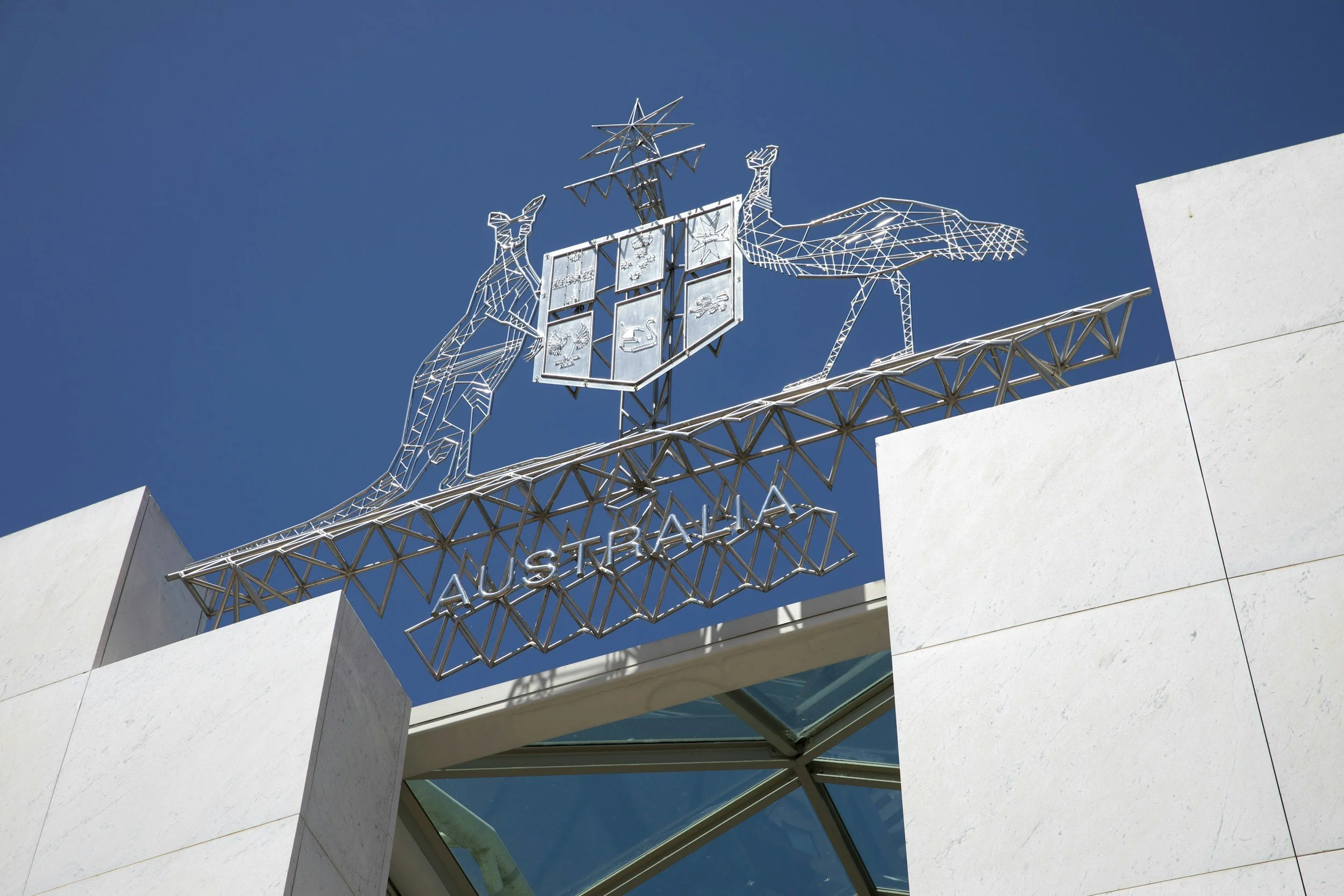
A second pathway is domestic infrastructure. Australia is actively positioning itself as a destination for AI era data centre investment, and government policy is now explicitly linking AI ambitions to “sustainable data centre development” and skills. The Commonwealth’s National AI Plan states Australia attracted about $10 billion in data centre investment in 2024, second only to the United States, and highlights a surge in AI skilled job postings over recent years.
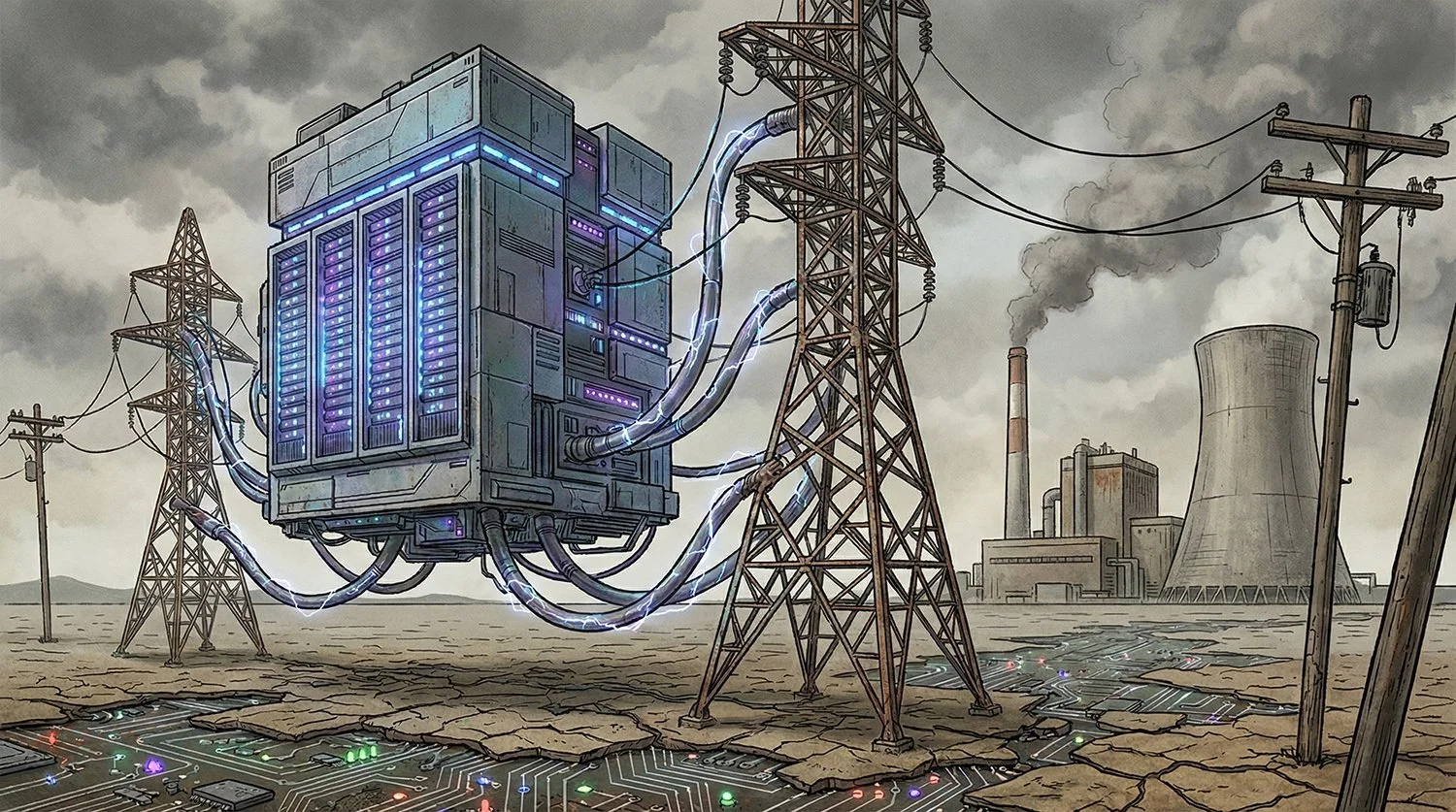
A third pathway is physical limits, especially energy and water. ABC reporting on data centres and AI in December 2025 highlights the growing policy focus on whether expansion can be supported without crowding out other users or relying on drinking water for cooling, alongside broader debate about grid capacity and where facilities should be located.


















Other Recent Signals
The ABC economists’ concerns about the cost of the AI build out align with big capex forecasts elsewhere. Goldman Sachs Research reported on 18 December 2025 that Wall Street consensus estimates for 2026 capital spending by major AI hyperscalers had climbed to $527 billion, up from $465 billion earlier in the year, while also warning that the timing of any capex slowdown can be a valuation risk for infrastructure heavy beneficiaries.
At the same time, the ROI theme in the ABC piece matches the tone of recent industry commentary. Axios reports multiple executives and analysts arguing that better models alone do not instantly translate into economy wide automation, and that boards are increasingly focused on dollars and productivity, not token counts or pilots.



























License This Article
















 TheDayAfterAI News
We are a leading AI-focused digital news platform, combining AI-generated reporting with human editorial oversight. By aggregating and synthesizing the latest developments in AI — spanning innovation, technology, ethics, policy and business — we deliver timely, accurate and thought-provoking content.