
Withings Showcases AI-Powered Omnia Conceptual Mirror at CES 2025
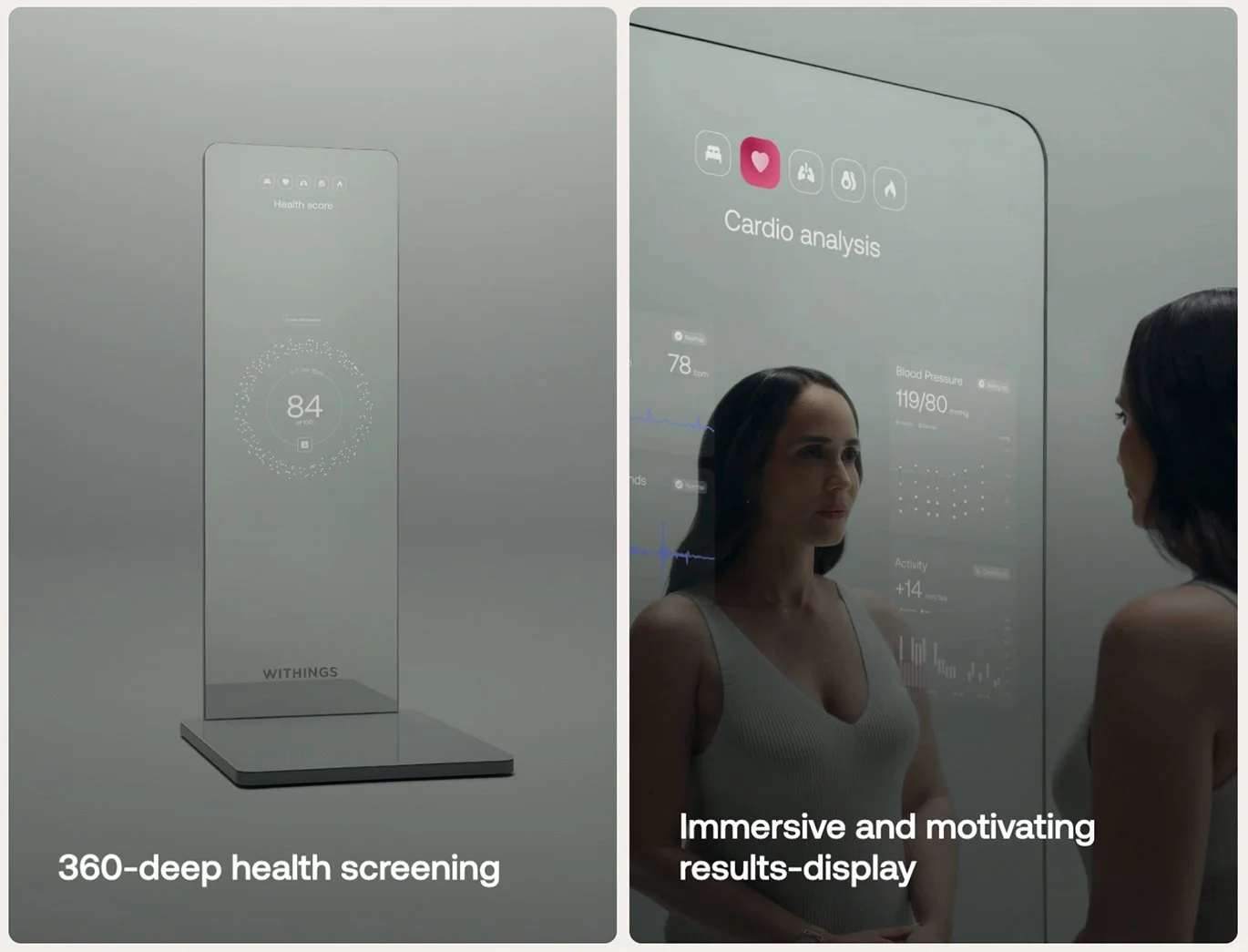
Image Source: Withings
French health technology company Withings unveiled its Omnia conceptual smart mirror at the Consumer Electronics Show (CES) in Las Vegas, an AI-integrated device designed as a visionary showcase to demonstrate 360-degree body scans for tracking metrics including weight, heart health and metabolic indicators. The full-length mirror, which uses artificial intelligence to process and display user data, is positioned as a concept to illustrate potential future health monitoring embedded in routine bathroom use, serving as a central hub without relying solely on wearables.
The Omnia features a base with embedded sensors that users step on for scans, capturing body composition details such as muscle-to-fat ratio, visceral fat, water mass and bone mass, alongside weight measured via an integrated scale. Heart health assessments include electrocardiogram (ECG) readings for atrial fibrillation detection, overnight and resting heart rates, irregular rhythm notifications, vascular age via pulse wave velocity and blood pressure. Lung health is evaluated through unspecified scanning methods, while additional data on sleep quality, activity levels and nutrition is pulled from connected Withings devices like smartwatches, blood pressure monitors and sleep trackers. The AI component analyzes this multisource data to deliver personalized insights, visualizations and voice-guided feedback, with an empathetic assistant offering real-time motivation and recommendations, such as increasing activity or consulting a doctor. Data syncs across the Withings app ecosystem, enabling features like asynchronous cardiologist reviews through the Cardio Check-Up service, where board-certified specialists assess ECG and contextual health information within 24 hours. Withings has stated that Omnia is a concept product tailored for CES, with no plans to sell it in its current form and no announced release date or pricing; it is not intended for medical diagnosis but to provide insights that may prompt professional consultation, subject to regulatory clearances in each market.
Withings Founder and President Eric Carreel said the device embodies the company's vision of interconnected health data to transform personal management. "By seamlessly analyzing a wide array of vital health parameters, OMNIA provides an unparalleled understanding of how the body’s systems interact" Carreel said in a statement.


























Background and Development
Withings, established in 2008 and based in Issy-les-Moulineaux near Paris, specializes in connected health devices such as blood pressure monitors and activity trackers. The company was acquired by Nokia in 2016 for 170 million euros to bolster its digital health unit but was repurchased by co-founder Eric Carreel in 2018 to regain independence and focus on consumer-oriented innovations under stricter European data regulations.
Omnia's creation reflects increased interest in at-home health tools post-COVID-19, which exposed gaps in remote monitoring, combined with progress in AI for data interpretation and sensor technologies for non-invasive scans. It extends Withings' existing lineup by centralizing data from devices like the Body Scan scale and ScanWatch, responding to user needs for unified tracking rather than fragmented apps. The mirror employs multisource technology, including light-based sensors for body mapping, to track changes longitudinally. As a CES-specific showcase, it highlights Withings' ongoing innovations without committing to a standalone product launch.



















Analysis of Impact
Omnia could illustrate advances in AI-driven preventive health by offering daily holistic overviews, potentially aiding early detection of issues like cardiovascular irregularities or metabolic imbalances through trend analysis and AI insights. Advantages include seamless integration into habits, reducing reliance on multiple gadgets, and facilitating telehealth by sharing data with professionals for timely reviews. This might empower users to adjust lifestyles, such as diet or exercise, based on personalized voice guidance.
Drawbacks involve potential inaccuracies in home-based readings compared to clinical standards, which could result in misleading alerts or missed conditions, as seen in user feedback on Withings' current products regarding inconsistent metrics like heart rate or weight. Privacy issues stem from aggregating sensitive data, despite Withings' emphasis on secure handling, raising risks of breaches or unauthorized access. As a concept without market plans, it faces the possibility of remaining unrealized, echoing past smart mirror demonstrations that did not progress to consumer availability. Accessibility could exclude those with physical limitations or without compatible devices. Third-party observers note it highlights tech-driven health equity gaps, where advanced concepts benefit affluent users in theory, while regulatory hurdles, like FDA approvals, would be necessary for any future iterations.
























Future Trends
AI-enhanced health mirrors like Omnia indicate a growing sector for contactless, home-based diagnostics amid rising chronic illnesses and aging demographics. Competitors such as NuraLogix with its Anura MagicMirror for facial blood flow analysis suggest a move toward voice-interactive systems and predictive modeling for risks like diabetes. Analysts anticipate evolution into augmented telehealth platforms, but ethical concerns over data use and algorithmic bias must be addressed to ensure devices supplement, not supplant, medical expertise. Withings plans to integrate select Omnia elements, including AI guidance and clinician reviews, into its app ecosystem later in 2025, potentially bringing aspects of the concept to users without the full mirror hardware.


















Source: CNet, Tech Radar, The Verge, Tech Crunch, PC Mag, Weighing Review, Nokia, Forbes








 TheDayAfterAI News
We are a leading AI-focused digital news platform, combining AI-generated reporting with human editorial oversight. By aggregating and synthesizing the latest developments in AI — spanning innovation, technology, ethics, policy and business — we deliver timely, accurate and thought-provoking content.