
Warner Strikes AI Deal: Suno Hits USD 2.45B Valuation & Buys Songkick

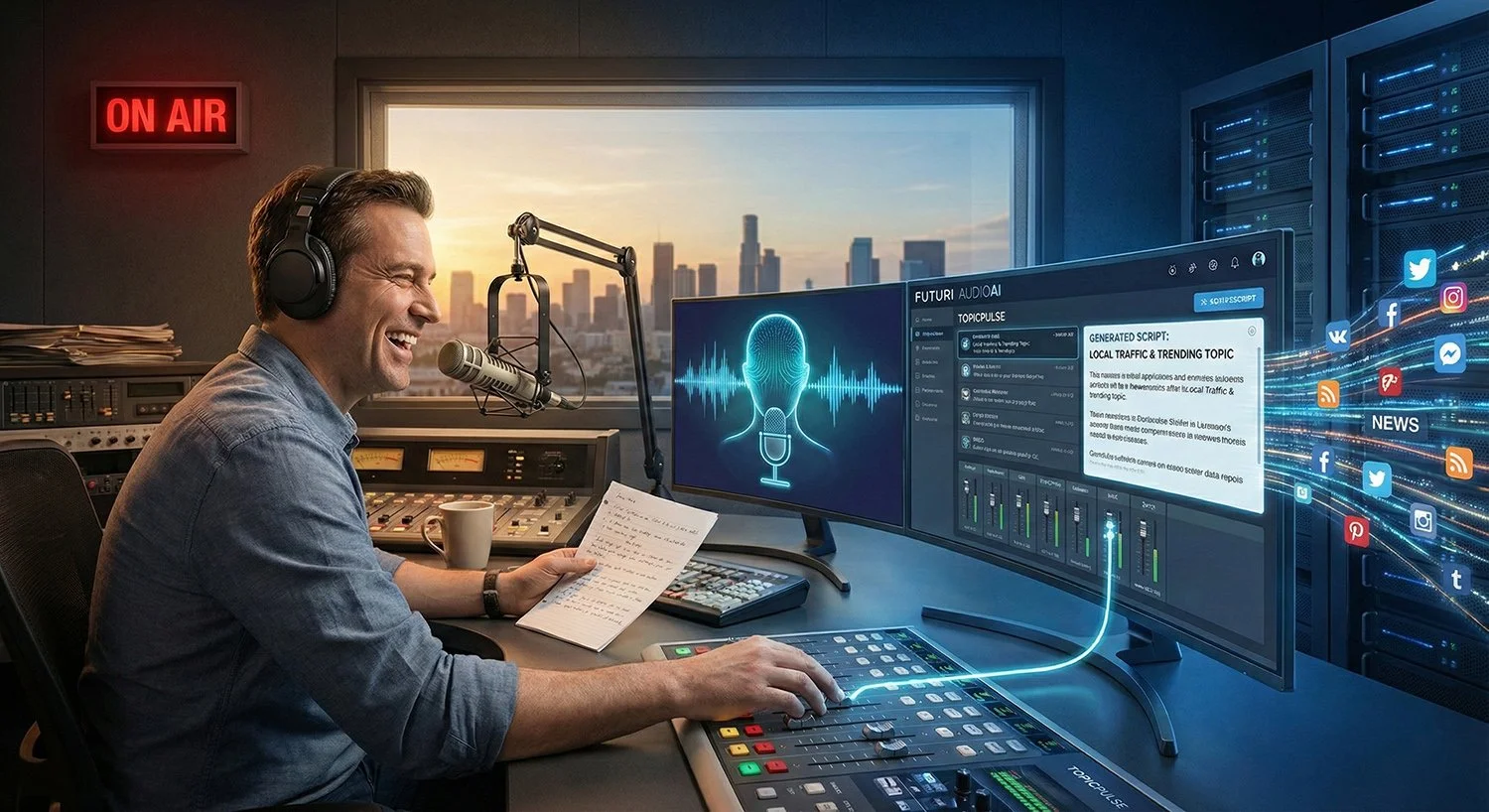
AI-generated Image (Credit: Jacky Lee)
Warner Music Group, one of the world’s three biggest record labels, has struck a deal with artificial intelligence music startup Suno to settle a high-profile copyright lawsuit and collaborate on licensed tools for generating songs. The agreement, announced on 25 November 2025, lets users of Suno’s platform create tracks using the voices, names, likenesses and compositions of Warner artists who choose to opt in.
Artists and songwriters will retain full control over whether and how their identity and works are used in AI-generated music, with participation strictly voluntary. The move marks a shift from courtroom confrontation to commercial partnership in the fast-evolving market for AI-driven music.
Financial terms of the settlement were not disclosed. People familiar with recent AI copyright agreements have suggested similar music deals can reach tens of millions of dollars, but the precise value of the Warner–Suno arrangement remains confidential.



















From Litigation to Licensed Innovation
The pact follows more than a year of tension between major labels and AI music platforms. In June 2024, Warner joined Universal Music Group (UMG) and Sony Music Entertainment in suing Suno and rival AI firm Udio in US federal court, accusing them of training models on copyrighted recordings without permission in what the Recording Industry Association of America (RIAA) called infringement “on an almost unimaginable scale”.
Suno, based in Cambridge, Massachusetts, has argued that learning from existing recordings is lawful and analogous to how humans absorb music, positioning its defence in the orbit of US fair-use principles. The case became a focal point for broader industry concerns that generative systems could flood streaming platforms with synthetic content and erode the value of human-created work.
Founded in 2023, Suno lets users generate full songs from text prompts. According to Warner and Suno, nearly 100 million people have used the service to create music over the past two years, a figure the companies highlight as evidence of strong grassroots demand.
The deal also lands days after Suno announced a USD 250 million Series C funding round led by Menlo Ventures, at a USD 2.45 billion post-money valuation, with participation from Nvidia’s NVentures and other investors. The fresh capital is intended to accelerate development of more advanced models and products built on licensed catalogues.
Warner, whose roster includes artists such as Dua Lipa, Ed Sheeran and Coldplay, is positioning the partnership as a way to shape how AI is used in music rather than simply fighting it in court. In statements around the deal, Warner CEO Robert Kyncl framed the agreement as an attempt to open new, licensed revenue streams for artists while giving fans interactive tools under clearer rules.


























Opt-In Controls and Platform Changes
Under the agreement, Warner artists and songwriters can opt in to allow their names, images, likenesses, voices and compositions to be used within Suno’s system. Those who participate are promised a share of the revenues generated when their identity or works underpin AI-assisted creations, though detailed royalty mechanics have not been made public.
Suno plans to roll out new, licensed models in 2026 and phase out its current broad-use systems. The new models will be built under licensing frameworks that include Warner’s catalogue and other rights holders, though neither side has disclosed exactly how much Warner content will be incorporated or how it will be weighted in training.
The partnership also brings major changes to Suno’s business model:
Free users will continue to be able to generate, play and share songs on the platform, but will no longer be able to download audio files.
Paying subscribers will retain download rights but face monthly caps, with the option to purchase additional downloads.
Over time, the existing unlicensed models will be deprecated in favour of the new licensed versions.
As part of the deal, Suno has acquired Songkick, the concert-discovery platform Warner has owned since 2017. Songkick will continue to operate as a standalone live music hub, but both companies see potential to link interactive AI tools with real-world events – for example, by surfacing tour dates alongside new AI-enabled fan experiences.
Warner and Suno also say the partnership is aimed at addressing the volume of low-quality or unlicensed AI music appearing on streaming services. By prioritising content tied to major catalogues and clear rights frameworks, they argue, licensed AI output will be easier for platforms and broadcasters to host without additional legal risk.














Legal Clarity and Open Questions for Creators
The Warner–Suno accord is being closely watched by streaming services, broadcasters and rights organisations as a test case for how AI-generated music might be integrated into mainstream distribution.
Licensed AI tracks created through the new system should, in principle, be easier to place on editorial playlists, radio rotations and synchronisation deals because label approval and revenue splits are defined in advance. That could help streaming services avoid the takedown disputes and copyright uncertainty that have surrounded some early AI uploads.
At the same time, artist advocates are weighing how far such deals truly shift power. Groups like the Music Artists Coalition and managers including Irving Azoff have, in broader AI debates, warned that artists risk losing leverage if licensing frameworks are negotiated primarily between technology firms and labels. They argue that opt-in mechanisms are positive but do not automatically guarantee equitable pay or long-term control.
Environmental and governance concerns also linger. Researchers and campaigners have highlighted the carbon and water footprint of large-scale AI training and inference, raising questions about how rapid deployment of generative music tools aligns with labels’ public climate and sustainability goals. So far, neither Warner nor Suno has detailed the energy profile of the new models attached to this deal.
Analysts note that, collectively, new licensing schemes for AI music – including Suno’s partnership with Warner – could become a meaningful revenue line for major labels over the rest of the decade. Some industry forecasts suggest that licensed generative music and related services could generate several billion dollars globally by 2030, though actual outcomes will depend heavily on artist adoption, consumer behaviour and regulation.















A Wave of AI Music Alliances
Warner’s move with Suno is part of a broader pattern of major labels turning litigation into licensing frameworks.
In October 2025, Universal Music Group reached an out-of-court settlement and licensing partnership with Udio, an AI music generator that had also been sued over training data. As part of the deal, Udio removed general download options for user-created AI tracks, prompting criticism from some creators who felt ownership and portability were being curtailed.
Warner has separately reached its own agreement with Udio, reflecting a similar trend toward tightly controlled, licensed output rather than open-ended generation on unlicensed training data.
In parallel, the major labels have embraced “born-licensed” AI music platforms that built their systems with rights deals in place from the outset:
On 20 November 2025, Los Angeles-based startup Klay Vision announced separate AI licensing agreements with Universal Music Group and Universal Music Publishing Group, Sony Music Entertainment and Sony Music Publishing, and Warner Music Group and Warner Chappell Music. Klay says its large music model is trained entirely on licensed repertoire.
These arrangements differ in scope and emphasis. Suno and Udio are navigating transitions from an early, more open era into a licensed environment after facing lawsuits, while Klay and similar companies present themselves as cleaner, pre-cleared options for interactive listening and personalised soundscapes.
Taken together, they indicate that the majors are moving toward a world where AI tools can be widely used, but under conditions that preserve control over catalogues and data and create revenue-sharing paths back to rights holders.

















AI-Augmented Music in the Mainstream
As AI systems become more capable, their role in everyday listening and music production is likely to expand. Suno’s next-generation models, combined with opt-in access to major catalogues, could make it easier for broadcasters, podcasters and playlist editors to commission custom background tracks or jingles without protracted licensing negotiations, potentially lowering some curation and production costs.
Audience perceptions may be a moving target. A recent Deezer-commissioned study found that 97% of listeners in its test could not reliably distinguish AI-generated tracks from human-made ones under the conditions used, suggesting that AI music can blend into mainstream consumption more seamlessly than many expect.
At the same time, regulators in markets such as the UK and EU are reviewing intellectual property and data-use rules for AI, and some artists are calling for explicit consent and compensation mandates for training on their recordings. The Warner–Suno deal adopts an opt-in model for future use of artist likeness and works, but it does not in itself resolve wider disputes about historical training data or industry-wide bargaining power.
For now, the agreement stands as a prominent example of how a major label and an AI music company can convert a legal dispute into a structured partnership. Whether it becomes a template for the industry will depend on how many artists choose to participate, how transparent the revenue splits prove to be, and how listeners respond to an AI-enhanced, but more tightly licensed, music ecosystem.























 TheDayAfterAI News
We are a leading AI-focused digital news platform, combining AI-generated reporting with human editorial oversight. By aggregating and synthesizing the latest developments in AI — spanning innovation, technology, ethics, policy and business — we deliver timely, accurate and thought-provoking content.