
MIT Study Maps 950+ Global AI Policies, Reveals Major Gaps in Job and Ethics Protections

Image Credit: Jacky Lee
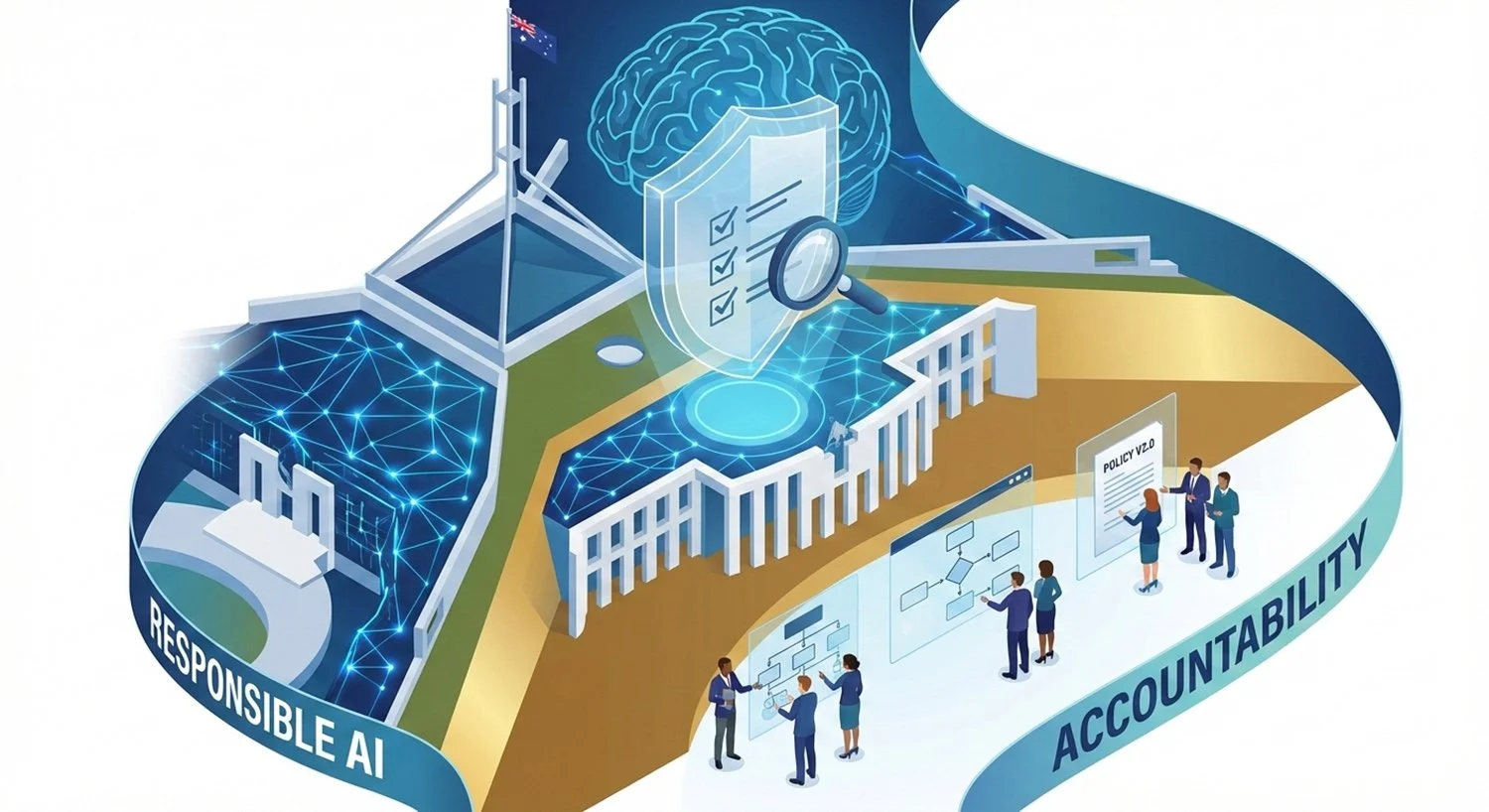
Researchers at the Massachusetts Institute of Technology have released a pilot database that scans more than 950 artificial intelligence governance documents, uncovering lopsided attention to certain risks while spotlighting neglect in areas like economic impacts on human roles and ethical considerations beyond Western frameworks.
Unveiled on October 15, 2025, the tool draws from the Center for Security and Emerging Technology's ETO AGORA archive to evaluate how well laws, regulations, standards and corporate commitments address AI threats. Using large language models, it assigns coverage scores from one for barely noted to five for thoroughly covered, with human checks for reliability. Early validation on six U.S. focused texts, such as Executive Order 14179 on Removing Barriers to U.S. Leadership in Artificial Intelligence from January 23, 2025, and Anthropic's Responsible Scaling Policy updated in May 2025, showed strong alignment between automated and expert assessments.




























Surge in AI Oversight Fuels Demand for Systematic Tracking
This initiative arrives amid a boom in AI rules, as nations and firms grapple with tools like generative systems that promise productivity gains but carry hidden dangers. Frameworks have proliferated since 2023, yet few efforts have systematically probed their strengths and weaknesses. The pilot seeks to fill that void by mapping documents against taxonomies like the MIT AI Risk Taxonomy, which sorts threats into domains from technical flaws to societal shifts.
Past discussions on AI ethics have often centred on Western concerns, such as privacy under Europe's General Data Protection Regulation or bias checks from the U.S. National Institute of Standards and Technology. This tilt, rooted in where most policy work originates, can leave global variations underplayed. For instance, approaches that emphasise individual rights might not fully align with community based norms in Indigenous Australian or African settings, or they could overlook how AI surveillance tools might strain collective privacy values in parts of Asia and Latin America. Such mismatches arise partly from drafting teams in resource rich nations recycling familiar models, which limits safeguards in diverse locales and risks amplifying harms where social nets are thin.



























Pipeline in Action: Blending LLMs with Expert Oversight
The system's backbone classifies texts across risks, mitigations and contexts like lifecycle stages or sectors, pulling from OECD and NIST inspired structures. It tested five large language models on the six documents before selecting Anthropic's Claude Sonnet 4.5 for its balance of accuracy and cost, achieving substantial agreement with human raters via Cohen's Kappa measures often matching expert consistency.
Refinements, like capping low score descriptions to single sentences, lifted reliability by 11 percent. Humans reconciled scores on 24 risk subdomains, flagging nuances such as over scoring ambiguous passages. The full run on over 950 entries generates quotes as evidence, with interactive tools like heat maps revealing patterns: public administration and research sectors get robust treatment, while arts, entertainment and recreation draw scant focus, hinting at overlooked creative industry vulnerabilities.























Charting Coverage: Peaks in Security, Valleys in Broader Harms
Visual outputs from the pilot underscore stark divides. Governance shortfalls, system security breaches and transparency gaps top the list for attention, as seen in detailed fixes from Google DeepMind's Frontier Safety Framework version 2.0. At the other end, AI welfare and rights, multi agent interactions and economic plus cultural devaluation of human effort rank lowest, with many pre 2024 texts ignoring them entirely.
These patterns trace AI policy's growth: early efforts honed on core robustness, but societal angles lag, especially in U.S. dominant archives. The skew toward English materials, bolstered by spotty third party translations for items like China's 2023 generative AI rules, tilts analysis away from non-Western views. This setup risks underestimating threats in emerging markets, where AI could widen divides without context specific tweaks.




























Gaps in Non-Western Ethics Call for Localised Approaches
The pilot's U.S. heavy lens exposes a key limitation: potential blind spots for cultural and regional differences. As MIT notes, English only processing and translation hiccups could distort how policies handle subtle local issues, from collective decision making in Southeast Asia to rural access barriers in sub Saharan Africa or South Asia. Contributors like Aidan Homewood from the Centre for the Governance of AI offered input on these challenges, though the core critique stems from the project's own review.
Resource gaps explain much of this: affluent regions craft expansive rules, while others patch together adaptations that may not fit homegrown realities. The fallout? Eroded confidence in worldwide standards and heightened exposure to pitfalls. Analysts, drawing from voices at Brown University and the Vector Institute, suggest this could fuel distrust if AI tools ignore, say, land customs in Indian farming or urban rural splits in Brazilian hiring algorithms. Broader impacts include stalled innovation in the Global South and uneven protection against inequality spikes, pushing for joint efforts on original language scans and add on modules.
























Spotlight on Job Risks: Urging Wider Protections
Economic and cultural devaluation of human effort emerges as a glaring weak spot, encompassing threats like routine task automation leading to widespread shifts in work. While spots like San José's AI Policy 1.7.12 touch on workforce empowerment through upskilling for over 7000 staff, most documents skim the surface without firm plans such as reskilling funds or transition supports.
This neglect mirrors AI's double edged nature: efficiency boosts alongside disruption, with estimates pointing to millions of roles at stake globally by 2030, hitting informal economies hardest in developing areas. The pilot links these to full lifecycles from design onward, echoing OECD principles, and highlights how sparse coverage leaves labour markets exposed. Third party views stress the need for mandatory audits in high stake deployments to soften blows and build equitable growth.



















Path Forward: Toward Broader, Multilingual Mapping
Looking ahead, the team eyes expansions like three point scales for simplicity and prompt tweaks to curb biases, alongside more CSET translations for non-English texts. Ties with partners including Ateneo de Manila University signal multilateral pushes on big threats like bioweapons risks.
Observers see this as a foundation for open dashboards that hand reins to civil groups in less covered regions. By naming voids, it arms makers of rules to forge tough, fair systems. As contributor Emre Yavuz from the Cambridge Boston Alignment Initiative put it in spirit, this marks an entry point for more astute, balanced AI worldwide. Open under Creative Commons BY 4.0, the resources beckon wide collaboration, aiming to ensure AI advances with all voices in the mix.




































 TheDayAfterAI News
We are a leading AI-focused digital news platform, combining AI-generated reporting with human editorial oversight. By aggregating and synthesizing the latest developments in AI — spanning innovation, technology, ethics, policy and business — we deliver timely, accurate and thought-provoking content.