
AI ‘Big Bang’ Study 2025: ChatGPT Captures 48% of AI Traffic, 83% of Top 10 Chatbots
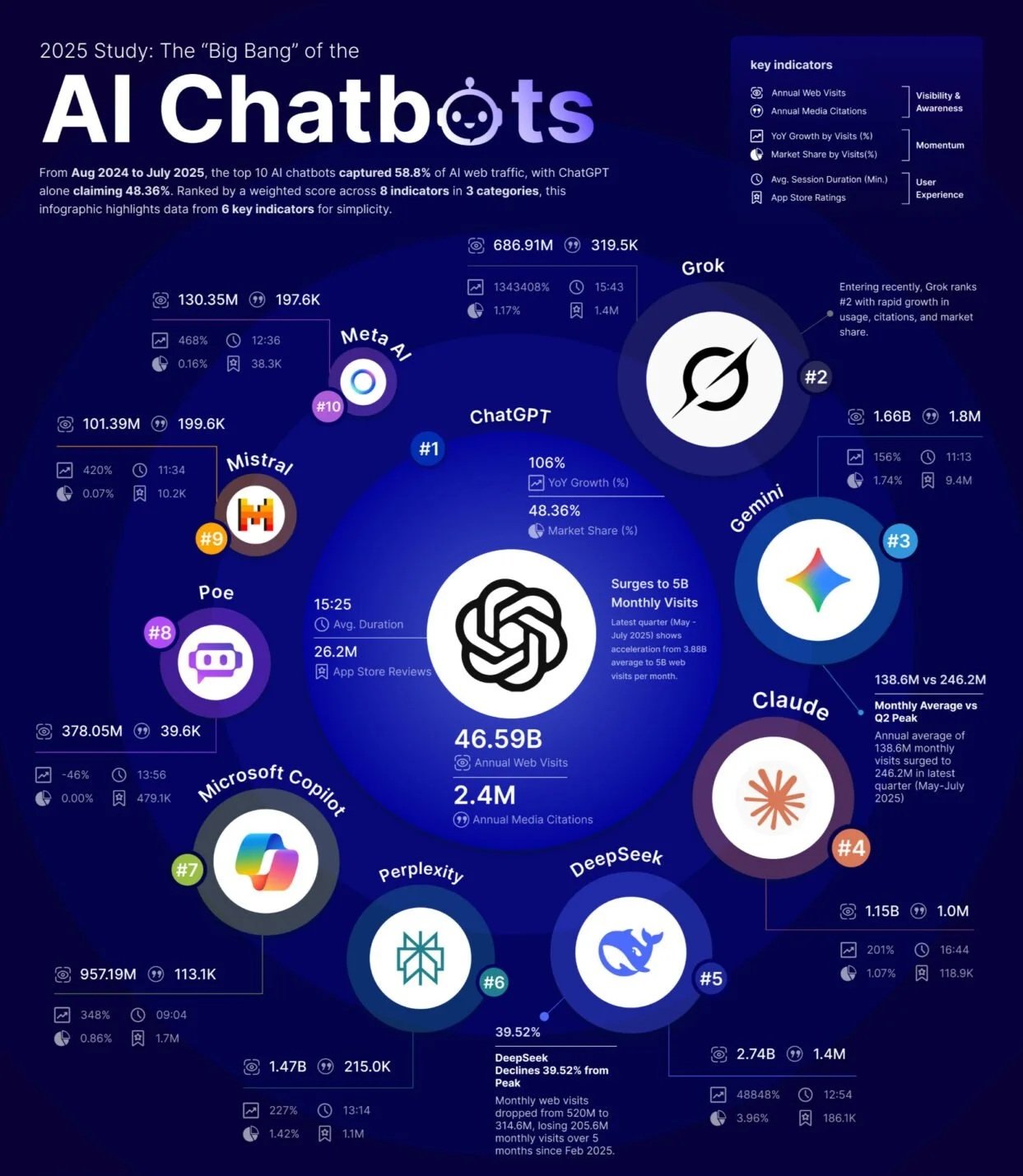
Image Source: One Little Web
A detailed examination of the artificial intelligence chatbot market published in August 2025 shows ChatGPT maintaining a substantial lead in web traffic, while indicating a diversifying field where specialized competitors are incrementally challenging established players through targeted functionalities.
The "AI ‘Big Bang’ Study 2025", produced by SEO agency OneLittleWeb, assessed more than 10,500 AI tools and nearly 100 billion estimated web visits spanning August 2024 to July 2025, utilizing data from platforms including Semrush for traffic analysis and Muckrack for media citations. The report evaluated the top 10 chatbots via a weighted scoring system incorporating eight key metrics: annual web visits, year-over-year growth, month-over-month growth, market share, average session duration, media citations, app-store reviews, and app-store ratings.
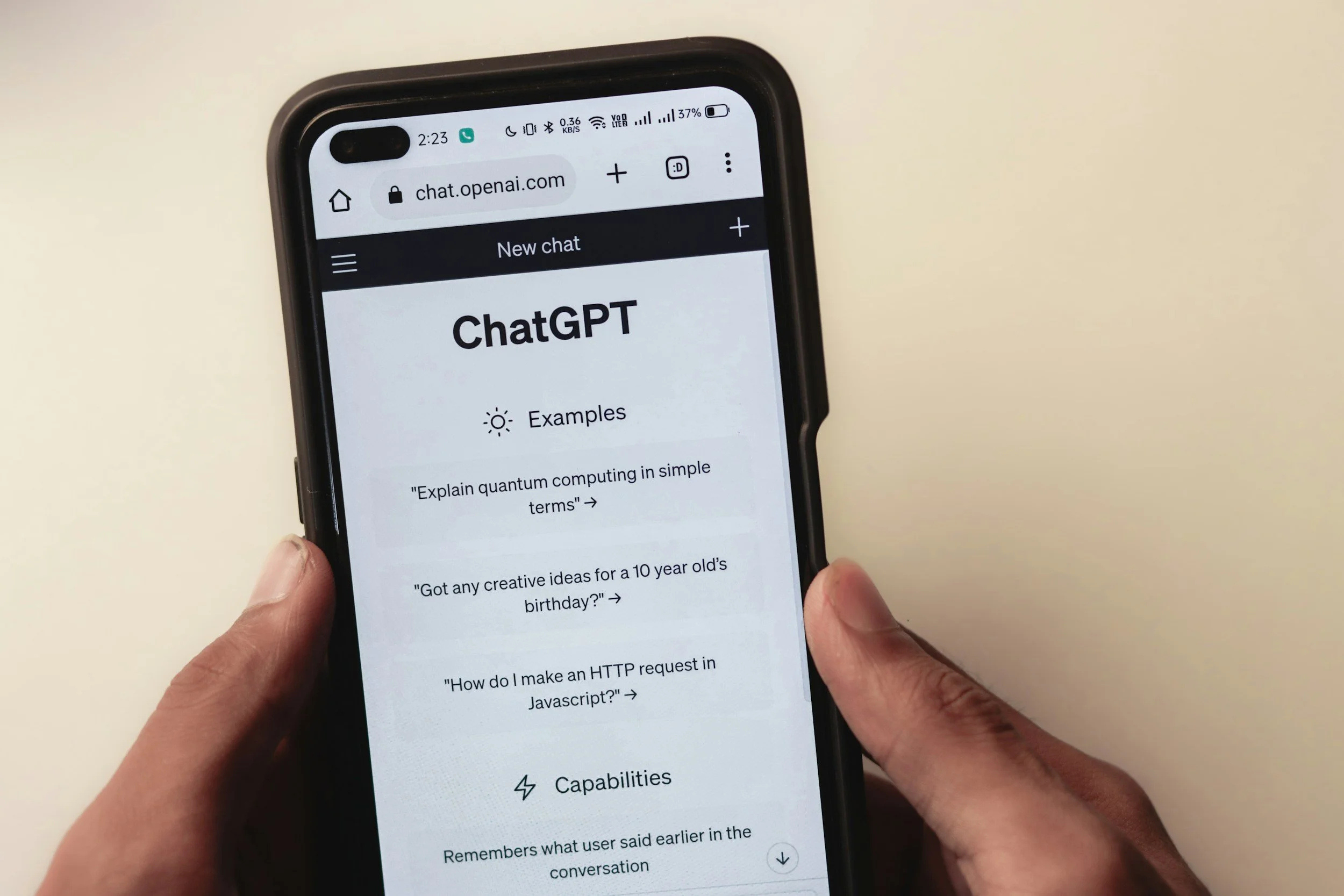
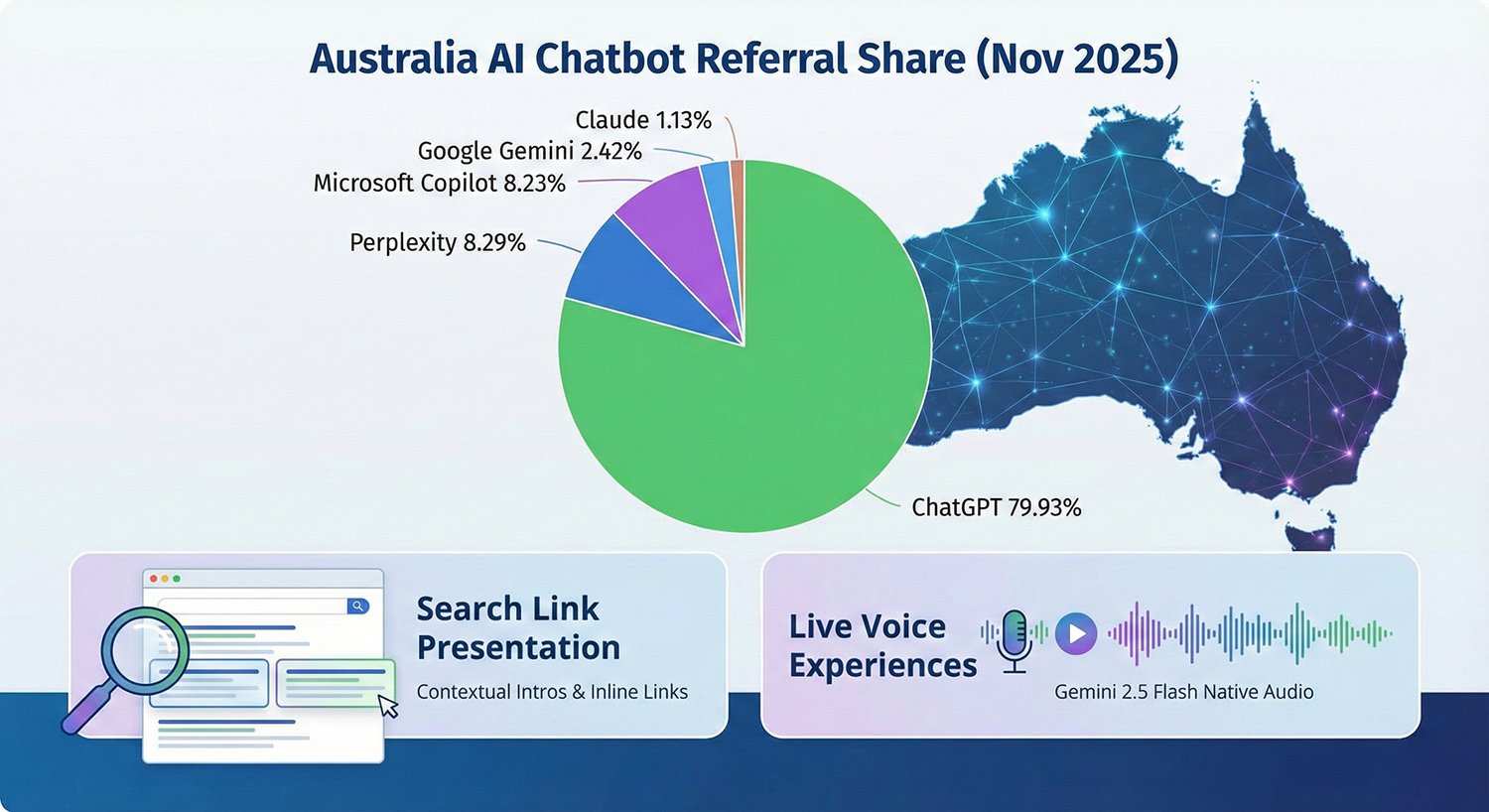
OpenAI's ChatGPT recorded 46.59 billion visits, comprising 48.36 percent of total AI tool web traffic, with a 106 percent year-over-year rise. This represents approximately 83 percent of the traffic among the top 10 chatbots, which together garnered 55.88 billion visits or 58.8 percent of the overall AI landscape.



















Methodology and Data Scope
The analysis relied on third-party analytics to monitor global desktop and mobile visits, excluding API integrations or embedded applications, and centered on direct user engagements with chatbot platforms. Media citations for the top performers exceeded 7.7 million, with an average of 644,200 per month, underscoring publicity's influence on adoption rates. OneLittleWeb, headquartered in New York with operations in Bangladesh, aimed to deliver quantitative perspectives on AI usage trends, prioritizing empirical data over qualitative assessments.























Key Rankings and Performance Metrics
The weighted overall rankings place ChatGPT first, followed by Grok in second, Gemini third, Claude fourth, DeepSeek fifth, Perplexity sixth, Microsoft Copilot seventh, Poe eighth, Mistral ninth, and Meta AI tenth.
xAI's Grok amassed 686.91 million visits (1.17 percent share), exhibiting a 1,343,408 percent increase from minimal prior levels, propelled by its linkage to the X social network. France's Mistral registered about 101.39 million visits (0.07 percent share) amid stable but nascent expansion in regional developer communities.
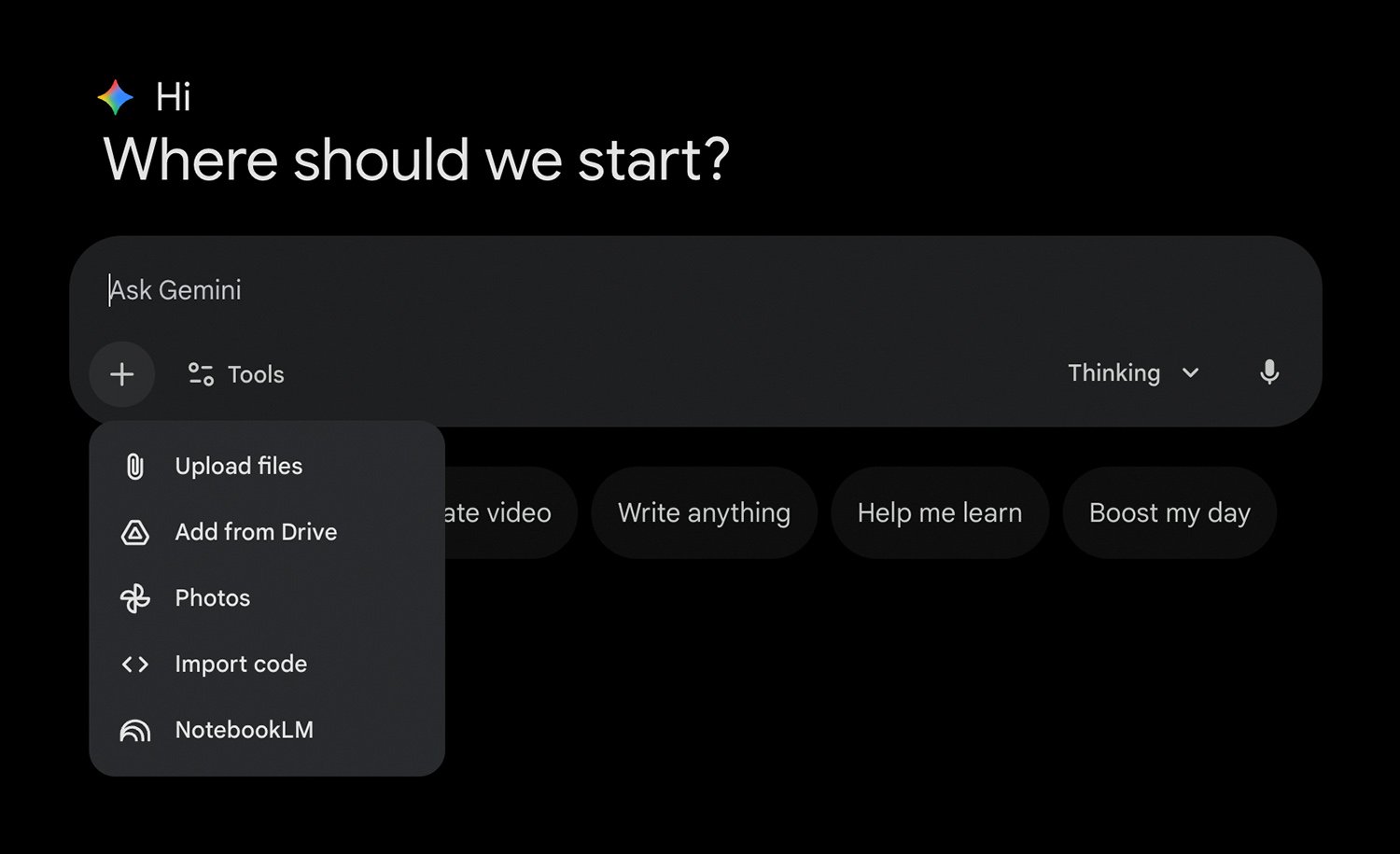
Google's Gemini logged 1.66 billion visits (1.74 percent share) and a 156 percent growth, supported by seamless incorporation into Google's search infrastructure and refinements boosting monthly traffic to an average of 246.2 million in recent periods.
Anthropic's Claude recorded 1.15 billion visits (1.07 percent share) and 165 percent expansion, distinguished by steady progress and the highest average session time of 16:44 minutes, reflecting strong retention in areas like coding and analytical work.
DeepSeek ranked second by annual web visits with 2.74 billion (3.96 percent share), though it faced a 39.5 percent drop from its February 2025 high of 520 million monthly visits to about 314.6 million in July, linked to reduced media exposure after initial hype.
Perplexity, oriented toward research queries, secured 1.47 billion visits (1.42 percent share) and 227 percent growth, attributed to its emphasis on sourced answers.
Quora's Poe saw 378.05 million visits (~0 percent share) but a 46 percent year-over-year decline, pointing to difficulties in sustaining momentum as an aggregator platform.

















Market Fragmentation and Niche Dynamics
The findings depict a stratified market: broad-purpose leaders like ChatGPT, versatile contenders such as Gemini and Grok, and focused entrants like Perplexity and Mistral addressing particular domains. Perplexity's source-verification approach has supported consistent mid-range results, whereas Mistral's open-source orientation attracts developers despite constraints in broader scaling and adoption.
Such diversification arises from the AI surge following ChatGPT's 2022 debut, which catalyzed global investments in AI technologies approaching $200 billion by 2025, based on Goldman Sachs projections. Factors contributing to variances include ecosystem alignments, as with Gemini's Google connectivity, and publicity fluctuations, evident in DeepSeek's post-launch normalization.



























Broader Impacts on AI Industry
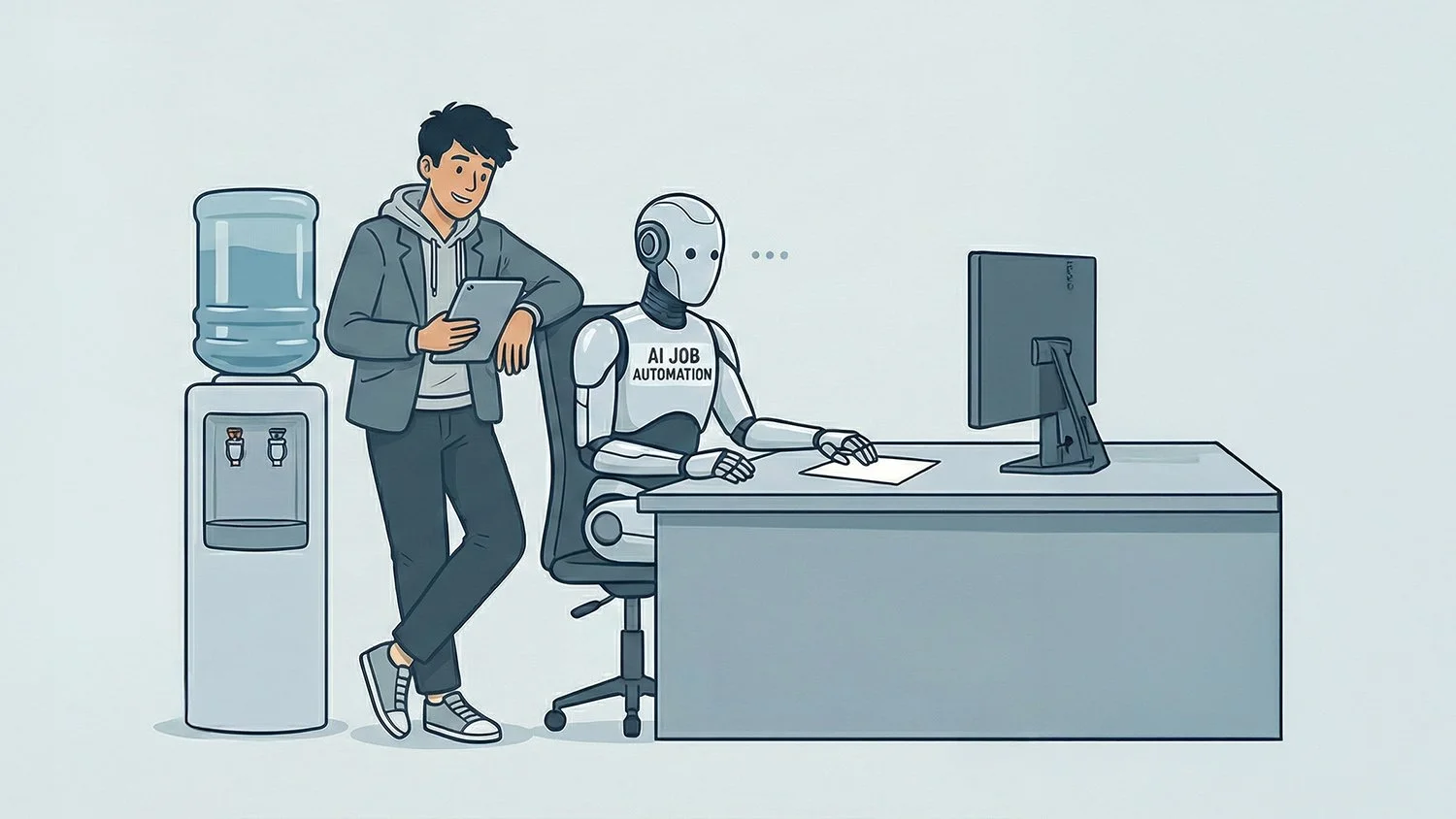
Traffic concentration in the top 10 at 58.8 percent suggests maturing consolidation, which may heighten entry barriers for newcomers while spurring advancements in engagement strategies. Effects ripple into fields like information technology and marketing, where generative AI could automate activities accounting for up to 30 percent of hours currently worked across the U.S. economy by 2030, per McKinsey evaluations. Conversely, downturns for entities like Poe underscore vulnerabilities in models lacking unique technological edges.




















Future Trends in AI Chatbot Evolution
Projections indicate continued 100-200 percent yearly expansion for secondary players, with differentiation via specialized applications pivotal to diminishing ChatGPT's predominance. Anticipated developments point to agentic AI for independent task execution, multimodal processing integrating text with visuals and audio, and heightened regulatory oversight, notably under frameworks like the EU AI Act, potentially influencing global deployment paces. Observers highlight that platform embedding and mobile adoption will likely amplify disparities between interconnected leaders and isolated specialists.



















 TheDayAfterAI News
We are a leading AI-focused digital news platform, combining AI-generated reporting with human editorial oversight. By aggregating and synthesizing the latest developments in AI — spanning innovation, technology, ethics, policy and business — we deliver timely, accurate and thought-provoking content.