
Hugging Face Expands Open-Source AI Role with US$4.5B Valuation and Robotics Push
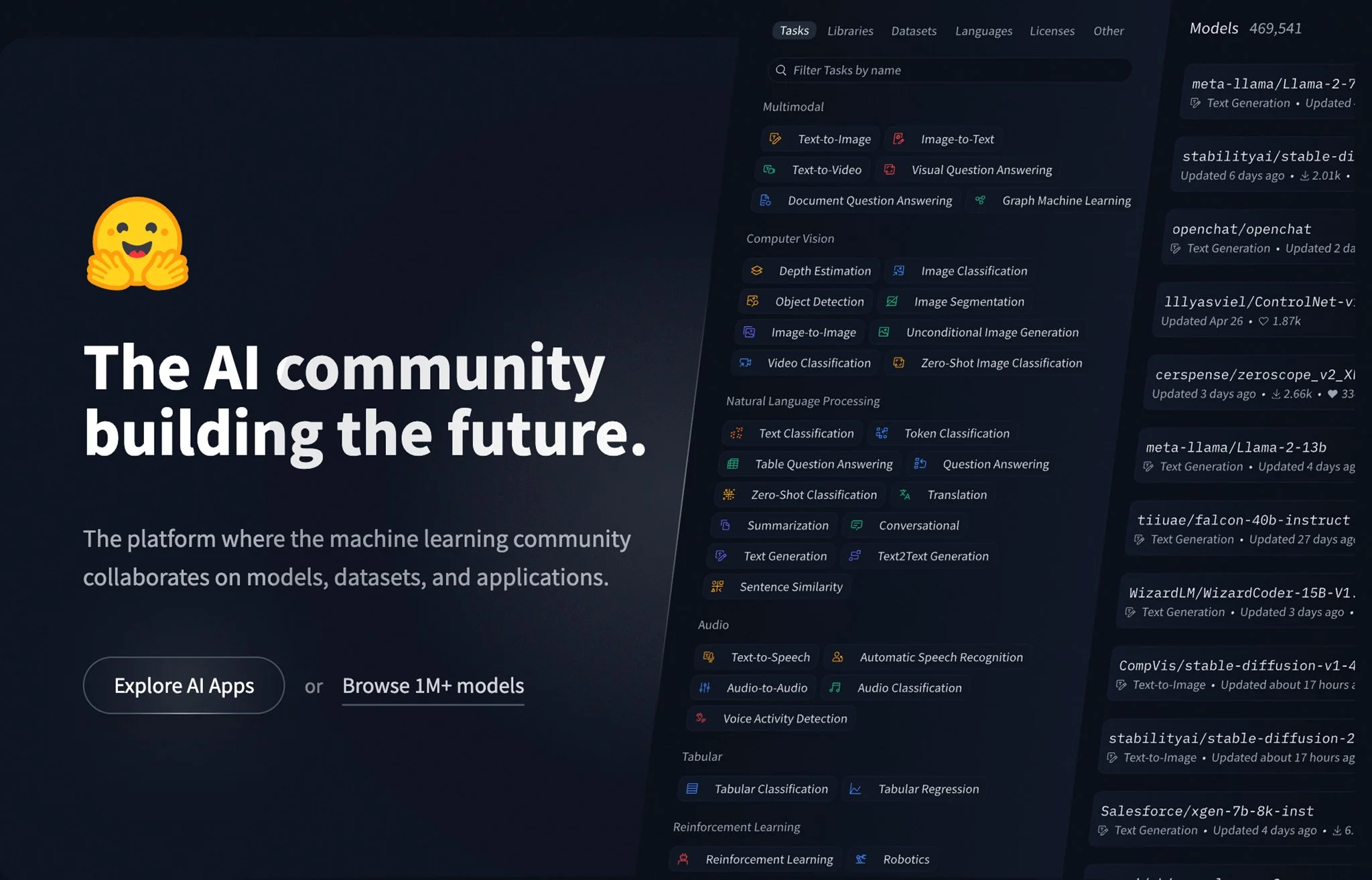
Image Source: Hugging Face
Hugging Face, a key player in the artificial intelligence sector, has emerged as a central hub for open-source machine learning, facilitating collaboration among developers and researchers worldwide amid rapid advancements in AI technology.



















Company Overview
Founded in 2016, Hugging Face provides an open-source platform that enables users to build, train and deploy machine learning models, with a focus on natural language processing and other AI applications. The platform, often described as the "GitHub of AI", hosts over 1 million repositories of models, datasets and applications, serving more than 50,000 customers. Its core offerings include the Transformers library, a widely used open-source toolkit for handling pre-trained models, as well as the Hub for sharing resources and Spaces for demonstrating AI-powered apps across modalities like text, image and video. This structure supports both free community access and paid enterprise solutions for accelerated computing and deployment.

























Background and Founding
Hugging Face was established in New York City by French entrepreneurs Clément Delangue, Julien Chaumond and Thomas Wolf, initially as a chatbot application aimed at teenagers. The founders pivoted after open-sourcing the app's underlying algorithm, recognizing a broader need for accessible machine learning tools amid the rise of transformer-based architectures in AI research. This shift was driven by the growing complexity of AI development, where proprietary barriers limited innovation; Hugging Face aimed to democratize access, allowing smaller entities to leverage advanced models without extensive resources. The company's emphasis on open-source stemmed from the founders' belief in collaborative progress, addressing gaps in proprietary ecosystems dominated by tech giants like Google and OpenAI. By basing operations in New York while maintaining ties to European tech scenes, Hugging Face positioned itself at the intersection of U.S. investment and global AI talent.


























Development and Growth
Hugging Face's expansion has been marked by significant funding and strategic moves. In August 2023, it secured US$235 million in a Series D round led by investors including Salesforce, Google, Nvidia, Amazon and Intel, valuing the company at US$4.5 billion – more than double its 2022 valuation. This brought total funding to approximately US$400 million, enabling investments in technology infrastructure and a workforce of around 250 employees as of 2025. Revenue reached an estimated US$70 million in annual recurring terms by the end of 2023, reflecting a growth of over 350% from the previous year amid demand for its MLOps tools that streamline model production and monitoring in a market projected to reach US$16.61 billion by 2030. Key initiatives include contributions to open-source projects like the Bloom multilingual model in 2022 and StarCoder for code generation in 2023, fostering community-driven advancements. In April 2025, Hugging Face acquired Pollen Robotics, its fifth acquisition, to integrate robotics capabilities into its AI ecosystem, expanding beyond software to hardware applications. These steps have solidified its role in AI's paradigm shift, where machine learning is increasingly integral to software development.






















AI Impact and Analysis
Hugging Face's open-source approach has profoundly influenced AI accessibility, reducing entry barriers for researchers and startups by providing free tools and models that rival proprietary alternatives. This has accelerated innovation in fields like medical AI, where platforms like Hugging Face lower capital requirements for developing applications such as diagnostic tools. The impact extends to policy, with the company advocating for open-source priorities in U.S. AI strategies to counter dominance by closed systems. However, challenges include ensuring model safety and ethical use, as widespread access amplifies risks like misinformation or environmental impacts from resource consumption. Analysts note that by enabling collaboration, Hugging Face has shifted AI from elite labs to a global community, potentially hastening breakthroughs but also intensifying competition with entities like OpenAI.




























Future Trends
Looking ahead, Hugging Face is poised to capitalize on trends toward more efficient AI models, reinforcement learning and agent-based systems, as evidenced by top papers on its platform emphasizing data quality and scalability. Experts predict a surge in open-source language models over the next 12-24 months, with Hugging Face leading in aggregation and adoption metrics. The company's growth strategy, including enterprise expansions and investments in startups like Nixtla, suggests a focus on integrating AI into broader industries. Amid regulatory scrutiny, its advocacy for open development could shape future policies, though sustaining momentum will depend on balancing community contributions with commercial viability in an evolving AI landscape.








































 TheDayAfterAI News
We are a leading AI-focused digital news platform, combining AI-generated reporting with human editorial oversight. By aggregating and synthesizing the latest developments in AI — spanning innovation, technology, ethics, policy and business — we deliver timely, accurate and thought-provoking content.