
MCP Nears One Year: Anthropic’s Open Protocol Becomes Key Standard for Connected AI Systems

Image Credit: Martin Martz | Splash
Nearly a year after its launch, the Model Context Protocol, or MCP, developed by U.S. artificial intelligence firm Anthropic, is emerging as a key framework for linking AI systems to external data and tools, enabling more dynamic and practical applications in fields from software development to business operations.
The protocol, open sourced on 25 November 2024, addresses longstanding barriers that have limited large language models, or LLMs, by providing a standardised way for them to access real time information and perform actions beyond their training data. This development comes as AI adoption accelerates globally, with experts viewing MCP as a step towards more autonomous agentic systems that can interact with the world like human assistants.


















Background and Development
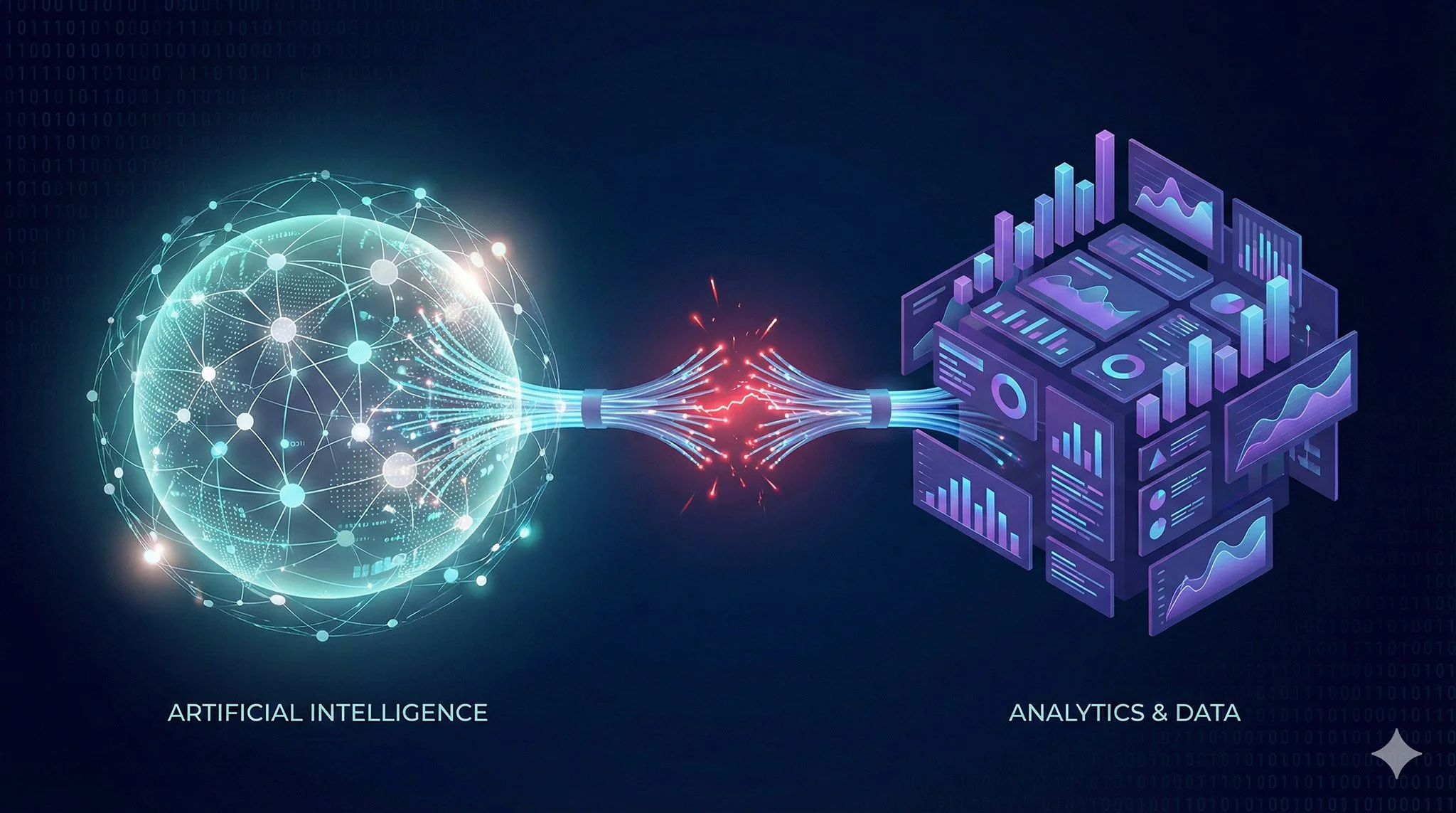
AI models such as Anthropic's Claude or OpenAI's GPT series have excelled at processing language but struggled with isolation from live data sources, including databases, APIs and business tools. Prior approaches, like OpenAI's function calling API introduced in 2023, relied on vendor specific connectors, leading to fragmented implementations and what Anthropic termed an "N times M" integration challenge where each model required custom links to every tool or data source.
Anthropic, founded in 2021 by former OpenAI executives and backed by investors including Amazon, released MCP to create an open standard inspired by protocols like the Language Server Protocol used in code editors. The move aimed to simplify connections, reducing development time and fostering an ecosystem where AI could draw from diverse systems without bespoke coding. By mid 2025, the protocol had seen rapid uptake, with integrations from major players like Google DeepMind and OpenAI, alongside tools from companies such as Zed and Sourcegraph.










How MCP Works
At its core, MCP functions like a universal connector, akin to USB C for hardware, allowing AI applications to communicate with external services through a client server architecture. An MCP client, typically embedded in an AI host like a chatbot or development environment, sends requests to MCP servers that expose data or tools, such as file systems, databases or APIs. The protocol uses JSON RPC for bidirectional communication, enabling AI to not only retrieve information but also execute tasks, like querying a database or sending an email.
For instance, in a business setting, an AI agent could use MCP to pull sales data from a PostgreSQL database, analyse it and update a Slack channel, all without custom integrations. This builds on existing concepts like function calling but standardises them, making it easier for developers to build secure, scalable connections. Anthropic provided initial SDKs and pre-built servers for platforms like Google Drive and GitHub to accelerate adoption.





















Adoption and Impact
Since its release, MCP has been integrated into various sectors, enhancing AI capabilities in software engineering and enterprise workflows. As reported by Anthropic and tech press, companies like Block and Apollo adopted it early for secure data access, while coding platforms Replit and Codeium used it to give AI agents better context for generating code. In cloud computing, providers such as Google Cloud and IBM have positioned MCP as a standard layer enabling multi agent systems, where specialised AI components collaborate on complex tasks.
The impact is evident in improved efficiency: developers report reduced complexity in building AI applications, leading to faster innovation and broader access to tools. For end users, this translates to more capable AI assistants that can handle real world actions, such as booking reservations or analysing live data, potentially boosting productivity in industries like finance and healthcare. Analysts suggest significant reductions in integration costs, democratising advanced AI for smaller organisations.
























Challenges and Future Outlook
Despite its promise, MCP faces hurdles, particularly in security. Researchers in April 2025 identified vulnerabilities, including risks of prompt injection and unauthorised data access when combining tools. The protocol's initial session level permissions, while straightforward, prompted calls for enhanced authorisation mechanisms, leading to updates in 2025 that incorporated OAuth based flows and best practice guidance as an evolving area. Additionally, its early design favoured local or trusted environments, but 2025 updates including HTTP transports have addressed limitations in scalability for distributed systems.
Looking ahead, experts anticipate further evolution, including stateless adaptations for cloud native setups and the emergence of MCP marketplaces for sharing connectors. With growing support from tech giants, MCP could become a de facto standard, driving trends towards more interconnected AI ecosystems. However, success will depend on addressing security gaps and ensuring interoperability across models, as AI continues to integrate deeper into daily operations.























 TheDayAfterAI News
We are a leading AI-focused digital news platform, combining AI-generated reporting with human editorial oversight. By aggregating and synthesizing the latest developments in AI — spanning innovation, technology, ethics, policy and business — we deliver timely, accurate and thought-provoking content.