
Microsoft Launches NLWeb to Bring AI Conversational Agents to Websites

Image Credit: BoliviaInteligente | Splash
Microsoft Corp has introduced NLWeb, an open-source initiative designed to embed artificial intelligence-driven conversational capabilities directly into websites, marking a step toward what the company describes as an "agentic web" where AI agents can autonomously navigate and transact online.
Announced at the Microsoft Build 2025 conference on May 19, the project seeks to simplify the addition of natural language interfaces, enabling users and AI systems to query website content in everyday language rather than through traditional search or navigation. By leveraging existing web standards like Schema.org and RSS, NLWeb allows developers to transform static sites into dynamic, AI-responsive platforms without extensive reconfiguration.















Origins and Rationale
The concept behind NLWeb traces back to longstanding efforts to enhance web semantics, building on protocols such as RSS and RDF, which were pioneered by R.V. Guha, the project's lead developer and a Microsoft corporate vice president who joined the company as a technical fellow. Guha's prior work on Schema.org, a collaborative vocabulary for structured data adopted by over 100 million websites, provided the foundation for NLWeb's approach to making site data accessible to large language models (LLMs).
Microsoft's motivation stems from the rapid evolution of AI agents — software entities capable of reasoning, planning, and executing tasks independently. As AI shifts from assistive tools to autonomous systems, traditional websites risk obsolescence if they cannot support agentic interactions. NLWeb addresses this by providing a protocol akin to HTML for AI contexts, ensuring websites can participate in an emerging ecosystem where agents discover, query, and transact across platforms. This move aligns with broader industry trends toward open standards, countering proprietary AI silos and fostering interoperability amid growing regulatory scrutiny on data privacy and AI governance.












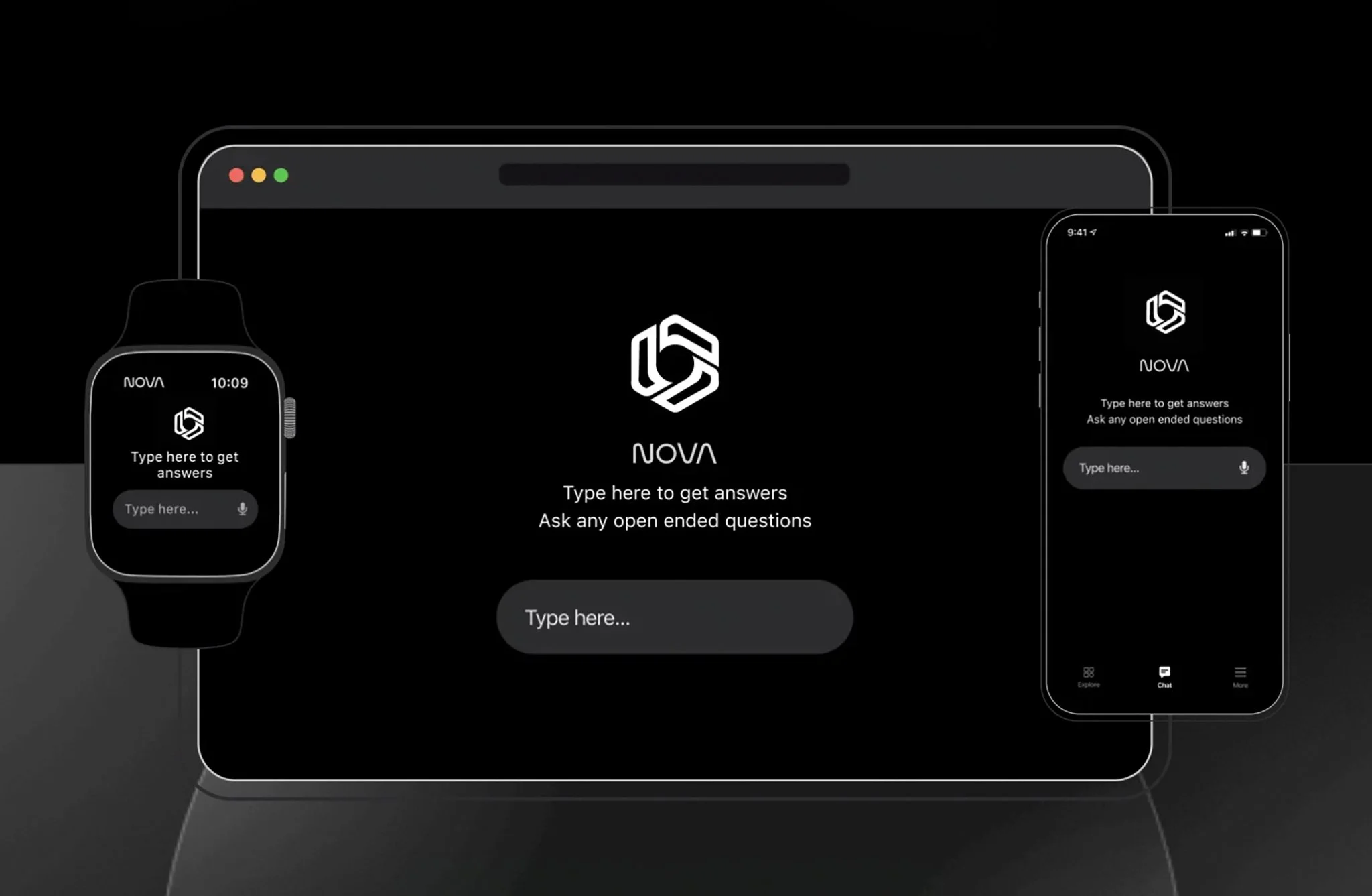
Technical Implementation and Evolution
Implemented primarily in Python, NLWeb functions as a server-side framework that ingests site data into vector databases and connects to LLMs for processing natural language queries. It supports the Model Context Protocol (MCP), a standard for AI agent communication, allowing each NLWeb instance to serve as an MCP server for discoverability. Developers can integrate connectors for popular LLMs and databases, with responses formatted in Schema.org JSON to ensure structured, machine-readable outputs.
Since its launch, NLWeb has seen iterative updates, including integration with PostgreSQL's PGvector for enhanced data handling in July 2025. Early adopters such as Chicago Public Media, Common Sense Media, DDM, Eventbrite, Hearst, Inception Labs, Milvus, O'Reilly Media, Qdrant, Shopify, Snowflake and Tripadvisor have deployed it to test conversational features on e-commerce and content sites. However, development faced an early setback when security researchers Aonan Guan and Lei Wang identified a path traversal vulnerability on May 28, just days after the announcement, potentially exposing API keys in .env files. Microsoft committed a patch to its reference implementation on June 30, with confirmation to researchers on July 1, emphasizing that none of Microsoft's production products were affected, though it declined to assign a Common Vulnerabilities and Exposures (CVE) identifier despite researcher requests.





















Collaborations and Expansions
In August 2025, Cloudflare Inc partnered with Microsoft to incorporate NLWeb with its AutoRAG technology, an automated retrieval-augmented generation system that enhances query accuracy by combining vector search with LLM reasoning. This integration enables websites to handle complex, intent-based questions from users and agents, such as personalized recommendations or aggregated insights, directly at the edge network for faster response times.
The collaboration underscores NLWeb's platform-agnostic design, supporting deployments across cloud providers and operating systems. By September, Cloudflare's developer documentation included guides for implementing NLWeb in AI search applications, signaling broader adoption in content delivery networks.
























Implications and Outlook
NLWeb's deployment could democratize AI integration for small publishers, reducing barriers to entry in an AI-dominated digital landscape and potentially boosting user engagement through conversational experiences. For e-commerce, it promises transformed customer journeys, with dynamic personalization based on context-aware queries, though this raises concerns over data privacy and the need for robust consent mechanisms.
Looking ahead, analysts anticipate NLWeb evolving toward mobile compatibility and agent-to-agent (A2A) standards, fostering a networked web of AI entities. Challenges include ensuring security in open-source ecosystems and addressing biases in LLM integrations. As adoption grows, NLWeb may influence web standards bodies, potentially reshaping search optimization and digital commerce, but its long-term success hinges on community contributions and resolution of early vulnerabilities.



























 TheDayAfterAI News
We are a leading AI-focused digital news platform, combining AI-generated reporting with human editorial oversight. By aggregating and synthesizing the latest developments in AI — spanning innovation, technology, ethics, policy and business — we deliver timely, accurate and thought-provoking content.