
GlobalBuildingAtlas Released: First 3D Map of 2.75 Billion Buildings

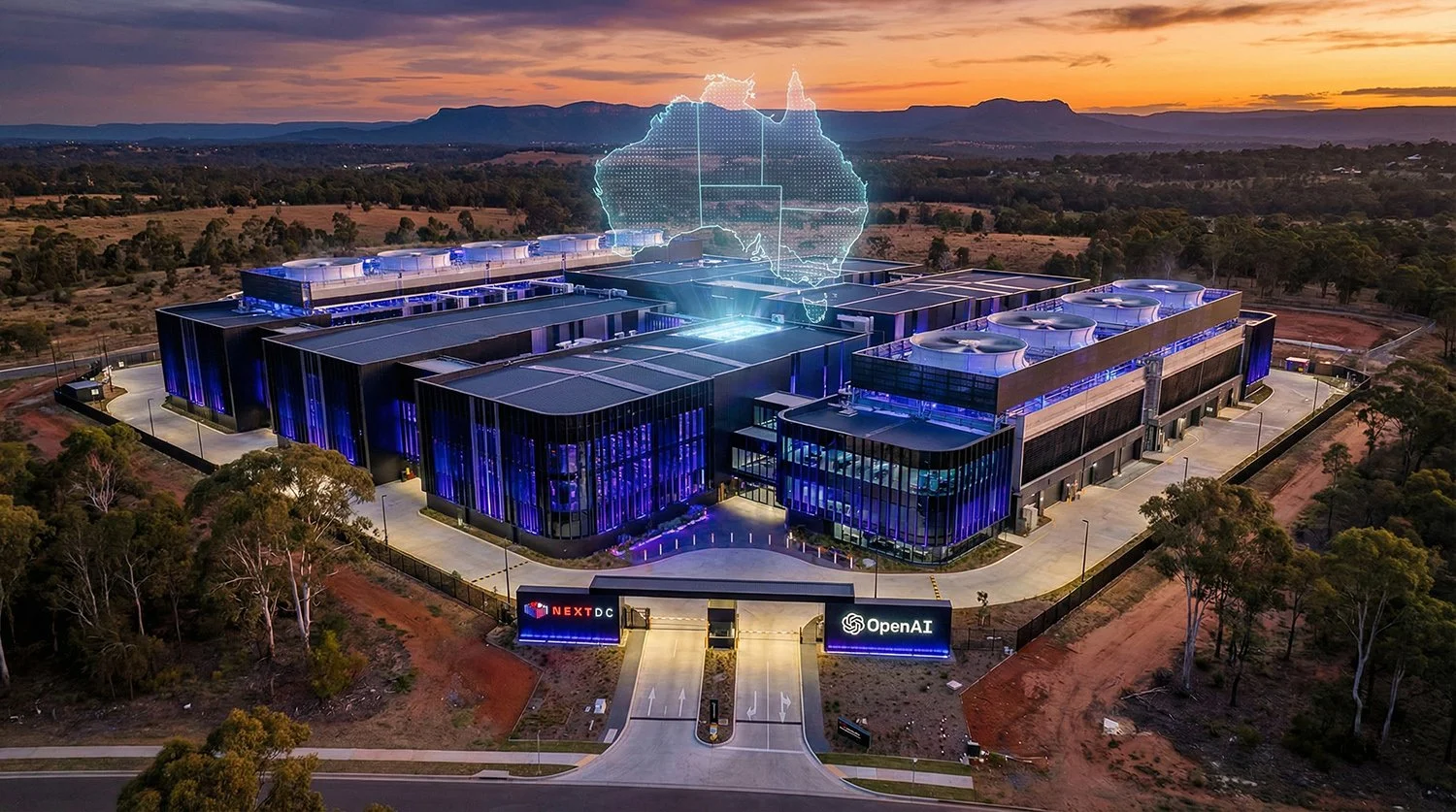
AI-generated Image for Illustration Only
(Credit: Jacky Lee)
A new open dataset, GlobalBuildingAtlas, has been released with a peer reviewed paper in Earth System Science Data (ESSD). Recent independent coverage describes it as a near global 3D building map, with the project reporting about 2.75 billion buildings derived from satellite imagery and machine learning.


















What Was Released
GlobalBuildingAtlas is distributed as three linked products: GBA.Polygon (building footprints), GBA.Height (a global 3 m by 3 m height layer), and GBA.LoD1 (simple 3D building blocks produced by combining polygons with predicted heights).
The authors report the LoD1 layer includes about 2.68 billion buildings with predicted heights and more than 97% height completeness.



























How The AI and Earth Observation Pipeline Works
The paper describes a workflow built on PlanetScope satellite imagery, processing roughly 800,000 scenes, primarily from 2019, with some 2018 scenes used where 2019 imagery was too cloudy.
On the machine learning side, the methodology includes deep learning for building mapping and monocular height estimation, with the project repository documenting implementation details and tooling used to serve the dataset.























Reported Accuracy and Key Limitations
The paper reports height prediction errors (RMSE) that vary by region, with continent level results ranging from about 1.5 m to 8.9 m.
The project also notes practical constraints for users, including uncertainty in automatically generated outputs and operational issues such as heavy traffic affecting the online viewer and services.

















Why It Matters for AI Earth Applications
For AI driven environment and science use cases, building level footprints plus heights support workflows that move from hazard to likely impact. Typical applications include exposure screening (for flooding or other hazards), settlement and infrastructure analysis, and urban climate studies where built form is a core input. Independent reporting also frames the dataset as a baseline for monitoring and risk analysis at global scale.


























Australia Link: What Is Specifically Identifiable
Because the release is global, it includes Australia, and the paper’s evaluation material includes Oceania related results and examples (including references to Launceston in qualitative comparisons).






















How It Compares with Other Major Open Building Datasets
GlobalBuildingAtlas sits alongside several widely used building and settlement datasets, but differs in structure and resolution:
Microsoft Global ML Building Footprints reports about 1.4 billion building footprints derived from Bing Maps imagery (primarily footprints, with some height related work in updates).
Google Open Buildings is described by Google as mapping about 1.8 billion buildings across parts of Africa, Asia, Latin America and the Caribbean, rather than full global coverage.
DLR WSF 3D provides global building height and volume indicators on a 90 m grid, and JRC GHSL GHS BUILT H provides building height distribution on a 100 m grid, both useful for macro analysis but not designed as building by building 3D models.
Google Open Buildings 2.5D Temporal provides annual layers (2016 to 2023) for building presence and height across its coverage footprint, supporting change detection rather than global LoD1 style building models.






















Access, Licensing and Data Scale
The official archive lists a total size of about 36 TB, tiled in 5 degree by 5 degree chunks, with polygons and LoD1 provided as GeoJSON and heights as GeoTIFF. A smaller representative subset is also provided for testing.
Licensing is listed as CC BY NC 4.0, which permits reuse with attribution but restricts commercial use.
A separate third party conversion is hosted on Source Cooperative and should not be confused with the official distribution.












 TheDayAfterAI News
We are a leading AI-focused digital news platform, combining AI-generated reporting with human editorial oversight. By aggregating and synthesizing the latest developments in AI — spanning innovation, technology, ethics, policy and business — we deliver timely, accurate and thought-provoking content.