
PCMag Names Top AI-Powered Smart Home Devices of 2025

Image Credit: Jacky Lee
Technology review publication PCMag has released its selections for the best smart home devices of 2025, based on evaluations of products across more than 20 categories, focusing on artificial intelligence integrations that support functions such as predictive automation and personalized user experiences.
The list covers devices for security, displays, cleaning, thermostats and outdoor applications, assessing how AI contributes to efficiency in areas like energy management and interoperability with ecosystems including Amazon Alexa, Google Assistant and Apple HomeKit. This release aligns with expanding adoption in the smart home sector, where AI addresses demands for seamless operation amid ongoing concerns over privacy and cybersecurity.



















Testing Methodology and Scope
PCMag conducts evaluations in its labs, with experts testing for installation simplicity, ecosystem compatibility, performance indicators like latency and durability, and overall cost-effectiveness. AI elements are scrutinized for precision in detection and recognition tasks through hands-on assessments.
The 2025 guide spans multiple sub-categories within major segments, involving assessments of numerous devices over extended periods. Metrics include power usage for climate controls, resolution for surveillance and mapping accuracy for autonomous cleaners. Independence is maintained by relying on data-driven ratings, with periodic revisions as market entries emerge.
















Key Categories and Top AI-Enhanced Products
For outdoor security, the Aqara Camera Hub G5 Pro leads with AI-enabled motion detection differentiating humans, animals and vehicles, alongside Matter protocol support for enhanced connectivity. The Arlo Video Doorbell 2nd Generation incorporates AI for identifying packages and individuals, facilitating automated interactions through compatible assistants.
Smart displays highlight AI capabilities: The Amazon Echo Show 15 (2024) leverages Alexa for proactive Hunches that automate based on user patterns, such as turning off lights, and separately provides recipe suggestions through query-based skills. The Google Nest Hub Max uses AI for gesture-based operation and face recognition to tailor displays.
Cleaning devices feature the Ecovacs Deebot X8 Pro Omni, equipped with AI for environmental mapping, obstacle evasion and adaptive floor-type handling in self-maintaining modes. In kitchen tech, the Brisk It Origin 940 employs AI to generate recipes and modify cooking parameters based on ingredients and food types.
The Ecobee Smart Thermostat Premium applies AI to analyze occupancy and adjust climate settings, yielding potential energy reductions of up to 26% based on an internal analysis by Ecobee. For lawns, the Husqvarna Automower 435X AWD utilizes AI for terrain navigation and integration with voice assistants.



















AI's Central Role in Device Functionality
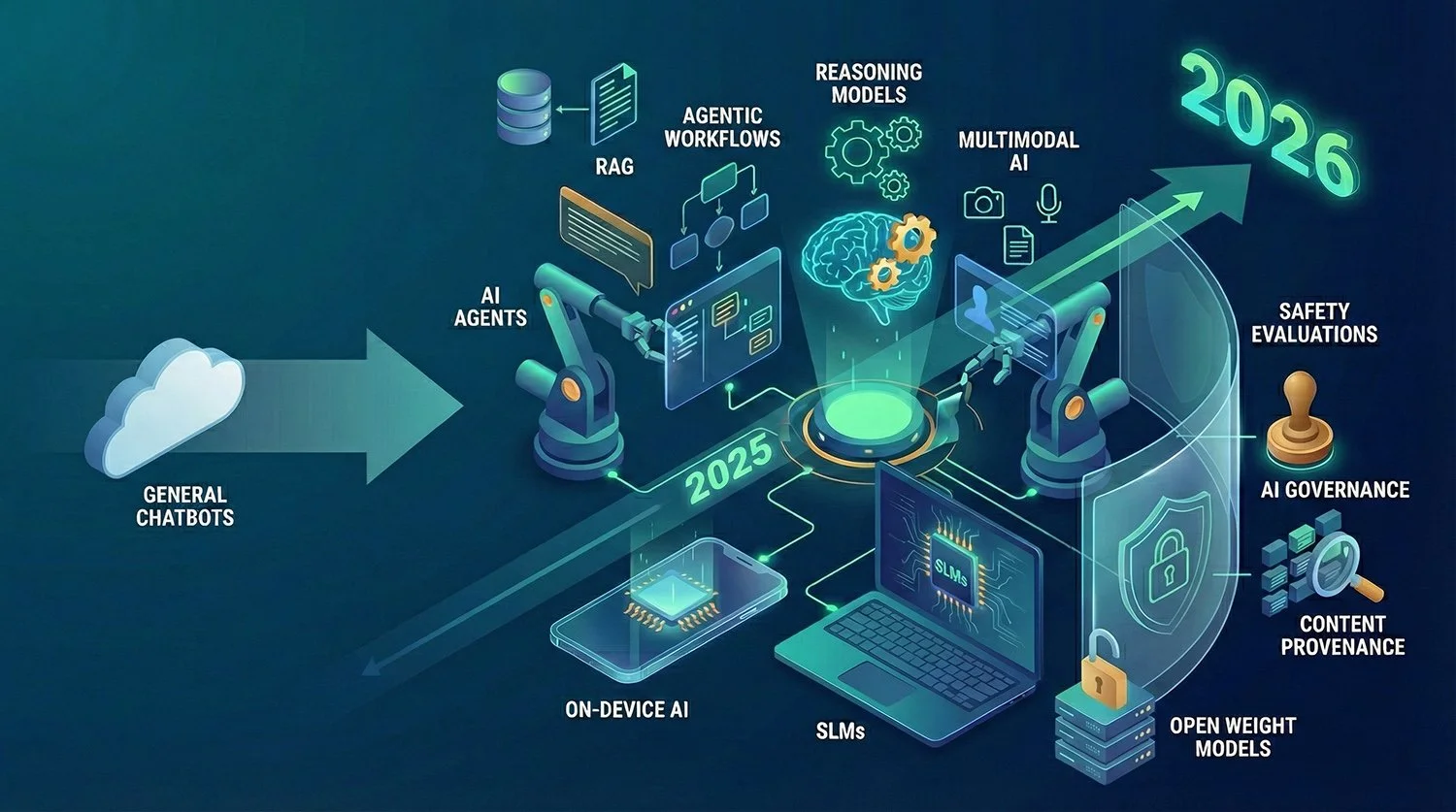
AI enables progression from static rules to adaptive systems, exemplified by LG refrigerators showcased at IFA 2025 that employ AI for analyzing usage behavior and optimizing cooling during low-usage periods to save energy. Such integrations foster interconnected environments where devices synchronize for scenarios like security activation.
PCMag emphasizes AI's role in improving usability, including voice interfaces for accessibility, while noting risks in data security. At IFA 2025 in Berlin from September 5-10, AI dominated exhibits across appliances and security, marking a shift toward machine learning-driven solutions.
























Background and Development of Smart Home AI
Smart home origins date to the 1960s with systems like the ECHO IV for basic control, advancing via X10 protocols in the 1970s for networked communication. The 2010s introduced IoT via wireless standards, with AI gaining traction after 2015 through devices like the Amazon Echo, incorporating natural language capabilities.
By the 2020s, AI supported contextual adaptations, such as learning-based navigation in cleaners or predictive scheduling in thermostats. Progress was fueled by reduced component costs and cloud infrastructure, with investments from firms like Google and Amazon leading to standards like Matter in 2022 for unified compatibility. The COVID-19 period accelerated uptake, with one-third of smart device owners in U.S. broadband households reporting increased usage, according to Parks Associates.













Market Impact and Future Trends
Valued at US$162 billion in 2025, the smart home market is forecast to expand to US$1.4 trillion by 2034, with AI driving a CAGR of 20-27% via optimizations in security and resource use. Benefits encompass 10-15% lower energy demands from AI thermostats, based on independent studies of similar devices, and bolstered safety, though issues like protocol fragmentation and vulnerabilities remain.
Trends indicate advanced AI incorporation, including generative tools for management and synergies with vehicles for energy balancing. Projections suggest AI in automation reaching US$75 billion by 2029, propelled by sustainability and demographic shifts toward assisted tech. Emphasis is expected on dependable, privacy-centric deployments under increasing oversight.





















 TheDayAfterAI News
We are a leading AI-focused digital news platform, combining AI-generated reporting with human editorial oversight. By aggregating and synthesizing the latest developments in AI — spanning innovation, technology, ethics, policy and business — we deliver timely, accurate and thought-provoking content.