
California Enacts First U.S. Frontier AI Transparency Law: SB 53 Signed by Newsom

Image Source: Economic Security Project
Governor Gavin Newsom on 29 September 2025 signed Senate Bill 53, the Transparency in Frontier Artificial Intelligence Act, or TFAIA, marking the United States first state level mandate for openness from developers of cutting edge AI systems. The law targets frontier models, those massive AI foundations trained with immense computing power, aiming to curb risks like cyber attacks or weapons development while keeping the Golden States tech engine humming.
This move comes as California, home to 32 of the worlds top 50 AI firms and the Bay Area recipient of more than half of global venture capital flowing into AI and machine learning startups in 2024, seeks to lead on responsible tech amid a federal vacuum. Newsom described the act as a way to build public trust in AI, a technology he called the new frontier in innovation, without stifling growth. The legislation responds directly to a March 2025 report from an AI experts panel convened at his request, which urged evidence based guardrails for frontier models capable of reshaping society.




























Pioneering Provisions for Frontier AI Oversight
At its core, TFAIA zeroes in on frontier developers, those training foundation models using more than 10 to the power of 26 integer or floating point operations, roughly equivalent to the compute behind systems like GPT 4 or beyond. Large frontier developers are a subset: those meeting the compute threshold who also, together with affiliates, had annual gross revenues exceeding 500 US million dollars in the preceding calendar year. These players must craft and post online a frontier AI framework, a detailed playbook outlining how they weave in national and international standards to spot and tame catastrophic risks.
Such risks include AI aiding in chemical or biological weapons, launching unsupervised cyber assaults akin to murder or theft, or slipping human control in ways that could harm more than 50 people or rack up a billion dollars in property damage from one event. Frameworks demand annual reviews, with material changes explained publicly within 30 days, and quarterly summaries of internal risk assessments from frontier model use sent to the states Office of Emergency Services.
Before rolling out new or substantially modified frontier models, all developers file transparency reports detailing release dates, supported languages, output modalities, intended uses, and restrictions or conditions. Larger outfits add summaries of catastrophic risk assessments and steps to align with their frameworks, potentially bundling these into broader system cards. The law bars materially false or misleading statements about risks or framework compliance, with carve outs for trade secrets, cybersecurity, public safety, or national security, provided companies keep unredacted versions on file for five years.
A standout feature is the 15 day clock for reporting critical safety incidents to the Office of Emergency Services, such as unauthorised access to model weights causing injury or AI deception evading developer controls in tests gone awry. Developers must alert promptly, with even tighter 24 hour windows to appropriate authorities if death or serious injury looms. The public can tip off via a mechanism the office must establish, and starting 1 January 2027, annual anonymised aggregates of these events will hit the public domain, minus sensitive bits.
Whistleblower shields round out the package, baked into the Labor Code for covered employees assessing safety risks. These workers cannot face retaliation for flagging dangers in good faith to bosses, the Attorney General, federal watchdogs, or colleagues with oversight authority. Large developers must offer anonymous internal channels, update reporters monthly, and brief top brass quarterly. Contracts gagging such talk are voided, and courts can fast track injunctions against reprisals, shifting the proof burden to firms once foul play surfaces.
Enforcement rests solely with the Attorney General, who can chase civil penalties up to one million dollars per violation, depending on severity. The acts chaptering date is 29 September 2025, with key provisions like annual reports kicking in from 2027.



























Roots in Cautionary Veto and Expert Counsel
TFAIA traces its lineage to a more muscular bill, SB 1047, which Newsom vetoed on 29 September 2024 amid industry pushback over fears it would drive AI pioneers to friendlier shores like Texas. That earlier measure sought third party audits and kill switches for rogue models; this iteration dials back to transparency and reporting, informed by the 18 March 2025 AI working group report involving figures like former Supreme Court Justice Mariano Florentino Cuellar and Stanford AI pioneer Fei Fei Li.
The groups blueprint stressed empirical analysis over hype, balancing disclosure needs against security pitfalls, and pegged regulation to verifiable compute thresholds for simplicity. Senator Scott Wiener, a San Francisco Democrat and the bills architect, hailed the signing as a global first for frontier AI, crediting Newsoms tweaks for threading the needle between innovation and accountability. With federal efforts stalled, Wiener argued, California must fill the breach to safeguard its 15.7 percent slice of US AI job postings and trillion dollar tech giants like Nvidia and Google.
Cuellar, reflecting on the reports trust but verify ethos, noted that as frontier breakthroughs accelerate, policy must lean on science to keep America ahead. The acts findings underscore this: AI promises boundless gains but harbours perils demanding proactive transparency, especially with no overarching US framework in sight.
























Equitable Compute Push and Broader Safeguards
Beyond developer duties, TFAIA seeds CalCompute, a 14 member consortium under the Government Operations Agency tasked with blueprinting a public cloud cluster for ethical AI research. Prioritising University of California hosts, it eyes workforce equity and sustainability, with a framework due by 1 January 2027, contingent on funding. The Department of Technology will yearly assess and recommend updates to definitions like frontier model, drawing on stakeholder input and global norms to stay nimble.
Local rules clashing with these standards are preempted if adopted on or after 1 January 2025. Exemptions shield reports from public records laws to avert misuse, and federal conflicts could pause application. Remedies stack atop existing statutes, ensuring no gaps for non covered staff.





























Mixed Cheers from Tech Circles and Watchdogs
Industry voices greet TFAIA with cautious nods, viewing its narrow aim at revenue heavyweights as a win over blanket rules. Legal experts called it a shift from voluntary pledges to hard law, urging firms to audit frameworks now. Others flagged the compliance lift for transparency reports, while advising smaller developers to track ripples anyway.
Critics, though, see shortfalls in whistleblower hurdles, like proving specific dangers, as potentially too steep. The scopes tightness offers relief for most, sparing the vast majority of AI builders.
Broader, the law echoes Europes AI Act in risk tiers but skips its broad bans, focusing instead on US style disclosure. Analysts say it snaps the wait and see spell on regulation, proving states can act without choking progress.























Charting AIs Next Horizon
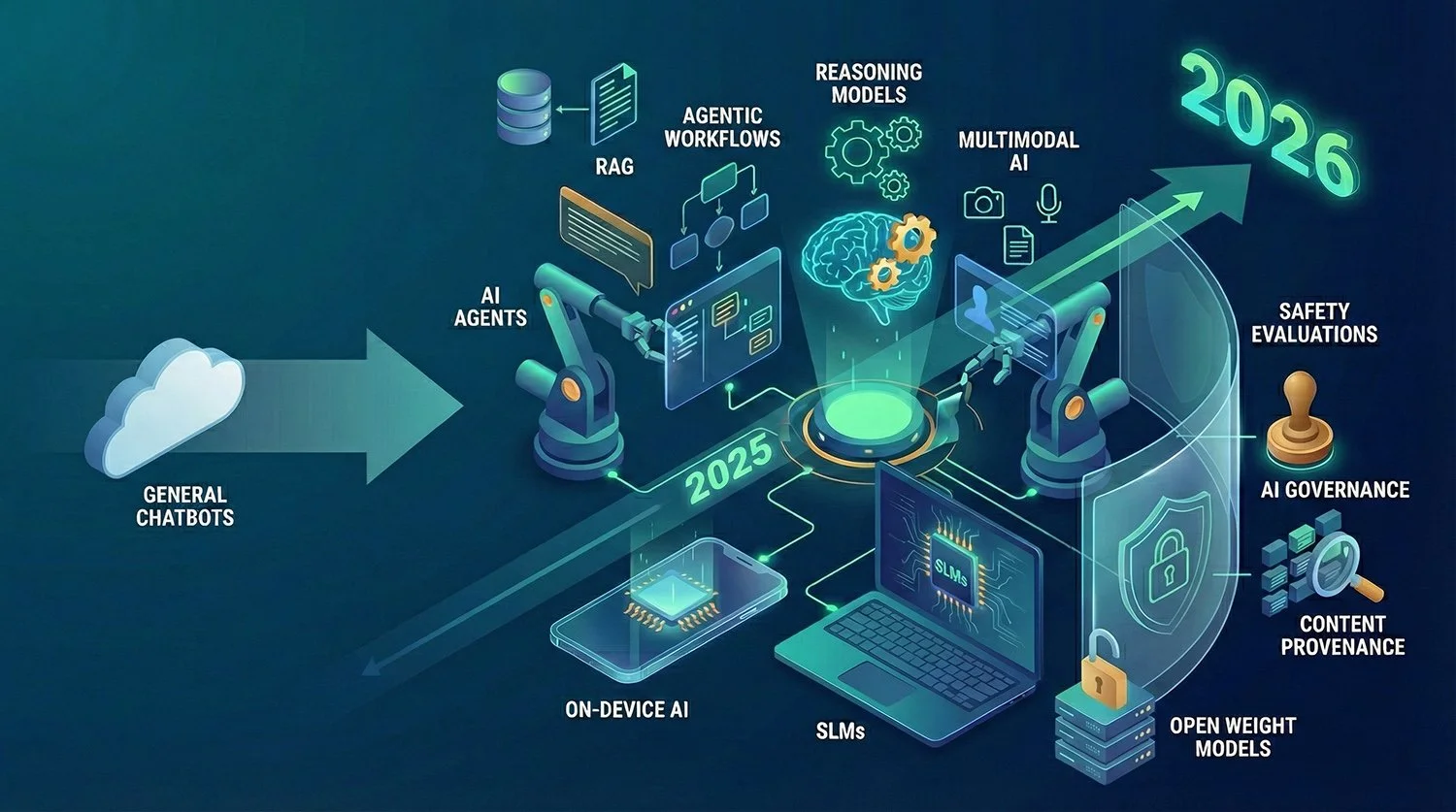
As TFAIA beds in, eyes turn to its ripple effects. It could blueprint for states like New York or Illinois mulling AI bills, pressuring Washington to harmonise or risk a patchwork. Globally, it aligns California with Japan and South Koreas risk based probes, bolstering the states clout in setting norms.
Yet challenges loom: verifying compute claims without audits, or adapting to leaps in model power. With annual tweaks baked in, the act promises evolution, not ossification, in taming AIs wild potential. For Californians, its a quiet vow that the tech birthing in their backyard serves all, not just the boldest coders.


































 TheDayAfterAI News
We are a leading AI-focused digital news platform, combining AI-generated reporting with human editorial oversight. By aggregating and synthesizing the latest developments in AI — spanning innovation, technology, ethics, policy and business — we deliver timely, accurate and thought-provoking content.