
OpenAI Signs USD 38 Billion AWS Deal in Strategic Cloud Expansion

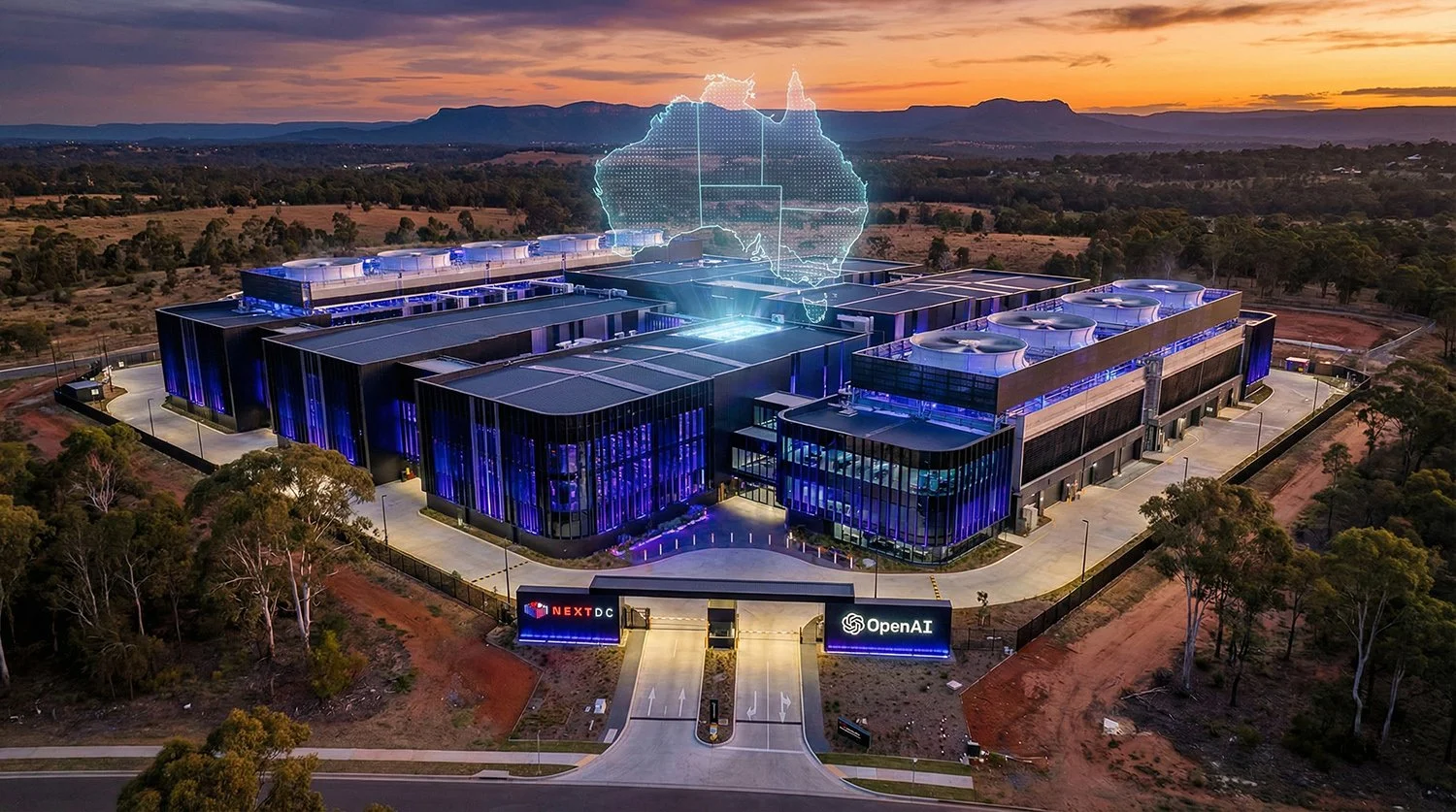
AI-generated Image (Credit: Jacky Lee)
OpenAI, the maker of ChatGPT, has signed a seven-year, USD 38 billion cloud services agreement with Amazon Web Services (AWS), cementing one of the largest infrastructure deals yet in the generative AI boom.
Announced on 3 November 2025, the agreement gives OpenAI immediate access to AWS data centres and “hundreds of thousands” of Nvidia graphics processors to train and run its next generation of models. All planned capacity is expected to be online by the end of 2026, with room to expand in 2027 and beyond.
Amazon has said the infrastructure will include large clusters built around Nvidia’s latest accelerators (such as the GB200 and GB300 series) alongside its own Trainium and Inferentia chips, part of a broader push to position AWS as a top-tier AI supercomputing platform.
The announcement comes days after OpenAI completed a major corporate restructuring that expanded its freedom to sign non-Microsoft cloud deals.




















From Microsoft Dependence to Multi-Cloud Strategy
In late October, OpenAI converted its operating business into OpenAI Group PBC, a for-profit public benefit corporation controlled by the non-profit OpenAI Foundation. The recapitalisation valued the company at roughly USD 500 billion and formalised Microsoft’s stake at 27%, while leaving around 26% with the foundation and the rest with employees and other investors.
Crucially, the new structure removed a clause from the 2019 Microsoft deal that had given the company a form of first refusal on supplying cloud compute. At the same time, OpenAI committed to purchase about USD 250 billion of Azure services over coming years, ensuring Microsoft remains a core infrastructure partner even as OpenAI diversifies.
Microsoft has invested more than USD 13 billion into OpenAI since 2019 and has been the primary cloud provider for flagship models like GPT-4 and the Azure OpenAI Service.
The AWS agreement therefore marks a strategic shift rather than a full break: OpenAI can now spread training and inference workloads across multiple hyperscalers — Azure, AWS and, via separate deals, Oracle and specialised providers such as CoreWeave — reducing dependency on any single vendor. Reuters has reported that OpenAI has also agreed to buy around USD 300 billion of compute over roughly five years from Oracle, and signed a long-term contract with GPU-focused cloud startup CoreWeave estimated at about USD 22.4 billion.
OpenAI CEO Sam Altman has framed the AWS pact as part of a broader effort to build a “frontier AI” compute ecosystem. In public statements, he has argued that scaling such models requires extremely reliable computing capacity at unprecedented scale, and has pointed to cloud diversification as a way to secure it.
























Financial Stakes and Infrastructure Ambitions
The AWS deal deepens an already aggressive spending trajectory. Altman has said OpenAI and its partners plan to invest about USD 1.4 trillion in AI infrastructure over the next decade, targeting roughly 30 gigawatts of computing capacity — enough, he has claimed, to power around 25 million US homes.
Analysts cited in UK press and bank research estimate that, under current plans, OpenAI could lose around USD 23.5 billion in 2025 and up to USD 60 billion by 2027 before any path to profitability, reflecting the cost of these commitments. HSBC and other institutions have warned that such multi-trillion-dollar capex across the sector raises the risk of an AI investment bubble if revenues do not ultimately catch up.
Despite these concerns, investor reaction to the AWS announcement was positive. Amazon’s stock rose about 5% on the day, adding nearly USD 140 billion in market value and pushing the company to a record valuation, while Microsoft shares dipped briefly before stabilising.
Paolo Pescatore, analyst at PP Foresight, described the OpenAI–AWS agreement as “hugely significant” and a strong endorsement of AWS’s ability to deliver compute at frontier scale.

























Diversification and a Fragmenting Model Landscape
The AWS deal underscores how major AI labs are embracing multi-cloud strategies to secure capacity, reduce outage risk and strengthen bargaining power on price.
For OpenAI, analysts expect AWS to host a mix of training and inference workloads, complementing Azure’s existing role and any future deployments on Oracle or other platforms. That gives OpenAI more flexibility to route jobs based on performance, latency, regulatory or cost considerations, rather than being locked into a single provider.
At the same time, the broader market is seeing growing “model fragmentation”: instead of relying on a handful of global foundation models, enterprises and governments are turning to regional or sector-specific systems tuned to local laws and data-sovereignty requirements.
A prominent example is Mistral AI. The Paris-based startup was valued at about €11.7 billion after a €1.7 billion funding round led by Dutch chip-equipment maker ASML in September 2025, making it one of Europe’s most valuable AI firms. Mistral’s Magistral family, launched in June 2025, focuses on transparent multi-step reasoning, with both open-source and proprietary variants. Its Saba model, introduced earlier in 2025, targets Arabic and South Asian languages, reflecting a strategy of building regionally adapted systems.
These regional models appeal to European telecoms, banks and public-sector users that want to comply strictly with EU data-protection rules and reduce reliance on US-based providers. Mistral’s leadership has publicly argued that Europe needs its own hyperscale infrastructure for AI, though current investments still lag US and Chinese levels.






















Anthropic–Big Tech Alliances and Meta–Oracle Talks
OpenAI is not alone in pursuing multi-billion-dollar, multi-cloud alignments.
Anthropic, developer of the Claude chatbot family, is backed by Amazon, Google and Salesforce, among others. Amazon has pledged up to USD 4 billion in funding and designated AWS as Anthropic’s primary cloud infrastructure partner, while Anthropic also runs workloads on Google Cloud’s TPU-based systems and has expanded its collaboration with Google on agentic workflows in Vertex AI.
Meta Platforms is following a similar path. The company has signed a deal to use Oracle Cloud Infrastructure to train and deploy Llama models and other AI systems, and, according to Reuters, is in advanced talks over a separate multi-year cloud contract with Oracle worth about USD 20 billion. Parallel negotiations with Google could see Meta rent Cloud TPUs and later buy them outright, further diversifying its hardware mix.
Taken together with OpenAI’s USD 38 billion AWS pact and its massive Azure and Oracle commitments, these deals illustrate how AI leaders are distributing workloads across multiple clouds and chip architectures (GPUs, TPUs and custom accelerators) to secure capacity and hedge against supply bottlenecks.




























Market Signal and Geopolitical Undercurrents
Financial markets treated the OpenAI–AWS agreement as a vote of confidence in Amazon’s cloud arm, which some investors had feared was falling behind Microsoft and Google in the AI race. The stock’s sharp rise after the announcement helped push Amazon’s valuation to a record USD 2.74 trillion.
At a geopolitical level, the deal reinforces US leadership in AI infrastructure. OpenAI’s long-term spending plans, combined with the Stargate joint venture with Oracle, SoftBank and MGX, aiming to invest up to USD 500 billion in US-based AI datacentres by 2029, highlight how closely advanced models are tied to domestic energy, industrial and security policy.
This concentration has prompted questions from regulators and central banks about systemic risk. The OECD and others have warned that AI-related capex is buoying short-term growth but could exacerbate financial vulnerabilities if expected returns fail to materialise.



























Agentic AI, Enterprise Software and the Capacity Question
The AWS deal also needs to be seen in the context of how AI is reshaping enterprise software.
Analyst houses increasingly focus on “agentic AI” — systems that can plan and execute multi-step tasks across applications with limited human supervision. Forrester’s recent “Predictions 2026” work suggests that by 2026 roughly half of ERP vendors will have launched autonomous governance modules that embed explainable AI, real-time compliance checks and automated audit trails into core workflows.
Gartner, meanwhile, forecasts that worldwide AI spending will reach around USD 1.5 trillion in 2025 and exceed USD 2 trillion in 2026, driven by the integration of AI into cloud infrastructure, business software and consumer devices as well as dedicated generative models.
If those projections hold, much of that agentic workload — automated invoice processing, supply-chain optimisation, customer-service orchestration and more — will run on hyperscale platforms like AWS, Azure and Oracle Cloud. Deals like OpenAI’s therefore function not only as financing arrangements for frontier research, but as long-term bets that enterprise demand for AI-enhanced workflows will justify the datacentres being built today.
At the same time, industry leaders such as IBM’s Arvind Krishna have publicly questioned whether multi-trillion-dollar data-centre investments can ever fully pay off at current infrastructure costs, highlighting the risk that AI capex overshoots sustainable economic returns.












































 TheDayAfterAI News
We are a leading AI-focused digital news platform, combining AI-generated reporting with human editorial oversight. By aggregating and synthesizing the latest developments in AI — spanning innovation, technology, ethics, policy and business — we deliver timely, accurate and thought-provoking content.