
Target Launches ChatGPT Shopping App Amid 119% Growth in AI Traffic
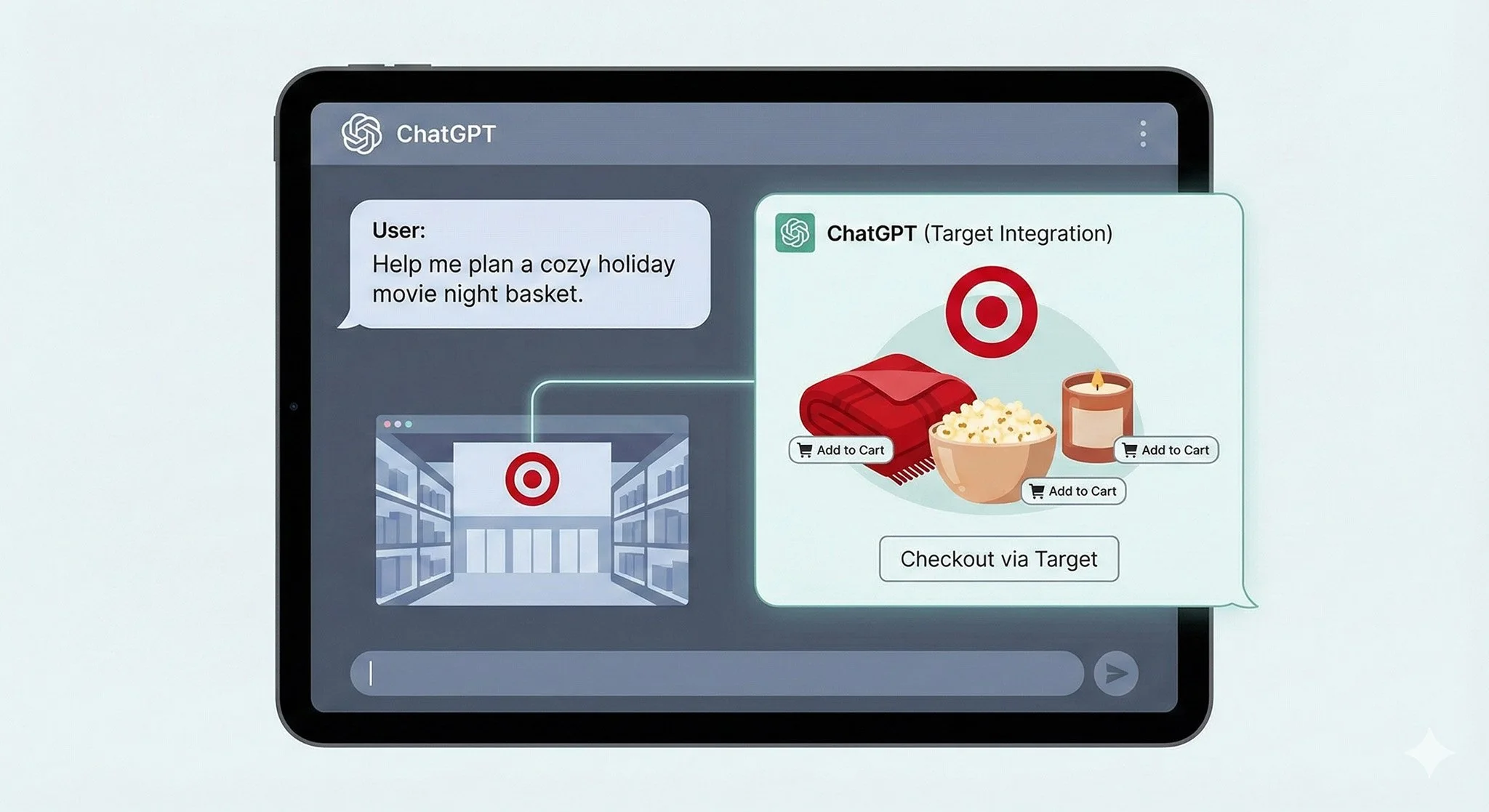
AI-generated Image for Illustration Only
(Credit: Jacky Lee)
Target Corporation is bringing its aisles into OpenAI’s ChatGPT, rolling out a beta app that lets shoppers browse products, build multi-item baskets and check out without leaving the chatbot. Announced on 19 November and launching in time for the U.S. Thanksgiving shopping week, it is among the first full-funnel retail experiences embedded directly inside a major generative AI platform.
The move extends an existing enterprise partnership between Target and OpenAI and underscores how both companies see “agentic commerce” – AI agents that can search, recommend and transact on a shopper’s behalf – as a next phase of e-commerce.























How the Target App Inside ChatGPT Works
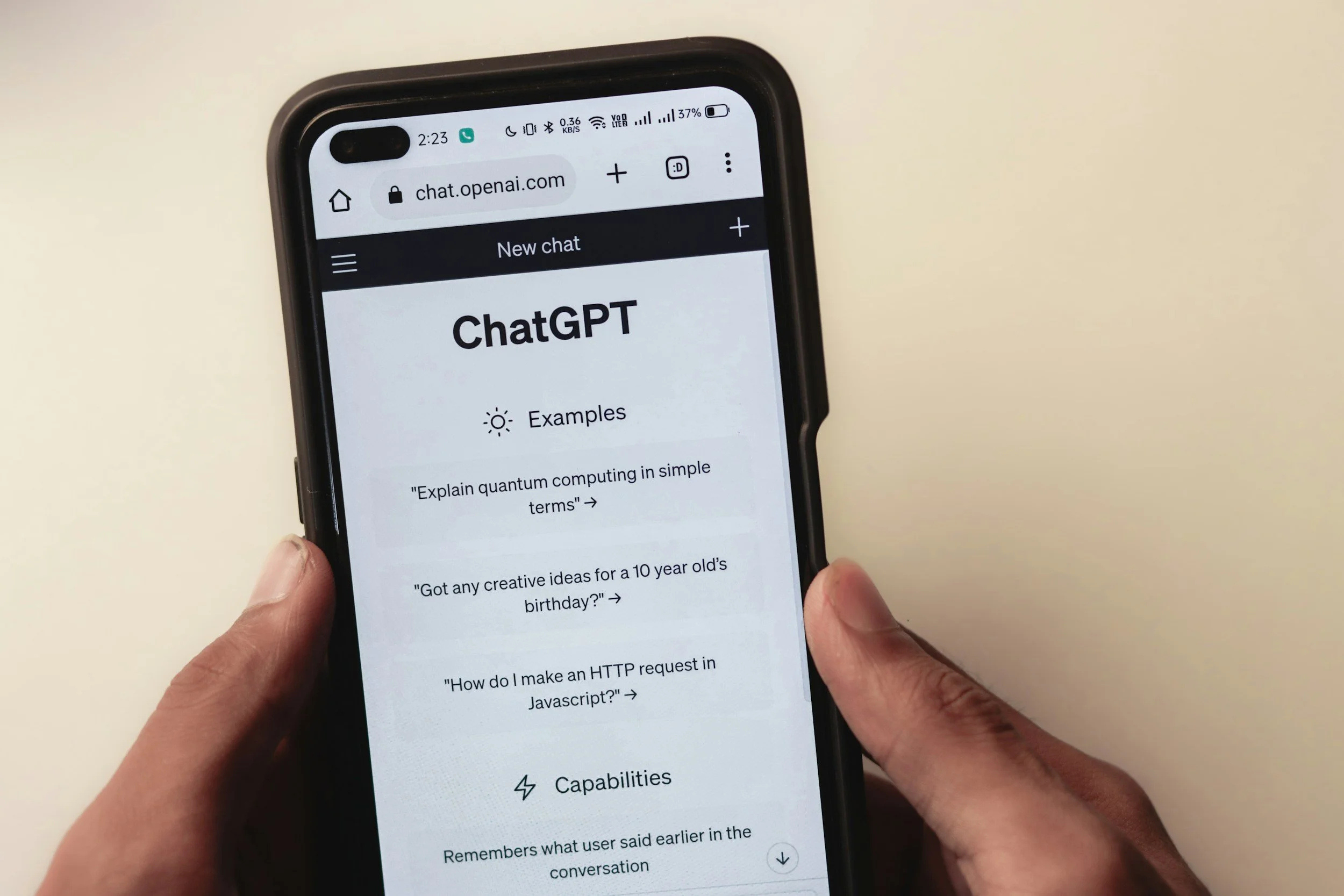
Within a ChatGPT conversation, users can invoke the Target app by tagging “Target” and describing what they need – for example, planning a holiday movie night or a child’s birthday party. The app responds with curated suggestions from Target’s assortment, such as throws, candles, snacks or themed decorations, and allows shoppers to add multiple items to a single cart.
From there, customers can complete purchases using their Target account and choose standard shipping, free same-day Drive Up, or in-store Order Pickup where available, mirroring options in Target’s own app. Same-day delivery via partners is in development but not yet live inside ChatGPT.
The experience is powered by ChatGPT’s new apps platform. According to OpenAI, apps are currently available to logged-in ChatGPT users outside the European Economic Area, Switzerland and the UK on the Free, Go, Plus and Pro plans, with Business, Enterprise and Education access following later.
Target says future updates to its ChatGPT app will include deeper personalisation, such as linking Target Circle loyalty accounts and tailoring recommendations based on past Target and ChatGPT interactions, while still giving users control over data sharing preferences.


























Building on Target’s Internal Use of OpenAI
The consumer-facing app sits on top of a broader enterprise agreement. Under the partnership expansion, Target will continue using OpenAI APIs and ChatGPT Enterprise across roughly 18,000 headquarters employees to support tasks such as demand forecasting, product development, software engineering and internal knowledge search.
Target has said that AI-powered tools already assist with supply-chain optimisation, store labour planning and customer-service workflows, with goals to reduce stockouts and free staff for higher-value work.
On the OpenAI side, ChatGPT Enterprise and Business products offer SOC 2–aligned security, admin controls and access to the latest GPT-5-series models, part of a push to position ChatGPT not just as a consumer chatbot but as a workplace platform.





















From Apps and MCP to Instant Checkout and ACP
Target’s app is one of several built on OpenAI’s Apps SDK, introduced at the company’s DevDay event in October. The SDK lets developers create interactive mini-apps inside ChatGPT, alongside early partners such as Booking.com, Canva, Coursera, Figma, Expedia, Spotify and Zillow. These apps use the open Model Context Protocol (MCP), originally introduced by Anthropic and now adopted by multiple AI providers, to connect models to external tools and data safely.
In commerce, OpenAI’s Instant Checkout feature – launched in late September for U.S. Etsy and Shopify merchants – allows users to complete purchases directly in ChatGPT using Stripe-powered payments. Retailers pay a transaction fee, and enabling Instant Checkout can influence where their products appear in ChatGPT shopping results, something OpenAI now discloses in its documentation.
Those payments run over the Agentic Commerce Protocol (ACP), an open specification designed to standardise how AI agents hand off shopping carts, prices and order details to merchants. PayPal recently announced it would support ACP as part of its own integrations with ChatGPT, joining platforms such as Shopify and Etsy.
Target’s ChatGPT app uses this stack: ChatGPT for conversation, MCP to connect to Target’s catalogue and account systems, and Instant Checkout plus ACP to complete single- and multi-item purchases.



























Why Target is Moving Now
The launch is timed for the peak U.S. holiday period. The National Retail Federation expects 2025 holiday retail sales to top the trillion-dollar mark again, and AI-assisted discovery is becoming a visible part of that season. Salesforce estimates that traffic from AI assistants such as ChatGPT and Gemini grew 119 per cent year-on-year in the first half of 2025, from a still-small base, with significantly higher conversion than social media or traditional search.
Target is also under pressure to reignite growth. In its most recent quarter, the retailer reported a 2.7 per cent decline in comparable sales, including a 3.8 per cent drop in stores, while merchandise sales over the first nine months of 2025 were down around 2 per cent year-on-year. Management has highlighted digital channels and more flexible shopping options as key levers to stabilise performance.
Beyond Target, major consultancies see AI shopping agents as a large structural shift. McKinsey estimates that “agentic commerce” – AI agents that can plan purchases, compare prices and transact autonomously – could orchestrate up to US$1 trillion in U.S. B2C retail revenue and US$3–5 trillion globally by 2030.
At the consumer level, expectations are shifting. A widely cited McKinsey personalisation study found that roughly seven in ten consumers expect personalised interactions and become frustrated when companies fall short. Separate surveys suggest that well over half of shoppers have tried voice or conversational search at least once, and a growing minority say they are open to using AI assistants to help with purchases.
For OpenAI, commerce integrations offer a new revenue stream on top of subscriptions, building on a user base that now exceeds 800 million weekly active ChatGPT users, according to recent third-party estimates.

























What Early Results Elsewhere Suggest
Target’s initiative follows other large retailers’ experiments with AI shopping assistants. Amazon’s Rufus, launched in early 2024 and gradually expanded, now serves hundreds of millions of customers and has seen interaction volumes more than double year-on-year. Internal and partner analyses suggest that customers who engage with Rufus are materially more likely to complete a purchase, although causality is still debated.
Walmart, meanwhile, has introduced its own generative AI assistant, Sparky, in its apps and website, and has partnered with OpenAI on internal tooling rather than on a public ChatGPT app. Google has integrated its Gemini models into shopping features that summarise reviews, compare products and, in some markets, can call stores to check inventory or complete purchases through Google Pay.
In parallel, OpenAI has launched a separate Shopping Research tool inside ChatGPT that scans online product information and reviews to create buyer guides. The feature is free for logged-in users globally and emphasises transparency: it links to source sites so shoppers can verify details, and OpenAI warns that AI-generated summaries may still contain errors or omissions. Recent changes by Amazon to block OpenAI’s crawlers from its retail site also show how control over data access is becoming a strategic issue in this space.
Taken together, these experiments suggest that AI assistants can drive incremental traffic and higher conversion, but also that user experience, accuracy and retailer data policies will determine how much of that potential is realised.
























Rankings, Data and Hallucinations
Target’s ChatGPT app arrives amid wider debate over how AI platforms rank and present commercial options. OpenAI has disclosed that enabling features like Instant Checkout can influence how often a merchant’s products are surfaced in shopping-related prompts, raising questions among some analysts about whether ranking systems could evolve into a new form of paid placement over time.
Retailers are also cautious about data flows. When a purchase begins and ends inside ChatGPT, some of the upper-funnel browsing data – historically valuable for retailers’ own ad businesses – sits with OpenAI instead of the merchant’s website. At the same time, retailers want reassurance that their product feeds and customer-support logs are not being reused to train models in ways that might benefit competitors.
On the AI side, reliability remains a concern. OpenAI’s own research this year acknowledged that even advanced models still “hallucinate” – confidently stating incorrect information – when training and evaluation methods reward guessing. That is manageable when suggesting throw blankets, but more serious when summarising return policies, product safety information or prices.
Target and OpenAI say guardrails, including up-to-date product feeds, price checks against Target’s systems and clear links back to official pages, are key to keeping the ChatGPT shopping experience trustworthy. But consumer advocates and academics have urged regulators to monitor how AI agents disclose sponsored placements, how they handle conflicting product data and how shoppers can contest faulty recommendations.






























A Crowded Field of AI “Gatekeepers”
Target’s ChatGPT app joins a growing set of AI-mediated shopping gateways:
Amazon continues to invest in Rufus, tying it into Prime, ads and Alexa.
Walmart leans on Sparky and its own apps, plus internal AI tools from OpenAI and others.
Google is pushing Gemini-based shopping modes that aggregate its vast product index, with “buy for me” auto-purchase experiments in select markets.
Meta is rolling out Business AI, a Llama-based agent that brands can deploy in ads and on their websites, especially across Facebook, Instagram and WhatsApp.
Unlike Amazon’s relatively closed ecosystem, OpenAI’s ACP aims to be an open standard that many merchants – from marketplaces to direct-to-consumer brands – can plug into. That could make ChatGPT more of a neutral “front end” for multiple retailers, though critics note that whoever controls the AI interface still wields enormous influence over which products are shown first.

















What It Means for Shoppers and Retailers
For shoppers, Target’s ChatGPT integration will not replace the traditional website or app, especially for highly visual browsing or detailed product comparison. Instead, it offers an additional channel for moments when a conversational prompt – “organise a cosy winter movie night for four adults and two kids, under US$100” – feels easier than navigating filters and search menus.
For Target and OpenAI, the bet is that these agentic flows will become a meaningful driver of both sales and data. Morgan Stanley recently forecast that by 2030, nearly half of U.S. online shoppers could be using AI agents, adding more than US$100 billion to U.S. e-commerce.
Whether that value accrues primarily to retailers, platforms like OpenAI and Google, or a mix of both remains unresolved. What is clear is that the path to the checkout page increasingly runs through an AI conversation – and Target’s new app is a prominent sign that mainstream retail now sees that chat window as part of the high street.































 TheDayAfterAI News
We are a leading AI-focused digital news platform, combining AI-generated reporting with human editorial oversight. By aggregating and synthesizing the latest developments in AI — spanning innovation, technology, ethics, policy and business — we deliver timely, accurate and thought-provoking content.