
SAS Targets 1 Million Talent Gap with 4 New AI Training Tracks

AI-generated Image for Illustration Only
(Credit: Jacky Lee)
As India’s AI market is projected to reach around USD 7.8 billion by 2025, training the workforce fast enough to meet demand remains a major concern. Against this backdrop, analytics major SAS is expanding its Academy for Data & AI Excellence in India, a structured programme designed to build skills in generative AI, data engineering and business analytics for both early-career and mid-career professionals.
A 2025 analysis by Bain & Company, reported in outlets such as Business Standard, estimates that by 2027 India’s AI sector could generate more than 2.3 million job openings, while the domestic AI talent pool may reach only about 1.2 million skilled professionals – implying a shortfall of over one million AI-ready workers if reskilling does not keep pace.


















Four Tracks for Different Career Stages
SAS markets the Academy for Data & AI Excellence as a modular, weekend-friendly offering for working professionals, with four distinct learning tracks delivered online via SAS Viya, Python and related tools. The tracks differ in depth and duration rather than following a single fixed template.
Each route combines conceptual grounding with hands-on exercises, including components on generative AI, agentic AI and responsible AI, with capstone projects based on practical business scenarios.
Foundations of Data & AI
The Foundations of Data & AI track is aimed at beginners and career switchers. It introduces:
Basic statistics and data literacy
Data preparation and visualisation
Introductory programming in SAS and Python
An overview of machine learning concepts
Delivered over roughly 60 hours of instruction, this track is positioned as an entry point for those with limited technical background, focusing on building confidence with tools and workflows rather than advanced theory.
Applied AI & ML with GenAI and Agentic AI
The Applied AI & Machine Learning with GenAI & Agentic AI track is a more intensive option, with around 150+ hours of coursework. It covers:
Supervised and unsupervised machine learning
Model evaluation and deployment on SAS Viya
Generative AI use cases and prompt engineering
Agentic AI concepts and ModelOps / MLOps workflows
Assignments are built around industry-style problems, such as customer churn prediction or risk scoring, to align with enterprise roles in AI development and model operations.
Applied Data Engineering for GenAI & Agentic AI Systems
The Applied Data Engineering for GenAI & Agentic AI Systems track focuses on the data plumbing needed to support modern AI stacks. Over around 80 hours, topics include:
Data ingestion and ETL pipelines
Working with cloud-hosted data on SAS Viya
Automation and orchestration for GenAI and agentic workflows
Integration of structured and unstructured data sources
The emphasis is on preparing reliable, scalable data pipelines to feed generative and agentic AI systems, particularly in regulated sectors such as banking and telecom.
Decision Intelligence & Business Analytics for the GenAI Era
The Decision Intelligence & Business Analytics for the GenAI Era track — about 112 hours long — is geared to business users and analysts with limited coding experience. Using SAS’s visual tools, it covers:
Exploratory analysis and dashboarding
Predictive and prescriptive analytics with low-code / no-code interfaces
Scenario planning and what-if analysis
Responsible AI and bias detection in decision systems
This route is designed for managers, analysts and domain specialists who need to interpret and act on AI-driven insights rather than build models from scratch.
Participants across tracks receive SAS digital badges and Academy completion certificates, and are positioned to sit for SAS’s global certification exams. SAS notes that a large majority of Fortune 100 companies use SAS software, which the company argues enhances the industry relevance of its credentials.














Addressing India’s AI Skills Gap
India’s AI and analytics market has expanded rapidly, driven by digital public infrastructure, smartphone penetration and cloud adoption. A range of studies by industry bodies and consultancies highlight both the opportunity and the skills challenge:
Earlier McKinsey work estimated that AI could add hundreds of billions of US dollars to India’s GDP by the mid-2020s.
Bain & Company projects that by 2027 there could be more than 2.3 million AI-related job openings, with only about 1.2 million suitably skilled professionals available, pointing to a gap of over one million workers without significant reskilling.
Other analyses and media reports similarly warn that only a minority of the existing workforce currently has AI-related skills, especially in areas such as machine learning, data engineering and AI governance.
SAS, founded in the 1970s as a statistical software provider, has increasingly repositioned itself as an AI and analytics platform vendor. In India, the Academy initiative sits alongside previous data-literacy and analytics learning offerings, but with an explicit focus on generative AI, agentic systems and responsible AI frameworks.
Company spokespeople and course materials emphasise ethical considerations such as data privacy, transparency and bias mitigation, reflecting wider concerns among regulators and enterprises about the risks of deploying AI at scale.
























Hands-On, Domain-Focused Approach
A recurring theme in SAS’s Academy messaging is a shift away from purely general-purpose models towards domain-specific, enterprise-aligned AI. Rather than centring solely on very large, general models, the curriculum highlights:
Use of generative AI in specific business contexts, such as customer analytics, risk and fraud, or operations optimisation
Integration of agentic AI into workflows, where systems can trigger actions or recommendations under defined guardrails
Techniques for efficiently adapting existing models, with an emphasis on governance and performance monitoring
These themes echo broader industry trends, where many organisations are experimenting with specialised and open-weight models tuned to their own data, rather than relying only on closed, general-purpose systems.
SAS has also embedded generative capabilities into its SAS Viya platform, including tools for synthetic data generation and natural language interfaces for analytics, which the Academy uses in lab exercises.
























Early Signals, Long-Term Questions
Publicly available material on the Academy focuses more on structure and content than on detailed outcome metrics. SAS highlights potential benefits such as:
Stronger pipelines of AI-literate talent for banks, insurers, telecom operators and manufacturers
Support for enterprises seeking to operationalise generative AI and agentic AI within existing governance frameworks
Pathways for individuals to gain vendor-backed credentials that complement university degrees or short online courses
Some independent commentators have noted that enterprise-oriented academies like SAS’s can play a useful role in regulated industries that require standardised toolchains and auditability, even as open-source ecosystems and academic programmes cater to other segments of the talent market.
However, detailed public data on completion rates, salary uplift or long-term career trajectories for Academy graduates are not yet widely available, making it too early to draw firm conclusions about long-term impact.



















How SAS Compares in India’s AI Training Landscape
SAS’s Academy sits within a crowded and fast-evolving upskilling ecosystem in India that spans corporate academies, edtech platforms and university programmes:
Corporate academies: Firms such as EY have built large internal AI academies to train tens of thousands of employees in generative AI and automation, later extending parts of these programmes to clients.
Edtech providers: Platforms like Scaler and Simplilearn offer multi-month AI and machine learning courses, some co-branded with institutes of national importance, often combining Python-based machine learning, deep learning and generative AI modules with placement support.
University programmes: Institutions such as IIT Madras have rolled out large-scale online degrees in data science and related fields, enrolling tens of thousands of learners over several cohorts.
Within this landscape, SAS positions its Academy as an option for working professionals and enterprises that already rely on, or plan to adopt, SAS technology. Its differentiators include:
Direct alignment with widely used enterprise analytics software
Integrated coverage of Responsible AI and governance themes
Structured, weekend-friendly delivery aimed at employed learners
By contrast, many edtech offerings emphasise open-source stacks and career transitions for early-career engineers, while university programmes prioritise academic breadth and foundational theory.

























Narrower, Accountable AI and Workforce Readiness
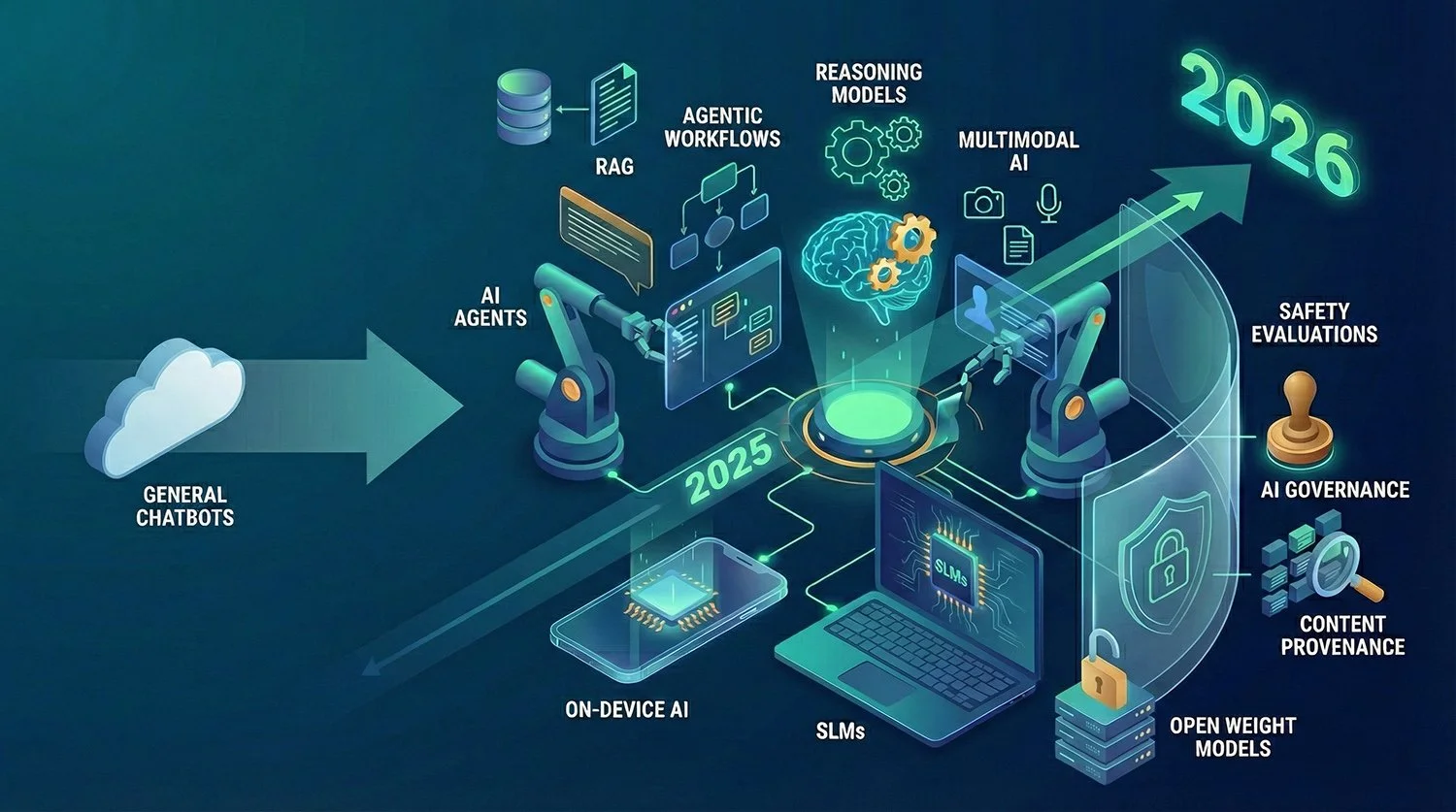
SAS’s own 2026 outlook describes a “Great AI Reality Check”, with organisations expected to pay closer attention to governance, energy use and demonstrable return on investment from AI systems. Rather than simply scaling up model size, companies are likely to focus on:
Identifying high-value, domain-specific use cases
Combining human expertise and agentic AI in clearly defined workflows
Managing infrastructure demands, as large-scale AI workloads increase data-centre energy consumption
Global analyses such as the Stanford AI Index note that performance gaps between open and closed models have narrowed on several benchmarks, which may encourage more organisations to blend commercial and open-weight systems depending on their requirements.
For India, with its young population and rapidly digitising economy, the central question is whether training programmes can scale fast enough, and inclusively enough, to meet demand. Initiatives such as SAS’s Academy for Data & AI Excellence add one more avenue for building applied AI skills, particularly in enterprise settings. Their ultimate impact will depend on how effectively learners translate credentials into durable capabilities, and how well organisations integrate those skills into accountable, real-world deployments.







































 TheDayAfterAI News
We are a leading AI-focused digital news platform, combining AI-generated reporting with human editorial oversight. By aggregating and synthesizing the latest developments in AI — spanning innovation, technology, ethics, policy and business — we deliver timely, accurate and thought-provoking content.