
ChatGPT Atlas Launch Triggers Security Concerns After 7-Day Prompt Injection Findings

Image Source: ChatGPT Atlas
OpenAI's freshly launched ChatGPT Atlas browser, designed to weave artificial intelligence directly into web surfing, has sparked early concern among security and privacy experts about its potential to expose users to data leaks and cyberattacks, only weeks after its debut.
The browser, unveiled on 21 October and built on the open-source Chromium engine, embeds an AI agent that can help with tasks such as navigating sites, summarising pages, drafting emails and conducting personalised searches. Available first as a free download for macOS, Atlas integrates with ChatGPT accounts, with its most advanced “agentic” features reserved for paying subscribers. The aim is to shift browsing from passive scrolling into a more interactive, AI-assisted experience. But within days of launch, security researchers began demonstrating ways attackers could exploit the agent, highlighting the tension between convenience and safety in the new wave of “agentic” AI tools.


























Launch Marks Bold Step in AI–Web Fusion
Atlas is OpenAI’s latest attempt to bring ChatGPT’s capabilities into everyday digital habits, positioning the browser as a challenger to both traditional browsers like Google Chrome and AI-enhanced rivals such as Perplexity’s Comet. Rather than keeping AI confined to a chat window, Atlas places it alongside regular web content, allowing users to ask the agent to research topics, help compare products, or assist with tasks like planning trips or drafting responses based on information it gathers from the web.
A central feature is its Agent Mode, where the AI can follow links, read pages, and carry out multi-step tasks at the user’s request, drawing on real-time web data without the need to switch between separate tools. The browser also connects to an upgraded Memories system that can store information about previous interactions, such as preferred websites, recurring topics or prior instructions, to make future sessions feel more “continuous” and personalised.
This builds on the memory features introduced in ChatGPT in 2024, but now ties them directly to web activity. Atlas launched first on macOS, with Windows and mobile versions promised in later phases. Early adopters praised the convenience, particularly the ability to summarise long documents or quickly collate information from multiple sites. However, the initial enthusiasm was soon tempered by reports of exploitable weaknesses in how the agent interprets content.























Prompt Injection Flaws Emerge as Key Threat
Within the first week of launch, security researchers highlighted a familiar and growing problem in AI systems: prompt injection. These attacks occur when malicious instructions are hidden in a web page’s visible text or underlying code. The AI agent, designed to read and follow content to help the user, can mistakenly treat those hidden instructions as legitimate commands.
In practical terms, a seemingly benign page could be crafted to tell the agent to do things like:
Follow a link to a phishing site,
Reveal information from previous tasks or memory, or
Download files that might contain malware.
Research from security firms showed that by abusing how Atlas reads and trusts page content, attackers could significantly increase users’ exposure to phishing attempts compared with traditional browsers. In test scenarios, Atlas users were found to be notably more vulnerable because the agent operates with broader capabilities than a standard browser tab, such as automatically following links or summarising content without the user manually inspecting each step.
Prompt injection is not unique to Atlas; it is a fundamental challenge for any agentic AI that reads untrusted content and then takes actions on the user’s behalf. However, Atlas’s tight integration of AI and browser functions means that everyday browsing — opening a news site, reading documentation, or logging into services — can also become a channel for more sophisticated social engineering and data-exfiltration attacks if guardrails fail.
Some security teams have responded by recommending cautious, limited deployment of Atlas in corporate environments, or restricting its agent features until mitigations mature, particularly where sensitive internal data may be in scope.




























Data Collection Practices Draw Privacy Scrutiny
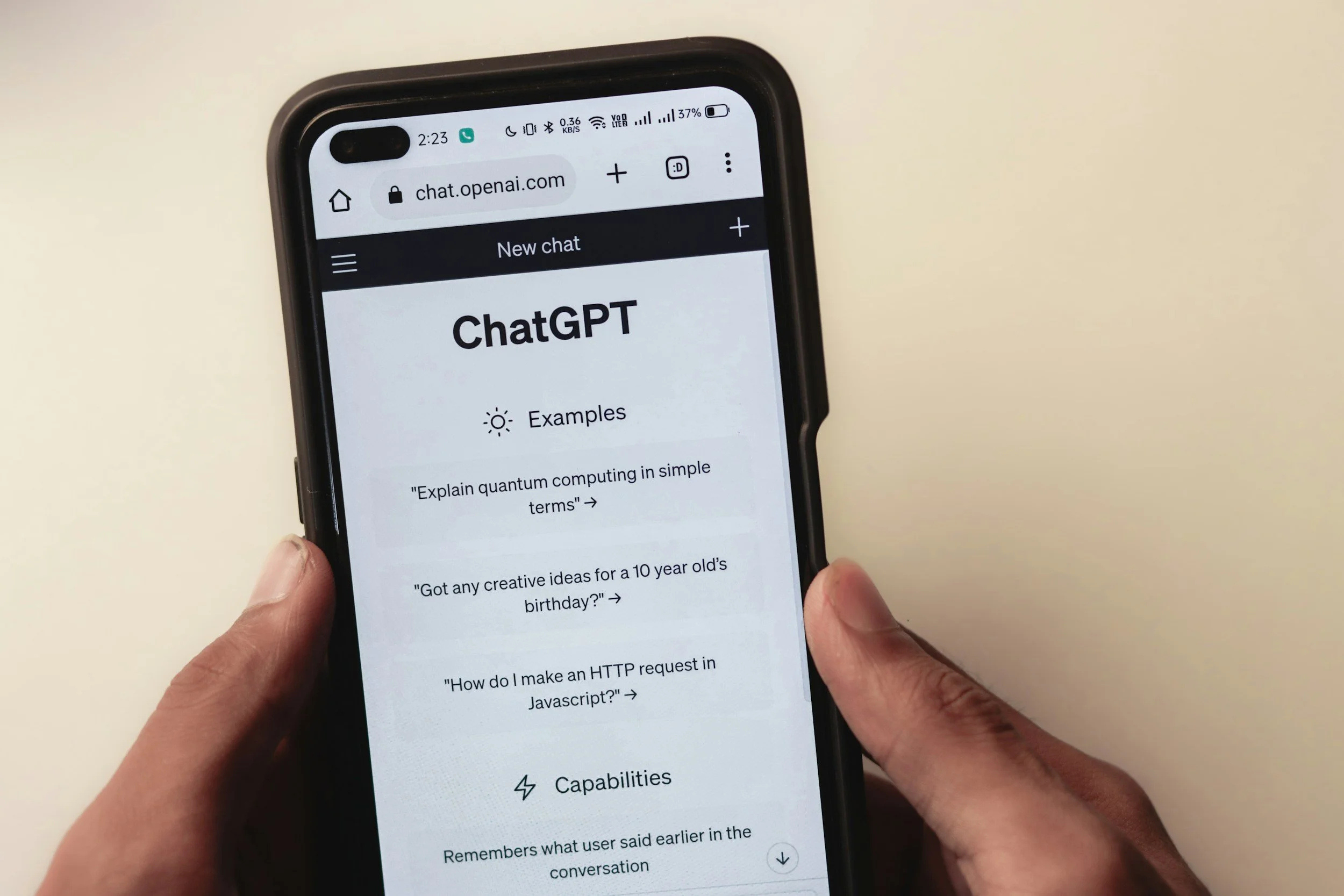
Alongside security concerns, Atlas’s approach to data and personalisation has raised questions among privacy advocates. The browser’s Memories feature can store information drawn from previous browsing and interactions, such as which pages were visited, what topics were discussed, and how the user tends to phrase requests, in order to make future responses more relevant.
OpenAI provides controls that allow users to review, delete and disable browser memories, and to adjust whether their data is used to improve OpenAI’s models. The company says that a dedicated “Include web browsing” option, which would allow web content to be used in specific browsing-related training, is switched off by default and must be explicitly turned on. More general model-improvement settings, such as “Improve the model for everyone”, remain enabled by default but can be disabled in the data controls if users do not want their chat content, including snippets of pages that Atlas attaches to their questions, to be used for training.
OpenAI also states that it aims to avoid storing certain types of obviously sensitive information. Nonetheless, privacy experts note that even when obvious identifiers such as account numbers or record IDs are excluded, AI systems can still accumulate detailed context over time.
Independent reviews and tests suggest that, in practice, Atlas can build rich behavioural profiles across extended use, combining browsing context, past prompts and inferred interests. Even without explicit identifiers, patterns of site visits and topics can reveal details about a person’s work, health, beliefs or financial situation. Critics worry that this kind of “behavioural telemetry”, if compromised, repurposed for targeted advertising, or accessed under changing policies, could amplify the risks associated with data breaches or misuse by third parties.
The tension here reflects a broader industry dilemma: agentic AI systems work best when they have more context about the user, yet regulators and privacy advocates are increasingly wary of tools that quietly accumulate long-lived profiles of online behaviour.



























Experts Weigh In on Systemic Challenges
Developers and researchers who have tracked AI safety issues for years emphasise that the problems surfacing in Atlas are not one-off glitches but symptoms of deeper, systemic challenges.
Software engineer Simon Willison, who has been writing about prompt injection since 2022, and other security experts argue that any AI agent trusted to read arbitrary web pages and then act on behalf of the user faces an inherent conflict: it must both understand and distrust the same content at the same time. They point out that instructions can be hidden not only in plain text, but also inside images, scripts and other embedded content, making purely text-based filters insufficient.
Other AI browsers have faced related scrutiny. Researchers have demonstrated attacks against tools like Perplexity’s Comet where instructions hidden in screenshots or embedded elements can influence the agent’s behaviour despite safeguards. The pattern suggests a category-wide problem: wherever AI is allowed to interpret untrusted content and execute follow-on actions, attackers will attempt to smuggle commands into that content.
Cybersecurity firms analysing enterprise use of Atlas have warned that combining powerful agents with broad access to corporate documents and communication tools could increase the risk of data loss if prompt injection or insider misuse is not carefully controlled. Their telemetry indicates that adoption is already spreading across a significant share of organisations, highlighting the urgency of addressing these issues rather than treating Atlas as a niche experiment.

























OpenAI Pledges Fixes Amid Ongoing Probes
OpenAI’s security leadership has publicly acknowledged that prompt injection remains an open and difficult problem for the entire industry. In posts and statements following the Atlas launch, the company’s chief security officer described prompt injection as a frontier area of security research and outlined a mix of short-term mitigations and longer-term work.
Among the steps OpenAI has highlighted are:
Tighter filtering and validation of content before it is passed to the agent,
Additional safeguards and confirmations on high-risk actions,
A “logged-out” or more constrained mode that limits what the agent can access when the user is not authenticated, and
Expanded red-teaming and collaboration with external researchers to uncover new attack paths.
Some of the most immediate bugs demonstrated by researchers have already been patched, according to OpenAI and independent follow-up tests. More comprehensive updates are promised over the coming weeks, as Atlas’s early feedback and exploit reports are folded into its security model.
Nonetheless, analysts note that Atlas arrived in a highly competitive and fast-moving AI market, where pressure to innovate can shorten testing cycles. Reviews of the browser suggest that while Atlas performs strongly on tasks like summarising documents and assisting with everyday browsing, it can still misinterpret complex scenarios or edge cases, especially when navigating adversarial content specifically crafted to confuse or manipulate it.




























Looking Ahead: AI Browsing’s Rocky Path
The Atlas episode highlights a key tension in the evolution of AI: autonomous agents promise to offload tedious digital work, but their deep integration with the web also introduces new ways for old threats to resurface.
On the technical side, emerging frameworks, such as security guidelines for generative AI and large language models, and community projects mapping out top risks for AI applications, aim to give developers checklists and patterns for hardening agentic systems. Some proposals focus on stronger sandboxing, allowing agents to operate in restricted environments with limited permissions. Others explore hybrid approaches where critical decisions are confirmed by users, or where more data processing happens locally rather than in the cloud.
On the regulatory side, governments in the United States, Europe, Australia and elsewhere are already scrutinising AI tools and online safety more broadly. As AI browsers and agentic assistants become more common, they are likely to face similar attention, especially where consumer protection, workplace monitoring and data-protection laws intersect.
For everyday users, the advice from many experts at this early stage is cautious but not fatalistic: treat AI-enabled browsers as powerful tools that still need careful supervision. That can mean:
Limiting use with highly sensitive accounts or documents,
Reviewing and adjusting memory and data-sharing settings, and
Staying alert to unexpected redirects, prompts or downloads triggered by the agent.
Atlas may be one of the first mainstream AI browsers, but it is unlikely to be the last. How OpenAI and its competitors respond to these early security and privacy challenges will help determine whether agentic AI becomes a trusted layer of the web, or a technology that users approach with permanent scepticism.








































 TheDayAfterAI News
We are a leading AI-focused digital news platform, combining AI-generated reporting with human editorial oversight. By aggregating and synthesizing the latest developments in AI — spanning innovation, technology, ethics, policy and business — we deliver timely, accurate and thought-provoking content.