
Direct vs. Indirect AI Access: ChatGPT, Grok, Claude and DeepSeek on Poe Compared

Image Source: Poe
Hong Kong residents are increasingly relying on platforms like Poe to access restricted Western AI chatbots such as OpenAI's ChatGPT and Anthropic's Claude, but differences in response quality, features and limitations compared to direct access remain a key concern amid U.S.-imposed barriers.
These variances, stemming from Poe's intermediary role, affect everything from output consistency to customization, prompting users to weigh convenience against potential trade-offs in a region where direct subscriptions are unavailable.
















Background on AI Access Restrictions
Hong Kong's exclusion from direct services arises from U.S.-based AI developers limiting availability in select territories. OpenAI suspended platform access in China, Hong Kong and Macau in July 2024 to comply with U.S. export controls on advanced technologies. Anthropic similarly excludes Hong Kong from its supported regions for Claude, preventing direct sign-ups.
Rooted in geopolitical tensions, these measures aim to curb potential misuse in sensitive areas, treating Hong Kong akin to mainland China despite its distinct governance framework. Professionals in finance, education and tech sectors, dependent on AI for data analysis and content creation, have faced disruptions, often resorting to VPNs before stricter enforcement.

























Rise of Poe as an Alternative
Quora's Poe aggregates multiple AI models, enabling Hong Kong users to engage with ChatGPT, Claude and others sans VPNs or prohibited direct plans like ChatGPT Plus or Claude Pro. Launched in 2023, it supports local registrations and offers free basic access alongside premium tiers for advanced models like GPT-4 or Claude 3.5 Sonnet via API integrations.
Local institutions, including the Hong Kong University of Science and Technology, endorse Poe for workflow integration, filling a void in restricted environments.




















ChatGPT: Direct vs. Indirect Access via Poe
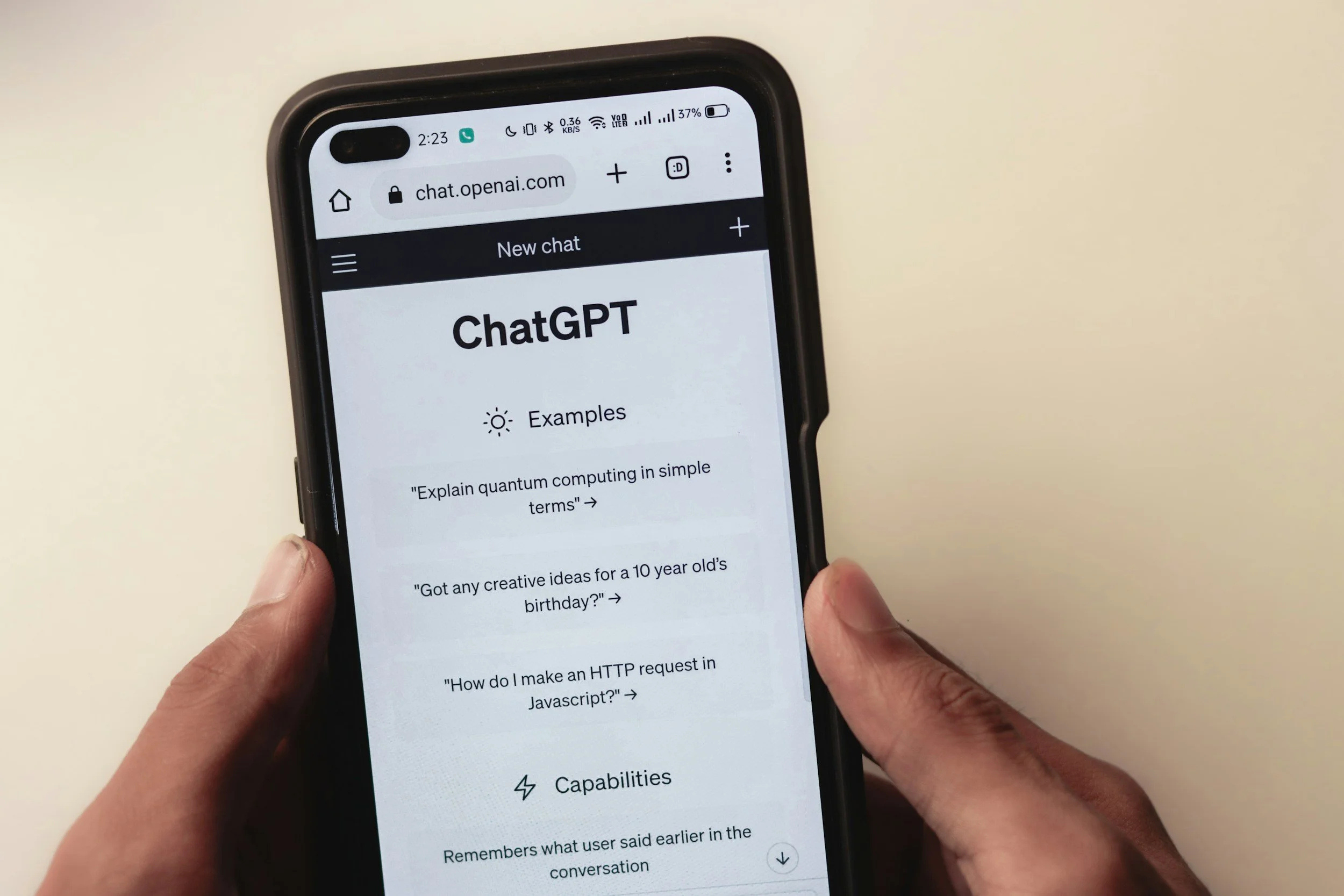
Direct access to ChatGPT, provided by OpenAI, allows users to interact with models like GPT-4o through the official website or app, offering native features such as custom GPT builders for specialized bots, voice modes, web browsing integration, and advanced data analysis tools. Responses are typically more verbose, contextually adaptive, and optimized for long conversations with higher token limits, enabling detailed outputs tailored to user preferences. However, in Hong Kong, direct subscriptions and usage are restricted due to U.S. export controls since July 2024, often requiring VPNs for access, though alternatives like Microsoft's Azure OpenAI Service remain available in the region without such blocks. In contrast, indirect access via Poe routes queries through OpenAI's API, introducing preprocessing like custom system prompts and caching that can result in more concise or structured responses, according to user reports. Poe's unified interface allows model switching and comparisons but imposes daily message limits (varying by plan) and lacks some native tools, though it enables VPN-free access in restricted regions like Hong Kong and can be more cost-efficient through a single subscription.























Grok: Direct vs. Indirect Access via Poe
Direct access to Grok, developed by xAI, is available through x.com, grok.com, or dedicated apps, providing features like real-time web searching, image generation with Flux models, and a humorous, uncensored response style modeled after the Hitchhiker's Guide to the Galaxy. Users benefit from higher usage quotas on premium plans, seamless integration with X (formerly Twitter) for contextual replies, and advanced capabilities in math, science, and coding without regional restrictions, including full availability in Hong Kong. Indirect access via Poe uses API integrations (including Grok-beta and Grok 4), which does not include real-time information from X or the internet, potentially leading to less dynamic outputs compared to the native platform, as Poe optimizes for multi-model efficiency. While Poe offers a convenient aggregator for comparing Grok with other models and requires no VPN, it introduces potential latency, message caps, and the absence of X-specific integrations, making it suitable for basic queries but less ideal for in-depth or specialized use, based on user comparisons.
























Claude: Direct vs. Indirect Access via Poe
Direct access to Claude, from Anthropic, occurs via the official website or API, featuring strong safety alignments, extended context windows for long documents or code (up to 1 million tokens in some versions), and tools like Artifacts for interactive previews of generated content such as code or diagrams. Responses emphasize ethical reasoning, accuracy in complex tasks, and features like prompt editing for refinements, but Hong Kong users may face access issues as the region is not explicitly listed as supported, often requiring VPNs. Via Poe, interactions leverage Anthropic's API but incorporate Poe's custom prompts and caching, which can make outputs more concise and handle code contexts differently, according to user reports. This indirect method provides VPN-free access in Hong Kong and multi-model comparisons, though it misses native features like Artifacts, may have performance variations due to API routing, and includes higher usage limits on premium tiers but potential privacy trade-offs from third-party handling.




















DeepSeek: Direct vs. Indirect Access via Poe
Direct access to DeepSeek, a Chinese AI model, is available through its official platform or apps like chat.deepseek.com, excelling in reasoning tasks, math, coding, and web searching with cost-effective, high-performance models like DeepSeek-R1 or V3, supporting context lengths up to 128,000-164,000 tokens depending on the version. It is fully accessible in Hong Kong without restrictions, offering low-cost or free tiers suitable for developers and researchers. Indirect access via Poe integrates DeepSeek models through APIs, allowing unified chats and comparisons with other AIs, but may introduce preprocessing that affects response nuance or speed, with potential for optimized versions that prioritize efficiency. Poe's platform adds convenience for multi-model use and no additional regional barriers, though it could impose message limits and lack some direct optimizations, making it a viable alternative for testing but potentially less performant for intensive reasoning tasks compared to native access, based on ecosystem trends.




























Impact on Users and the Local AI Landscape
Poe sustains AI usage in Hong Kong's tech ecosystem, bolstering sectors like finance and education, yet the direct-via-Poe disparities highlight a digital divide, inflating indirect costs and hindering full adoption.
This has accelerated demand for local alternatives from firms like Baidu, fostering innovation but risking fragmented standards.
Persistent U.S.-China frictions suggest enduring restrictions, with Poe-like aggregators likely evolving to minimize differences through better integrations. Hong Kong's push for domestic AI by 2030 may lessen reliance on Western tools, promoting hybrid models.















Source: Reddit, AppyPie, TechPoint, Zapier, Intuition Labs, Quora, Descript, Writesonic, Genape







 TheDayAfterAI News
We are a leading AI-focused digital news platform, combining AI-generated reporting with human editorial oversight. By aggregating and synthesizing the latest developments in AI — spanning innovation, technology, ethics, policy and business — we deliver timely, accurate and thought-provoking content.