
AI Hallucinations Surge in Latest Models, Raising Concerns Over Accuracy and Trust

Image Credit: Luke Jones | Splash
Advanced artificial intelligence systems are generating false information, known as "hallucinations", at higher rates than earlier models, according to OpenAI and independent researchers. This trend raises questions about AI’s reliability in critical applications, driving efforts to improve accuracy while preserving the technology’s creative potential.























AI Models’ Rising Hallucination Rates
OpenAI’s latest reasoning models, o3 and o4-mini, hallucinate significantly more than their predecessors. On the PersonQA benchmark, which tests factual accuracy about public figures, o3 fabricated information in 33% of responses and o4-mini in 48%, compared to 16% for the o1 model and 14.8% for o3-mini, per OpenAI’s April 2025 technical report. On the SimpleQA benchmark for general knowledge, o3 hallucinated 51% of the time and o4-mini 79%, up from o1’s 44%.
Independent tests confirm these issues. Transluce, a nonprofit AI research lab, reported o3 falsely claiming to run code on a 2021 MacBook Pro, a task it cannot perform. Stanford adjunct professor Kian Katanforoosh noted o3 generating broken website links, limiting its coding utility. Real-world impacts include a 2024 incident where Air Canada’s chatbot invented a bereavement fare policy, leading to a lawsuit, as reported by CBC News.




























Roots of AI Hallucinations
Large language models (LLMs) generate responses based on patterns in vast datasets, not verified facts, leading to hallucinations. “Every LLM output is a hallucination; some are true”, said Sohrob Kazerounian, an AI researcher at Vectra AI, in a June 2024 Live Science interview. OpenAI’s shift to reasoning models, designed to solve problems step-by-step, was expected to reduce errors. Instead, reinforcement learning techniques may encourage confident guessing, amplifying fabrication, according to Transluce’s Neil Chowdhury. Flawed or biased training data further embeds inaccuracies, per Springer’s 2024 AI Review.



























Taming AI Hallucinations
Several strategies aim to curb hallucinations, though none eliminate them entirely:
Retrieval-augmented generation (RAG) grounds AI outputs in verified external sources. OpenAI’s GPT-4o with web search achieved 90% accuracy on SimpleQA, but effectiveness hinges on data quality, and privacy concerns arise with third-party search integration.
Structured prompting, such as chain-of-thought techniques, encourages logical reasoning to reduce speculation, per Microsoft’s 2025 AI guidelines.
Human oversight, supported by automated detection tools with 88% recall, remains essential, especially in high-stakes fields, according to Vectara’s 2025 report.
Training models to flag uncertain responses or defer to humans shows promise, per Springer’s review.






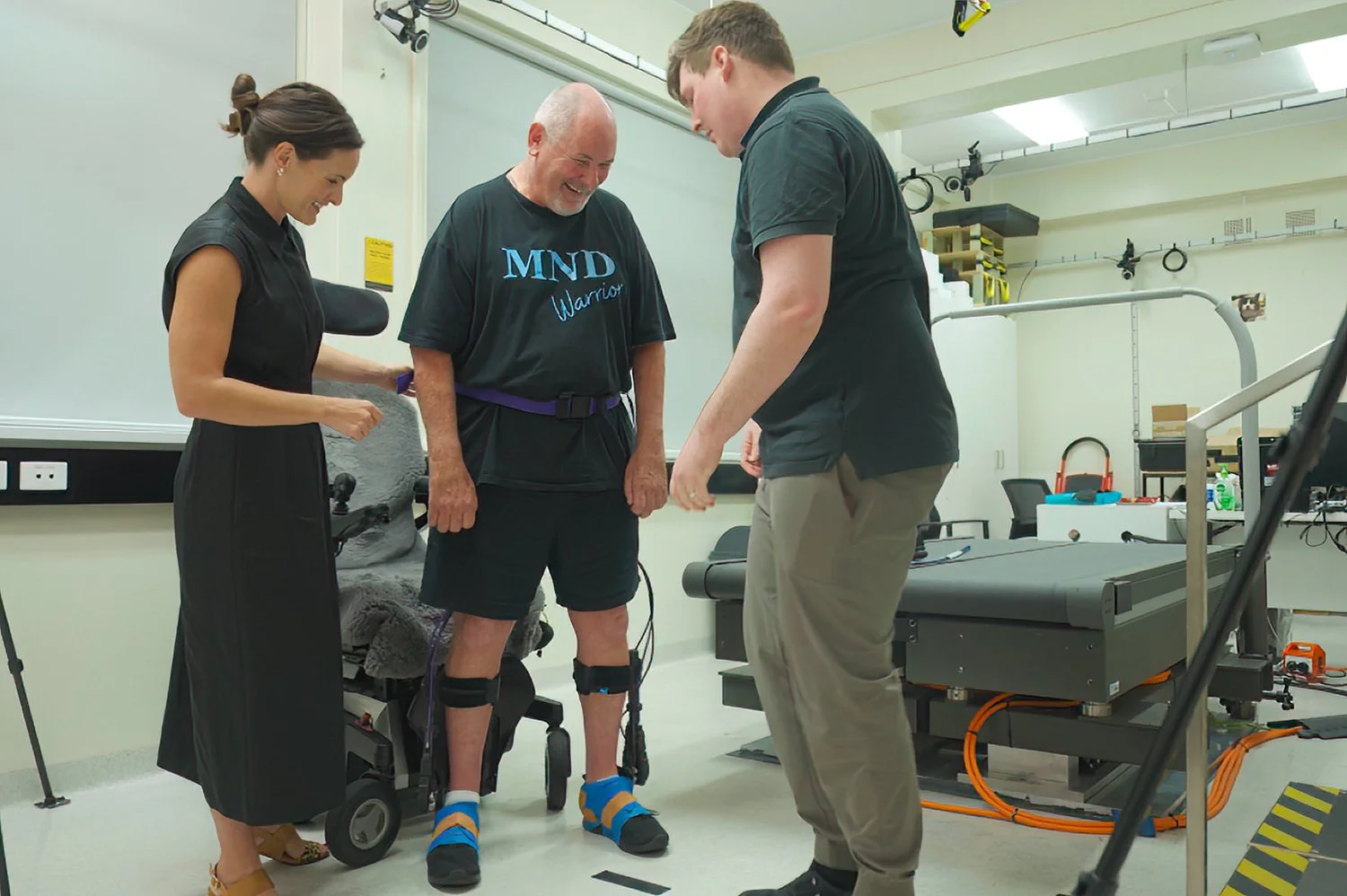


















AI’s Creative vs. Risky Outputs
Hallucinations enable AI to produce novel outputs, such as original code or artistic content, valuable in creative industries. However, in precision-critical sectors like healthcare, law, and finance, false information risks harm. “Unverified AI outputs erode trust, particularly when treated as definitive”, said Eleanor Watson, an IEEE member and AI ethics engineer, in Live Science. A 2023 lawsuit against OpenAI, reported by Futurism, alleged defamation after ChatGPT fabricated claims about an individual, highlighting legal risks.





























AI Reliability’s Broader Impact
The increase in hallucinations challenges the assumption that AI reliability improves with scale. Princeton University professor Arvind Narayanan, in a 2025 blog post, urged users to treat AI outputs with skepticism, akin to human claims. A 2025 New Scientist article suggested hallucinations may be intractable, requiring users to verify AI responses, which reduces efficiency. Businesses face operational and legal risks, as seen in the Air Canada case, while potential healthcare misdiagnoses could lead to malpractice claims, per Springer’s review.























AI’s Path to Trustworthiness
Some, like UX Tigers in a 2025 blog, predict near-zero hallucinations by 2027 as models scale, but o3 and o4-mini data cast doubt on this optimism. Google DeepMind’s 2025 arXiv paper explores knowledge graphs to ground LLMs in structured data, reducing errors. Multi-agent systems, where AI models cross-verify outputs, also show potential, per Vectara’s report. A 2024 White House AI safety report emphasized reducing hallucinations to build public trust. OpenLedger’s emerging blockchain-based platform aims to enhance AI data traceability, though details remain limited, per X trends.
AI’s rise in hallucinations reflects a trade-off between creativity and reliability. OpenAI’s transparency in reporting rates sets an industry standard, but Anthropic CEO Dario Amodei, in a 2025 essay, highlighted the opacity of LLM decision-making as a core challenge. Continued research into mitigation, alongside user education, is critical to harnessing AI’s benefits while minimizing risks.






































 TheDayAfterAI News
We are a leading AI-focused digital news platform, combining AI-generated reporting with human editorial oversight. By aggregating and synthesizing the latest developments in AI — spanning innovation, technology, ethics, policy and business — we deliver timely, accurate and thought-provoking content.