
Davos 2026: Pearson & Telangana Sign Pact for Global AI Academy
Image Credit: Evangeline Shaw | Splash
Pearson says it has signed a Memorandum of Understanding with the Government of Telangana at the World Economic Forum annual meeting in Davos on 24 January 2026, with the aim of strengthening AI skilling, assessment, and credentialing as part of a Global AI Academy being built under Aikam. Pearson also states it is Aikam’s first partner for this work.
Pearson frames the collaboration around learning content, trusted assessments, and globally recognised credentials, aligned to industry needs.












What Was Announced
According to Pearson’s release, the arrangement is formalised as an MoU between Pearson and Telangana through Aikam. That wording is important: an MoU usually signals intent and direction, and it does not automatically mean course schedules, pricing, enrolment targets, or delivery milestones are already locked in publicly. Pearson’s statement does not publish a curriculum, a public rollout timeline, or confirmed cohort dates.
The parties named include the Government of Telangana and Aikam, and Pearson’s Enterprise Learning and Skills unit. Pearson’s release also identifies key individuals involved, including Telangana’s Special Chief Secretary Sanjay Kumar, Aikam’s Founding CEO Phani Nagarjuna, and Pearson Enterprise Learning and Skills President Vishaal Gupta.






Aikam’s Role
In Pearson’s release, Aikam is described as an autonomous and globally oriented AI innovation entity, and Pearson positions it as an execution platform that pairs policy leadership with delivery.
Independent coverage around the Davos launch describes Aikam as a vehicle for building, testing, and scaling AI solutions, with an explicit push to move from pilots toward execution focused implementation.
Telangana’s Aikam pitch includes enabling pieces that directly affect whether training translates into deployment, including access to public datasets, computing infrastructure, and an AI fund of funds, as reported by Digital Watch Observatory and The Times of India.













Assessment and Credentials
Pearson’s own statement highlights the need for trusted assessment and portable credentials when building AI capability at scale.
There is also a broader, well established reason this keeps coming up in AI training. In labour markets, credentials and assessments can act as signals to employers when job readiness is hard to observe directly at hiring time. This concept is a classic result in labour market signalling theory, and it is one reason governments and institutions increasingly focus on the quality, recognition, and verification of short course credentials.






















Responsible AI Sits Alongside the Skills Plan
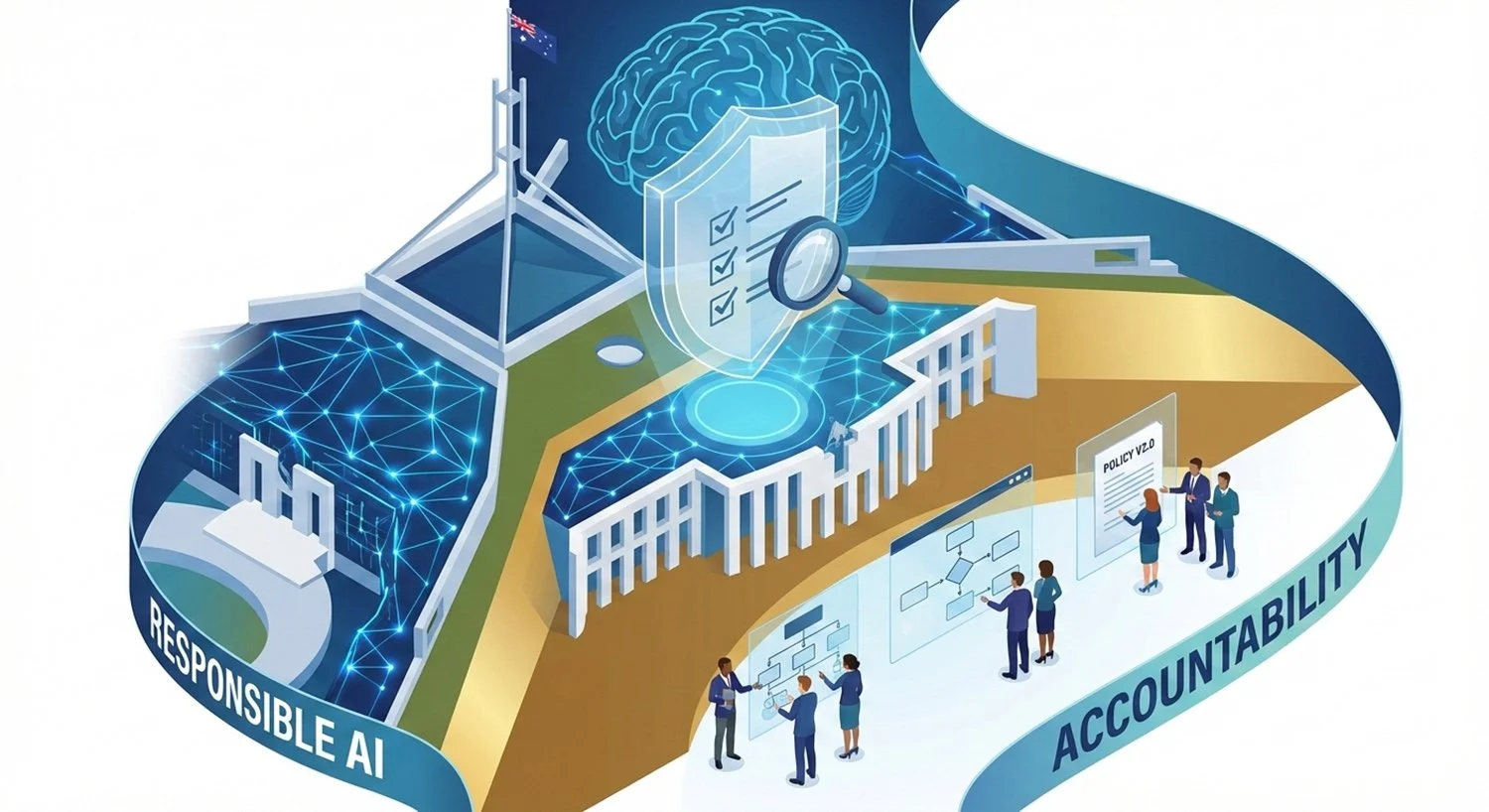
Telangana also launched the Responsible AI Standard and Ethics (RAISE) Index, described as a framework to measure responsible AI practices across the AI lifecycle, alongside Aikam’s rollout.
The Times of India reported that Telangana described this as the “first edition” of the RAISE Index. Digital Watch Observatory describes it as a framework for measuring responsible practices, without using the “first edition” phrasing.
Many organisations now need to show more than “we used AI”. They increasingly need to show that AI systems are being deployed responsibly, with transparency and accountability, especially where systems touch personal data or high impact decisions.














Pearson’s Credentialing Track Record
Pearson’s Telangana MoU announcement does not name specific product brands or platforms.
That said, Pearson has been actively building credential infrastructure. In January 2022, Pearson announced it acquired digital credential company Credly. Reuters reported the deal valued Credly at about US$200 million.
If the goal is globally recognised proof of skills, then credential infrastructure is as important as content libraries. Pearson’s public statements in this MoU lean into that direction, even though implementation details for Aikam are not publicly specified yet.



















The Wider Tread
Large education providers are trying to integrate AI skilling with the ecosystems that make training actionable.
One clear comparison is Pearson’s January 2025 partnership announcement with Microsoft, which framed the goal as combining Pearson’s learning and assessment strengths with Microsoft’s cloud and AI technologies to help prepare workers and organisations for AI adoption.
Another example is Pearson’s June 2025 announcement with Google Cloud, reported by Reuters, aimed at integrating AI powered learning tools into classrooms and supporting more personalised learning.
The difference in the Aikam model is the platform narrative. Aikam is being presented not only as a training effort, but as a broader execution environment, with datasets, compute access, ecosystem funding and multiple partner MoUs announced alongside it. That potentially improves the odds that training connects to real deployment opportunities, but it also raises the bar for delivery clarity.























What is Still Unknown
Because the agreement is an MoU, the next practical details will determine whether this becomes a replicable model or remains mostly a high level announcement.
Key things to watch:
Curriculum scope: whether it focuses on AI literacy, applied job skills, or deeper capabilities like evaluation, governance, and deployment practice.
Assessment design: whether assessments test hands on tasks and responsible use, not only knowledge checks.
Credential recognition: which employers or institutions recognise the credentials and how portable they are in practice.
Responsible AI integration: whether the RAISE Index principles flow into training requirements and project delivery, not just policy statements.
Delivery milestones: pilots, cohorts, dates, and operating model details that are not in the initial release.




















 TheDayAfterAI News
We are a leading AI-focused digital news platform, combining AI-generated reporting with human editorial oversight. By aggregating and synthesizing the latest developments in AI — spanning innovation, technology, ethics, policy and business — we deliver timely, accurate and thought-provoking content.