
China’s AI Censorship Goes Global: How LLMs Are Reshaping Digital Control and Governance

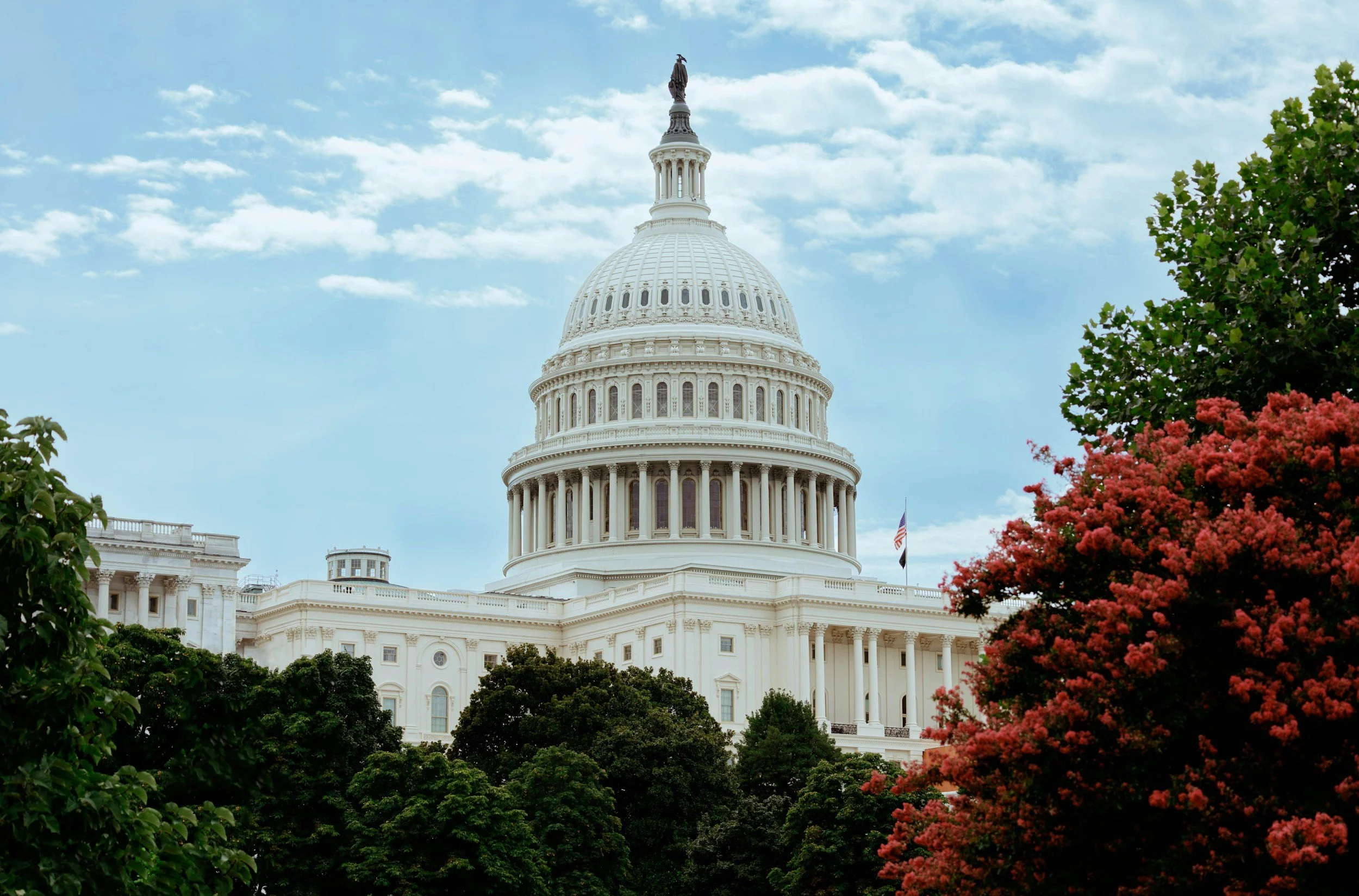
Image Credit: Susan Wilkinson | Splash
China is accelerating the development and deployment of large language model (LLM)-based tools to enhance its digital censorship capabilities, according to recent reports, sparking ethical debates over their potential to suppress dissent and shape global narratives. These AI systems, designed to monitor and control online content, mark a significant evolution from traditional censorship methods, with implications for human rights and AI governance worldwide.




























Background: From Manual to Automated Censorship
China’s internet, often referred to as the “Great Firewall”, has long been one of the world’s most tightly controlled digital environments. Historically, censorship relied on human moderators and keyword-based filters to block sensitive content, such as references to the 1989 Tiananmen Square protests or criticism of the Chinese Communist Party (CCP). A leaked dataset, reported by TechCrunch in March 2025, revealed China’s shift toward LLM-based systems capable of analyzing context, intent, and subtle expressions of dissent, such as idioms like “When the tree falls, the monkeys scatter”, which implies regime instability.
The Cyberspace Administration of China (CAC), the country’s internet regulator, oversees these efforts, requiring AI developers to align models with “core socialist values”. Reports from the Financial Times in July 2024 noted that companies like ByteDance, Alibaba, and DeepSeek must submit extensive datasets to ensure their models avoid politically sensitive topics. This regulatory framework, combined with China’s 2017 AI Development Plan, underscores Beijing’s ambition to integrate AI into governance and maintain ideological control.

























Development: How LLMs Enhance Censorship
Unlike traditional methods, LLMs process vast amounts of data to detect nuanced language, enabling real-time monitoring and suppression of content. A July 2025 Global Voices report highlighted that these systems proactively shape public discourse by amplifying pro-government narratives while neutralizing satire or alternative historical perspectives. For instance, DeepSeek’s R1 chatbot, launched in early 2025, was reported by The Guardian in January 2025 to self-censor responses on topics like Tiananmen Square, redirecting users to neutral subjects like math or coding.
The leaked dataset, discovered on an unsecured server, included 133,000 content samples across 38 categories, flagging topics from Taiwan’s sovereignty—mentioned over 15,000 times—to rural poverty and environmental scandals. Xiao Qiang, a researcher at UC Berkeley, told TechCrunch that LLMs improve the “efficiency and granularity” of censorship, reducing reliance on labor-intensive human oversight. This scalability allows China to monitor every corner of its internet, which had 1.09 billion users as of December 2023, per the China Internet Network Information Center.
























Global Export: Spreading Digital Authoritarianism
China’s AI censorship tools are not confined to its borders. A February 2025 report by the National Endowment for Democracy warned that Beijing is exporting these technologies through its Digital Silk Road initiative, embedding surveillance and censorship features in commercial products like Huawei’s infrastructure and apps such as WeChat. Countries like Cambodia, Nepal, and Thailand have reportedly explored similar systems, raising fears of a globalized model of digital authoritarianism.
OpenAI’s February 2025 report noted Chinese actors using LLMs to monitor anti-government social media posts and generate propaganda targeting Latin American audiences. This global reach has alarmed Western governments, with the American Edge Project’s December 2024 study showing Chinese AI models like Tencent’s Hunyuan-Large denying human rights abuses, such as Uyghur repression, while freely criticizing Western leaders. Such selective censorship highlights the potential for these tools to influence international public opinion.





























Ethical and Governance Challenges
The rapid deployment of LLM-based censorship tools has outpaced global efforts to establish human rights-based AI governance. Freedom House’s October 2024 report labelled China’s internet the least free for the 10th consecutive year, citing the erosion of online civil society spaces. The use of AI to suppress feminist, LGBT+, and ethnic minority voices, including Uyghur and Tibetan content, has drawn particular scrutiny.
Critics argue that these systems enable societal manipulation by enforcing ideological conformity, stifling political dissent, and distorting historical narratives. A January 2025 CNN analysis of DeepSeek’s chatbots found they failed to provide accurate information on sensitive topics 83% of the time, per a NewsGuard audit, undermining trust in AI as a neutral technology. Chinese officials have defended their approach, emphasizing commitment to responsible AI development.
The lag in international AI governance frameworks exacerbates these concerns. While the G7 and Council of Europe are developing AI regulations, China’s Interim Measures on Generative AI, effective August 2023, prioritize state control over individual rights, per a ScienceDirect analysis. This divergence complicates global cooperation, as noted in a 2021 study by the National Center for Biotechnology Information, which found vibrant but censored public discourse on AI ethics in China.





















Balancing Control and Innovation
For China, LLM-based censorship enhances governance efficiency, enabling rapid response to dissent and maintaining social stability—a priority under President Xi Jinping’s leadership. These tools also bolster China’s tech industry, with firms like DeepSeek gaining global attention, as evidenced by market reactions in early 2025, per CNN. Economically, integrating AI across sectors aligns with Beijing’s goal to lead the global AI market by 2030, per a June 2025 RAND report.
However, the ethical costs are significant. AI-driven censorship risks entrenching authoritarianism, silencing marginalized voices, and distorting truth, as seen in chatbot refusals to discuss human rights abuses. Globally, the export of these tools threatens free expression, particularly in nations with weaker democratic institutions. The lack of transparency in AI training data raises concerns about coded biases and potential misuse.


















A Divided Digital Landscape
China’s investment in AI censorship is likely to intensify, driven by its 2025 AI Action Plan, which promotes AI adoption while emphasizing state oversight, per MediaNama. However, this could hinder innovation, as Axios reported in July 2024, noting that political guardrails divert resources from developing competitive AI applications. The tension between control and creativity may limit China’s ability to surpass the U.S. in generative AI, despite its advances in computer vision.
Globally, the spread of China’s censorship model could fragment the internet, creating parallel ecosystems—one open, one controlled. Western nations are responding with stricter regulations, such as U.S. efforts to ban TikTok over data privacy concerns, per Al Jazeera in May 2024. Meanwhile, calls for decentralized platforms and AI circumvention tools signal resistance to digital authoritarianism.

























A Test for Global AI Governance
China’s LLM-based censorship tools reflect a broader struggle over the soul of AI: whether it serves as a tool for empowerment or control. Beijing’s approach—prioritizing state authority over individual rights—contrasts with Western frameworks emphasizing transparency and ethics. This divergence, coupled with China’s global tech influence, poses a challenge for policymakers seeking unified AI standards.
The immediate impact is clear: enhanced censorship strengthens China’s grip on domestic discourse but alienates international trust, as seen in skepticism toward DeepSeek’s models. Long-term, the proliferation of these tools could normalize AI-driven repression, particularly in authoritarian-leaning states, unless countered by robust governance and technological countermeasures.
As AI becomes integral to governance worldwide, the choices made today—by governments, tech firms, and civil society—will shape the digital future. For now, China’s AI censorship machine stands as both a technological advancement and a cautionary tale.






























 TheDayAfterAI News
We are a leading AI-focused digital news platform, combining AI-generated reporting with human editorial oversight. By aggregating and synthesizing the latest developments in AI — spanning innovation, technology, ethics, policy and business — we deliver timely, accurate and thought-provoking content.