
AI Stock Analysis Tested: 5 Chatbots Predict iRobot Stock Amid Bankruptcy Filing
Disclaimer: This article is for informational and educational purposes only. The predictions and analyses presented herein were generated by AI systems and should not be construed as financial advice, investment recommendations, or solicitations to buy or sell any securities. Stock prices are inherently unpredictable, and all investments carry risk of loss. Past performance does not guarantee future results. Readers should consult qualified financial advisors before making any investment decisions. TheDayAfterAI News and its contributors do not accept liability for any losses arising from reliance on this content.
In an unprecedented experiment, TheDayAfterAI News tasked five leading AI chatbots with the same challenge: predict iRobot (IRBT) stock performance for the trading week of December 15-19, 2025. Each AI was given identical parameters and asked to analyze technical indicators, market sentiment, fundamental catalysts, and macroeconomic factors to provide price forecasts and probability assessments.
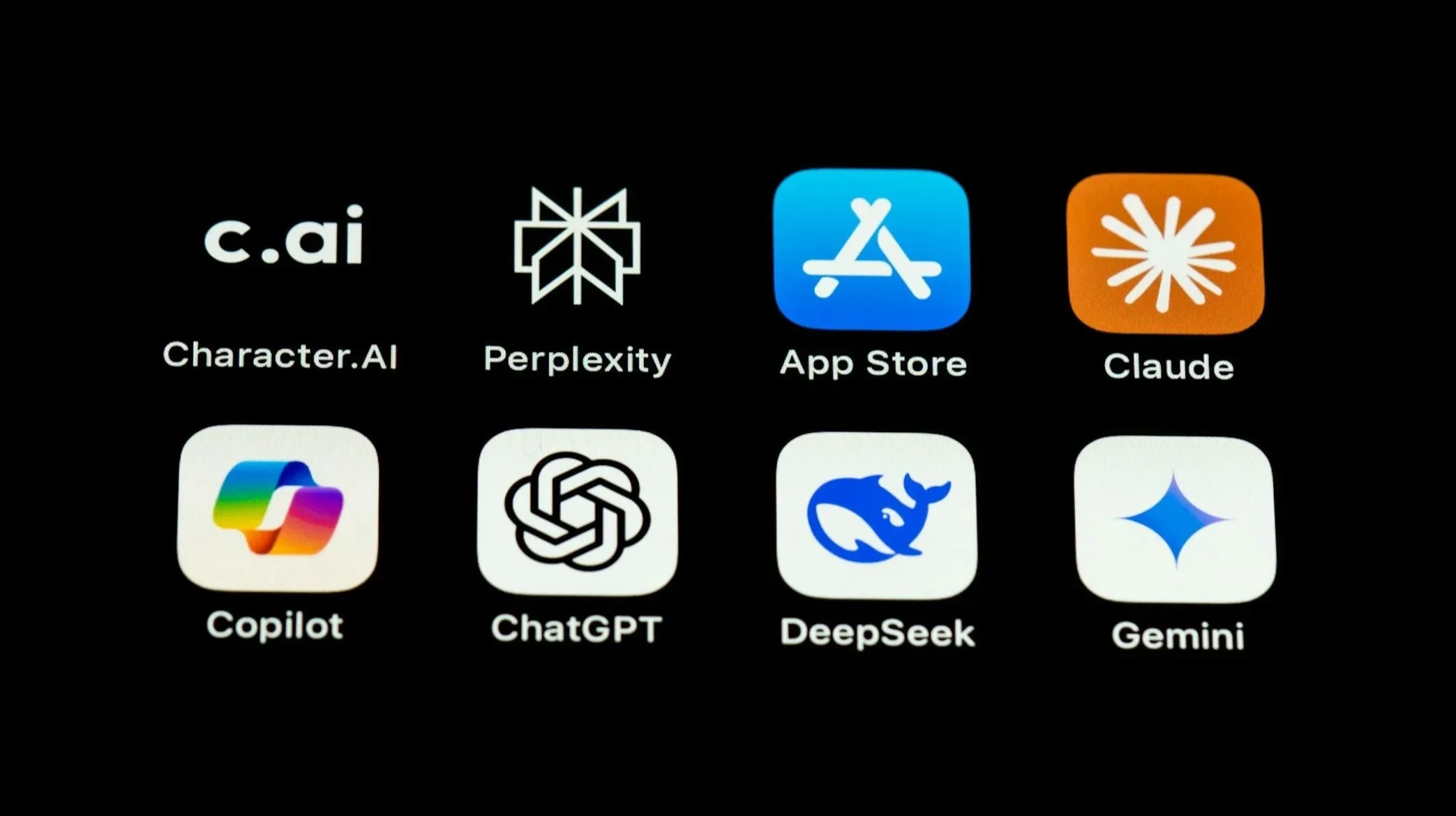
The participating AI models were: Claude (Anthropic), Perplexity, Gemini (Google), Grok (xAI), and ChatGPT (OpenAI). This article compares their methodologies, forecasts, and reasoning to help readers understand how AI tools approach financial analysis.









The iRobot Situation
Before examining the predictions, understanding the context is essential. iRobot faced a perfect storm of challenges:
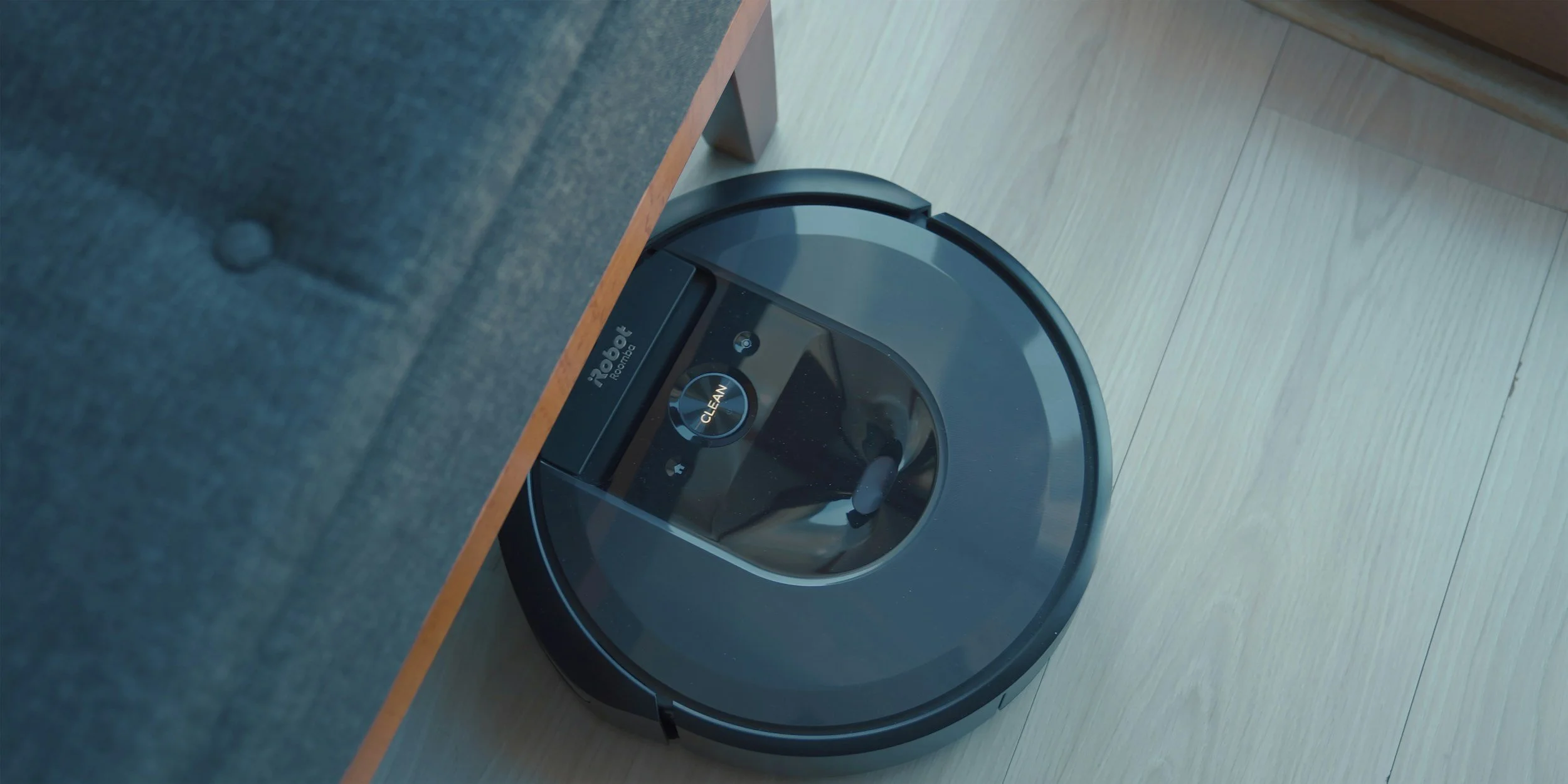
Failed Amazon acquisition: A proposed US$1.4 billion acquisition by Amazon collapsed in early 2024 due to regulatory concerns
Tariff pressure: 46% levies on imports from Vietnam devastated the company's cost structure
Deteriorating fundamentals: Q3 2025 revenue fell 24.6% year-over-year with negative EBITDA margins
Extreme short interest: Over 44% of the float was sold short, creating volatile conditions
Bankruptcy filing: On December 14, 2025, iRobot filed Chapter 11 with a pre-packaged deal transferring 100% equity to Shenzhen PICEA Robotics, explicitly stating shareholders would receive zero recovery
The stock closed at US$4.32 on Friday, December 12, 2025, before the bankruptcy announcement.





















Summary Comparison: All Five Predictions
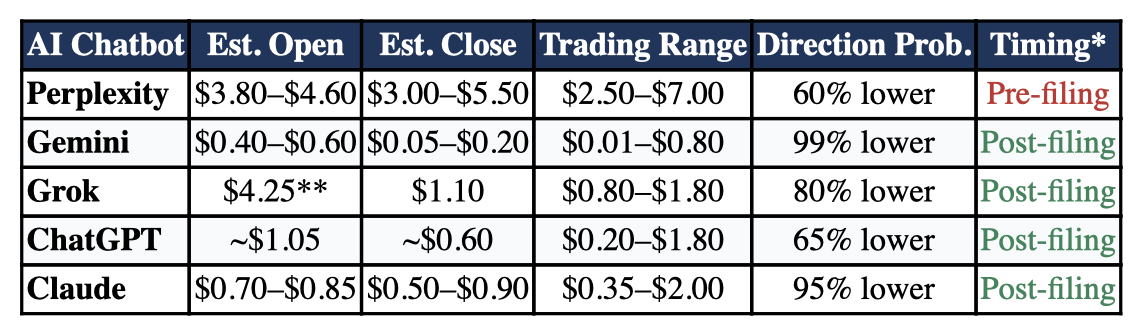
*Pre-filing = before bankruptcy announcement; Post-filing = after announcement.
**Grok used actual value when the report was generated.




















Perplexity: The Pre-Bankruptcy Baseline
Perplexity's analysis, conducted before the bankruptcy filing, provides an interesting baseline of what 'normal' distressed stock analysis might look like. The chatbot correctly identified IRBT as an "extremely high-risk, event-driven situation" with "distressed fundamentals."
Key observations from Perplexity included the extreme short interest (mid-40% of float), triple-digit borrow fees, and the potential for "violent squeezes." The analysis noted that IRBT was trading "more like an option on the outcome of its restructuring than a normal equity."
While Perplexity's price targets proved wildly optimistic in hindsight, the chatbot's qualitative assessment was prescient—it correctly identified the event-driven nature of the stock and warned that "standard technical tools should be treated as secondary to news flow and legal developments."















Gemini: The Most Bearish Outlook
Google's Gemini delivered the most dramatically bearish prediction among all five chatbots. With a 99% probability of decrease and a closing price estimate of US$0.05–$0.20, Gemini essentially predicted the stock would become nearly worthless by week's end.
Gemini's analysis was notable for its directness: "The stock is facing a terminal event." The chatbot highlighted that the official press release explicitly stated shareholders would experience a "total loss" and receive no recovery.
The analysis predicted Monday's open would gap down 80–90% from Friday's close, with traditional technical levels becoming "irrelevant" and the only "support" being "speculative penny-flipping activity."
























Grok: The "Zombie Stock" Assessment
xAI's Grok provided a colourful characterisation of IRBT as a "zombie stock"—a term that captured the essence of a company continuing to trade despite fundamental worthlessness. Grok's analysis balanced the bearish fundamentals against short-term trading dynamics.
Notably, Grok referenced actual intraday trading data from December 15, reporting that the stock opened at US$4.253 but collapsed to US$1.552 by the close. This integration of real-time data distinguished Grok's analysis from purely predictive approaches.
Grok assigned a 20% probability of a net increase for the week, citing potential short squeezes and options-driven volatility. The chatbot accurately noted that the December 19 options expiration could "pin or squeeze price" at key levels.




















ChatGPT: The "Option on Court Outcome" Framework
OpenAI's ChatGPT framed IRBT as an "option on a court outcome," an apt metaphor for a stock whose value depends entirely on bankruptcy proceedings. The analysis predicted high volatility but strong gravitational pull downward as markets price in expected equity cancellation.
ChatGPT's opening price estimate of approximately US$1.05 fell between the extremes of other chatbots, reflecting careful consideration of pre-market indicators. The chatbot noted pre-market prints ranging from US$0.75 to US$1.50, using the midpoint as its estimate.
The analysis included a thoughtful caveat: momentum indicators like RSI and MACD, while showing technical signals, were likely to be "broken" by the bankruptcy narrative—a recognition that standard analytical tools have limitations in extreme scenarios.














Claude: Comprehensive Risk Framework
Anthropic's Claude delivered the most detailed risk framework, providing multiple probability scenarios and explicit acknowledgment of uncertainty. The analysis assigned a 95% probability of decrease from Friday's close but broke down subsequent scenarios from Monday's opening.
Claude's scenario analysis was particularly thorough, offering a base case (60% probability, US$0.40–$1.20 range), speculative rally scenario (20% probability, US$1.00–$2.50), further collapse scenario (15% probability, US$0.15–$0.50), and even a trading halt possibility (5% probability).
The analysis concluded with a stark warning: "IRBT is no longer a conventional stock investment but rather a distressed equity with an expected terminal value of $0. Any trading is purely speculative gambling on bankruptcy court outcomes."







Key Observations from the Experiment
Information Timing Dramatically Affects Predictions: The most striking finding was the gulf between Perplexity's pre-bankruptcy analysis and the post-filing predictions. Perplexity expected prices in the US$3–$5 range; others predicted sub-US$1. This highlights how AI financial analysis is only as good as its access to current information.
Consensus on Direction, Divergence on Magnitude: All five chatbots agreed IRBT would likely decline—no surprise given the circumstances. However, closing price estimates ranged from US$0.05 (Gemini) to US$1.10 (Grok), representing a 22x difference. This variance reflects genuine uncertainty in pricing distressed securities.
Qualitative Insights Often More Valuable Than Numbers: Each chatbot's qualitative frameworks—"zombie stock," "option on court outcome," "terminal event"—provided arguably more useful guidance than specific price targets. These conceptual models help investors understand the nature of their risk rather than false precision in predictions.
Different Strengths Across Platforms: Perplexity excelled at synthesising multiple data sources with citations. Gemini provided the most decisive directional call. Grok integrated real-time trading data. ChatGPT offered a balanced analytical framework. Claude delivered the most comprehensive risk scenario analysis. Each approach has merit depending on the user's needs.
All Chatbots Appropriately Flagged Uncertainty: Notably, every chatbot included appropriate caveats about the speculative nature of their predictions. None presented their forecasts as certainties, and all acknowledged the limitations of technical analysis in event-driven situations. This responsible communication of uncertainty is encouraging.














Conclusion
This experiment demonstrates both the capabilities and limitations of AI-powered financial analysis. When properly informed, AI chatbots can quickly synthesise complex information, identify key risk factors, and provide frameworks for thinking about uncertain situations.
However, specific price predictions—even in less dramatic circumstances than a bankruptcy filing—should be treated with appropriate scepticism. The 22x variance in closing price estimates among informed chatbots underscores the fundamental difficulty of predicting market movements.
For investors and analysts, AI chatbots are best used as research assistants that can rapidly synthesise information and highlight key considerations, rather than as oracle-like predictors. The value lies not in the specific numbers but in the analytical frameworks, risk factors, and qualitative insights these tools can surface.












 TheDayAfterAI News
We are a leading AI-focused digital news platform, combining AI-generated reporting with human editorial oversight. By aggregating and synthesizing the latest developments in AI — spanning innovation, technology, ethics, policy and business — we deliver timely, accurate and thought-provoking content.